


Adaptation of fruit varieties to increased winter temperatures to reduce the impact of climate change on fruit production (AdapFrutCC).
MITECO
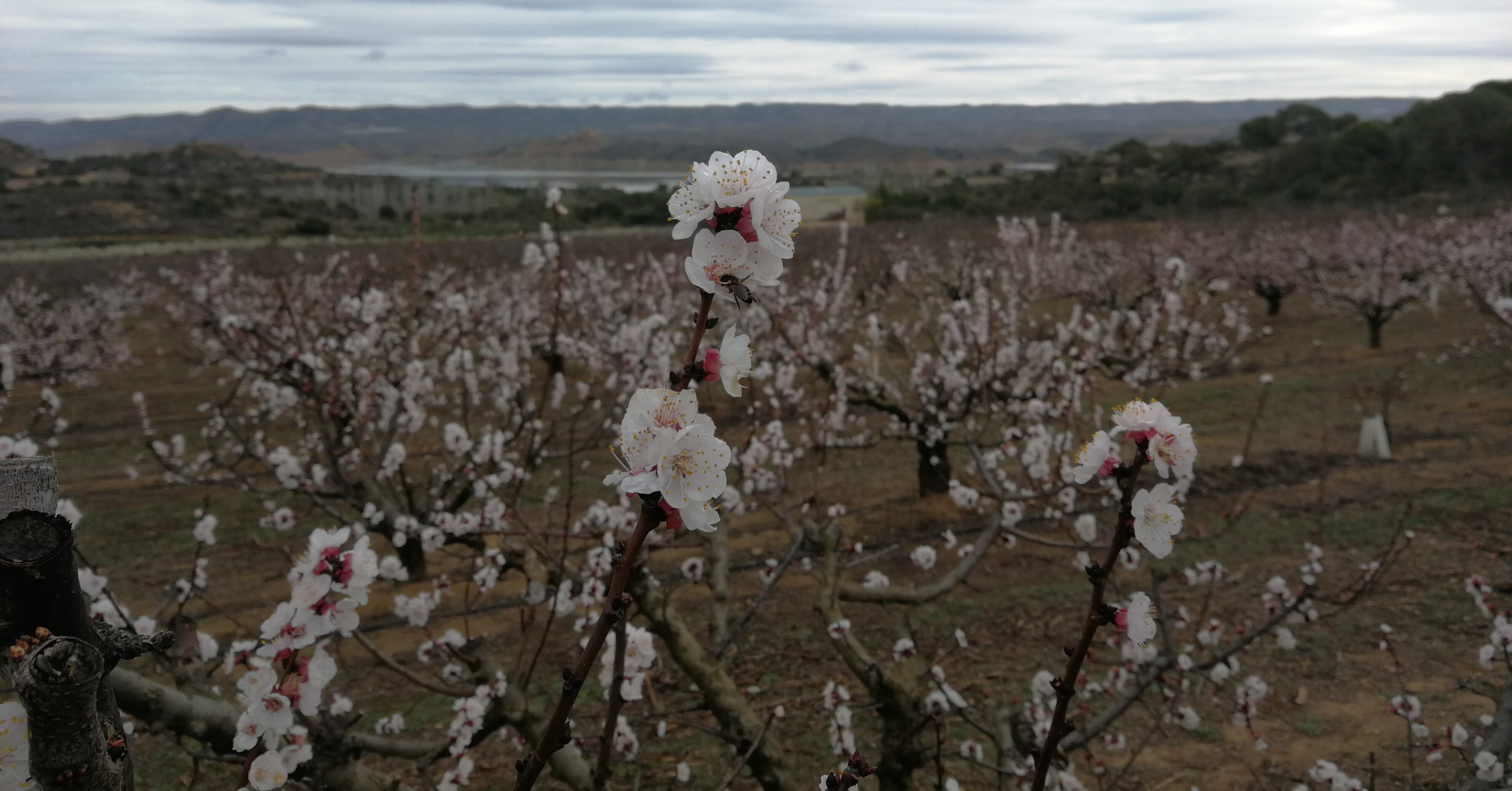
- This project has studied the adaptation of different species and fruit varieties with different cold needs in three climatological scenarios: the subtropical coast of Malaga, Zaragoza, with a temperate and cold climate, and Badajoz, with an intermediate climate.
- This information has helped to predict the negative impacts of climate change on fruit production and to raise awareness of this problem and the tools to adapt to both farmers and society in general.
Line of action:
Drivers of biodiversity lossStatus:
FinalizadoExecution date:
2023End date:
2025Total budget:
186.450,00 €Amount of aid from the Biodiversity Foundation:
149.160,00 €The general objective is to study the adaptation of fruit varieties to increased temperatures during the winter to reduce the impact of climate change on fruit production. The project will operate in three climatological scenarios: the subtropical Malaga coast, Zaragoza, with a temperate and cold climate, and Badajoz, with an intermediate climate.
Among its specific goals are:
- Phenological characterization of different varieties of fruit trees (relationship between climatic factors and the cycles of living beings).
- Determination of agroclimatic requirements for flowering.
- Prediction of the adaptability of the studied species to future temperature conditions in the context of global warming.
- Phenological characterization of eight varieties of the genus Prunus (two varieties of four species: peach, apricot, plum and cherry).
- Phenological characterization of 14 Pawpaw varieties.
- Gene expression during dormancy under different climatic conditions.
- Determination of the dormancy period of eight varieties of the genus Prunus (two varieties of four species: peach, apricot, plum and cherry).
- Experimental determination of the dormancy period of 14 Pawpaw varieties.
- Quantification of cold and heat and evolution of winter temperatures in the past, present and future.
- Analysis of agroclimatic parameters in the past and in the future.
- Potential adaptation of varieties to future climatic conditions.
- It has allowed significant progress in the knowledge of phenology, agroclimatic requirements and the adaptation of stone fruit trees and Pawpaw in different climatic contexts in Spain, which has shown that climate change has a direct impact on phenology and viability.
- The most relevant results of the project include the generation of Solid and relevant knowledge on the phenology of stone fruit trees (Prunus) in three climate scenarios for agricultural planning; the achievement of scientific advances for the Genetic improvement and varietal selection by identifying key genes in the regulation of dormancy; the quantification of agroclimatic parameters (cold, heat and frost risk) that show clear trends towards cold reduction, heat increase and progressive disappearance of frost; and the Evaluation of the potential adaptation of stone fruit varieties, which points out that, by the end of the century and under scenarios of high emissions, many will no longer meet their cold requirements, and only some specific ones, such as the peach tree ‘Alisio 20’, will have a more stable behaviour.
- Different actions have been carried out for the transfer of knowledge, such as scientific communications at national and international conferences, informative conferences and presentation of results to institutional bodies, consolidating the scientific and sectoral impact of the project.


Adaptation of fruit varieties to increased winter temperatures to reduce the impact of climate change on fruit production (AdapFrutCC).

 back to search