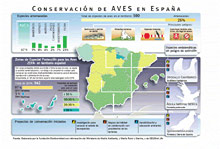


Spain is one of the countries in Europe with the largest number of bird species. Every year thousands of tourists who love ornithology visit our territory with the sole purpose of bird watching, also contributing to generate wealth and employment in rural areas and protected natural areas. To give an example, three quarters of the world’s bustard population and half of the planet’s little bustard are found in Spain. The Iberian imperial eagle or the Cantabrian capercaillie can hardly be seen anywhere else in the world, and another 13 species are of priority conservation and, in many cases, threatened with extinction: five of them (four endemic) are found in the Canary Islands.
On World Bird Day, the Biodiversity Foundation, a public foundation of the Government of Spain, under the Ministry of the Environment, Rural and Marine Affairs, wants to highlight the ornithological richness of our country and highlight the importance of birds for the balance of ecosystems and as generators of wealth.
So far, a total of 580 different species of birds have been counted in Spain, of which 363 would be common (those whose presence is more or less regular, either during the breeding season, migratory passages or wintering, either throughout the year) and the rest occasional.
Of these, a quarter are threatened or in danger of extinction according to the Red Book of Birds published by SEO/BirdLife in 2004, which represents almost half (45%) of all species in our country.
The destruction and loss of habitat is the greatest threat to birds, although there are other risk factors such as human disturbance (including leisure activities, uncontrolled hiking or motorized traffic on roads); changes in the agricultural environment (intensive crops or abandoned fields); or introduced species, which compete with and prey on non-native species. Other threats are caused by illegal hunting; electrocution and collision with power lines and wind turbines and the great drama of the illegal use of poison.