


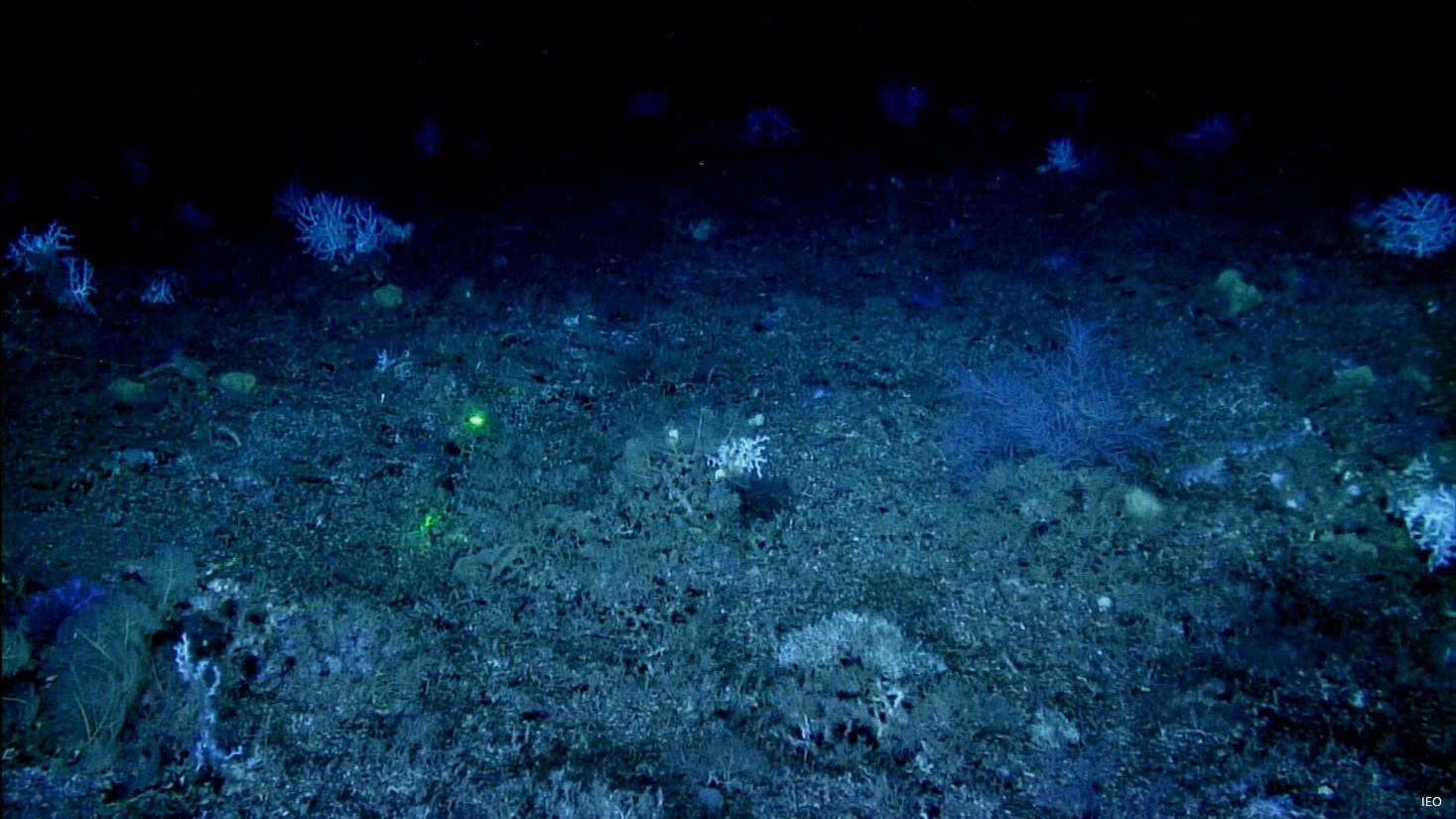


Due to the significant presence of methane in the area, an element that limits survival conditions, it was not expected that such a large amount of life would be found in the waters of the Gulf of Cadiz. Thanks to the LIFE+ INDEMARES project, coordinated by the Biodiversity Foundation of the Ministry of Agriculture, Food and the Environment, it has been discovered that, far from what was expected, there are extreme and biosynthetic environments in which there is a great biodiversity that was unknown until now.
In the deep depths of the Gulf of Cadiz, between 800 and 1200 metres, there are emanations of fluids at low temperatures saturated in methane, which build the so-called mud volcanoes, which are home to a great diversity of reliefs and habitats of extraordinary ecological interest.
From all the analysed, the natural and environmental uniqueness of the zone of expulsion of fluids saturated in methane gas, which is characterized by the abundant presence of mud volcanoes, seems unquestionable. This uniqueness lies in the fact that it hosts unusual geomorphological structures (pockmarks and mud volcanoes), and has the presence of rare species (such as molluscs and polychaetes linked to fluid emissions), as well as the very remarkable fact that it has habitats made up of cold-water coralss, of great ecological importance. For the life cycles of different species, the relevance of the identified and catalogued habitats is evident, since a large number of commercial species have important populations with recruitment in different areas of the mud volcano field, such as Norway lobster and hake.
The Gulf of Cadiz is located in the migratory corridor between the Atlantic and the Mediterranean, constituting an almost obligatory passage area for many species and being an important area for different faunal groups such as cetaceans, turtles and seabirds.
The fauna linked to mud volcanoes and adjacent seabeds includes about twenty species that are included in national and international conservation lists, such as the Spanish Catalogue of Endangered Species or the OSPAR Convention. The presence of slow-growing and highly fragile species, which also build habitats, such as cold-water corals, black corals or bamboo corals, justify the ecological and natural importance of the area.
In this way, with the proposal of Site of Community Importance (SCI) at the European level, an area of more than 310,000 hectares of high ecological value is protected, thanks to the results of the LIFE+ INDEMARES project.


