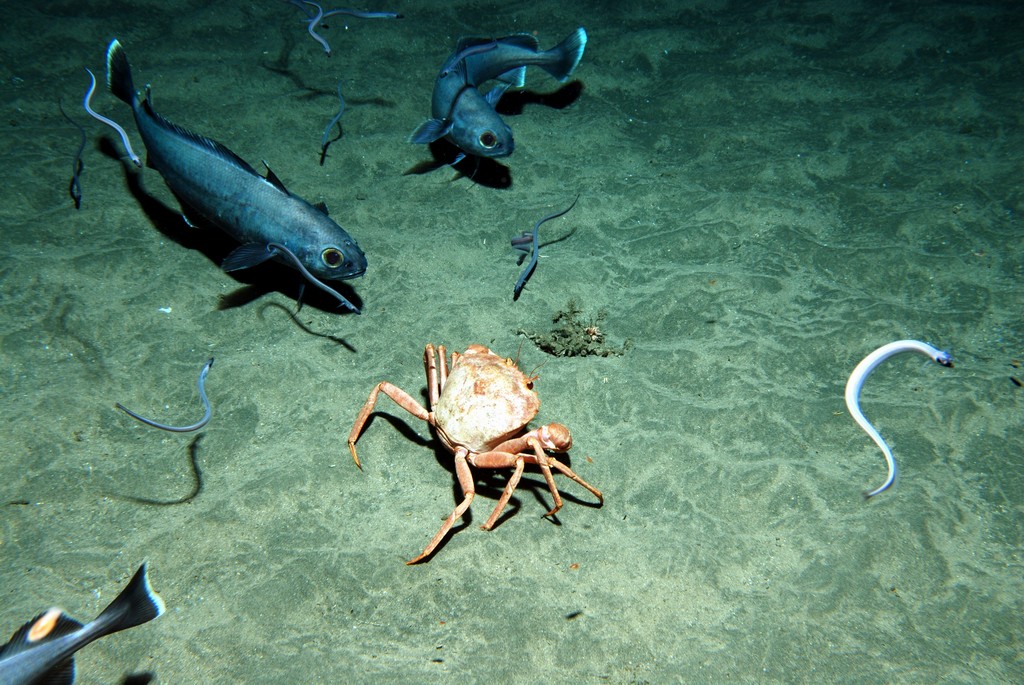


The Avilés canyon, together with the canyons of El Corviro and La Gaviera, make up an important system of submarine canyons located north of the Asturian coast. The biodiversity in this area is very high and more than 1,300 species have been inventoried to date on the seabed, some of them very vulnerable, such as corals, sponges and deep-sea sharks.
In the area, well-structured reefs have been identified and mapped by the corals Lophelia pertusa and Madrepora oculata, habitats protected by the European Directive present in specific areas of the head of the Avilés canyon. Likewise, the high biological productivity associated with the canyon system is responsible for the existence of an abundant and varied fishing fleet in the area.
During the study of the area, it has been concluded that the causes that cause the death of coral reefs could be related to climate changes, changes in the direction of currents or sedimentation processes generated by fishing trawling that end up suffocating corals.
The commitment of the future management plans that may be defined in the area will be responsible for achieving the delicate balance between a correct and lasting exploitation of the fishery resources of the area, in line with the essential protection of vulnerable habitats and species that guarantee the health of this ecosystem. It is a great challenge in which all the sectors involved are in line to bring it to fruition.
With the proposal of Site of Community Importance (SCI) at the European level, an area of more than 339,000 hectares of high ecological value is protected thanks to the results of the LIFE+ INDEMARES project.