


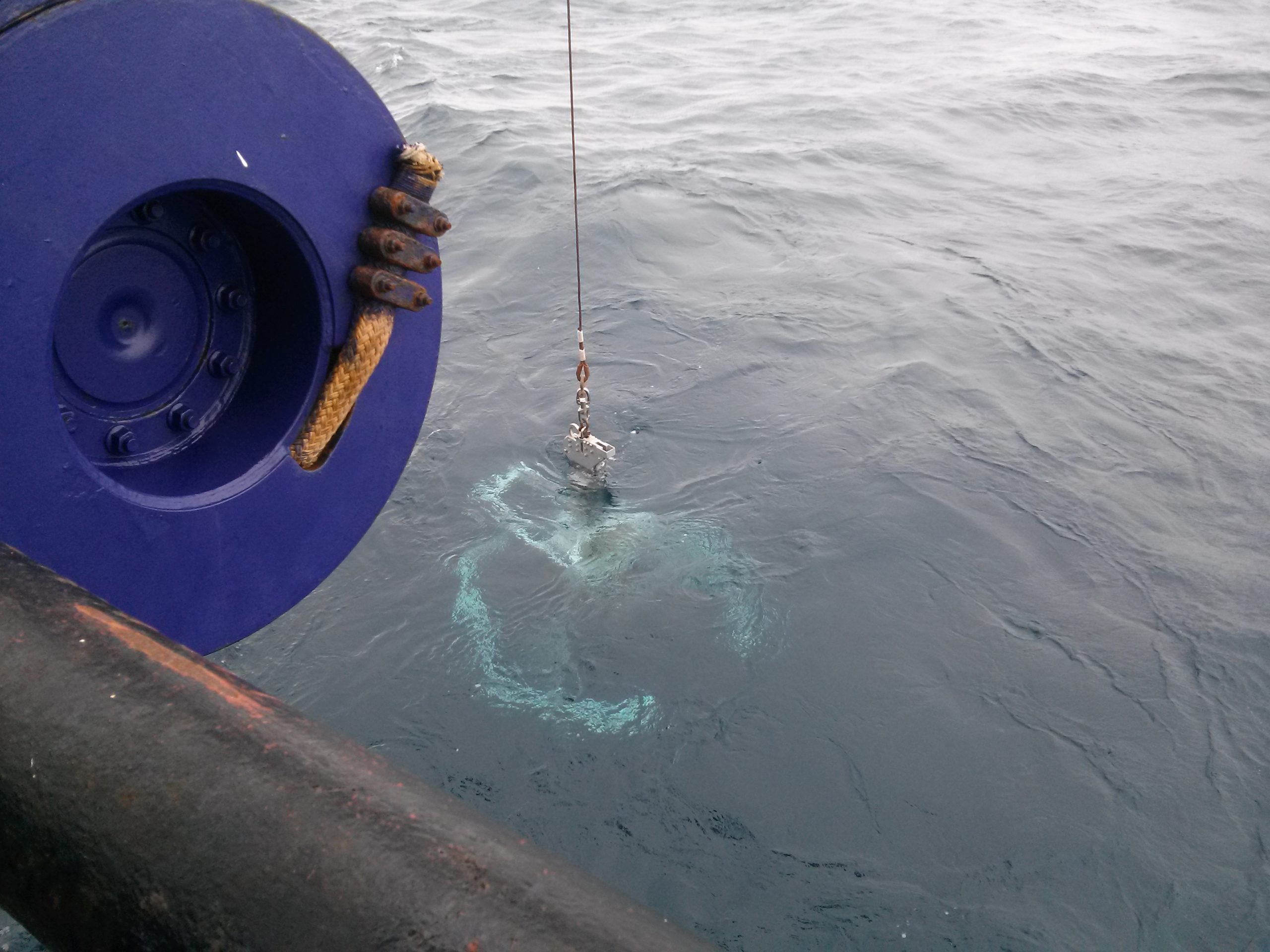


The information obtained will improve the knowledge of the habitats and species of interest that this area hosts in order to evaluate, if appropriate, its declaration as a Site of Community Importance (SCI).
A new oceanographic campaign begins today on the seabed of Murcia and south of Alicante. The information obtained will improve the knowledge of the habitats and species of interest that this area hosts in order to evaluate, if appropriate, its declaration as a Site of Community Importance (SCI).
Specifically, researchers from the IEO and the University of Alicante will study the underwater canyons of the Escarpe de Mazarrón located approximately between Cabo de Palos and Cabo Cope as far as Cape Cervera, as well as the Seco de Palos, a high seamount mountain whose summit is about 180 m from the surface and on its east face reaches a difference in altitude of 1,100 meters.
This expedition will also prospect the field of pockmarks to the north of the Seco de Palos. These Deep depressions in marine sediment are generated by fluid leaks and can reach a diameter of hundreds of meters. Those in this area appear to be dormant but may play an important role as ‘traps’ for organic matter.
This campaign, framed in the LIFE INTEMARES project, will complete the information collected in 2018 in the same study area, where scientists from the IEO’s Marine Geosciences Group (GEMAR) collected data that have made it possible to generate cartographies of the area with an unprecedented level of detail.
In this second expedition, the main objective is to detect vulnerable habitats and species within the study area. To this end, rocky reefs with possible fields of white and yellow corals, gorgonian, sponge and/or soft coral forests, and other types of seabed will be prospected in localities likely to host species vulnerable to human activity and that require protection.
To this end, the following shall be used: non-invasive techniques, such as the recording of photographs and video, although samples will occasionally be obtained that allow the precise identification of the species collected in the images. This campaign also has GEMAR researchers who will help pinpoint the sampling stations most likely to find vulnerable species.
The campaign will end on August 27 in the port of Cartagena and is part of the action of the LIFE INTEMARES project aimed at improving knowledge for the declaration of new marine protected areas within the Natura 2000 Network, the world’s largest network of protected areas.
The Biodiversity Foundation of the Ministry for Ecological Transition coordinates this project, in which the General Directorate of Sustainability of the Coast and the Sea of the same ministry, the IEO, the Spanish Fisheries Confederation, SEO/BirdLife and WWF-Spain participate as partners. It has the financial contribution of the European Union’s LIFE programme, among other sources of funding.
Do you want to know more about the oceanographic campaigns of LIFE IP INTEMARES?
You can follow our twitter @LifeIntemares and through the hashtag #Intemares find out all the news and marine news. You can also consult the intemares.es website, where you will find all the information about the project.
