




From 2 to 3 October, the IV Annual Seminar on marine litter was held in Seville, with the support of the LIFE INTEMARES project, within the framework of which opportunities and lines of work have been identified to address this problem related to sea and coastal tourism.
The General Directorate of Sustainability of the Coast and the Sea of the Ministry for Ecological Transition (MITECO) has shared, with the tourism sector and local administrations, joint solutions to address the problem of marine litter. The meeting, in which opportunities and lines of work have been identified, took place at the IV Annual Seminar on marine litter, held on October 2 and 3.
It is estimated that 26% of the marine litter found on the Spanish coast comes from the tourist use of our coasts, according to data from the latest report of the Marine Litter Monitoring Program on Beaches, prepared by MITECO. Among the most frequent objects on our beaches are plastics, which already account for 71.5% of the total waste found.
The seminar brought together more than 60 professionals from the nautical, recreational fishing, diving, hotel and catering sectors, as well as local administrations, conservation organisations, universities and technology centres, who met for two days at the headquarters of the Biodiversity Foundation in Seville.
During the seminar, the participants discussed the problem of marine litter and the search for possible solutions, and analysed experiences that can improve the knowledge of professionals working in the sea and coastal tourism sector. This meeting is part of the program of permanent seminars of the National Center for Environmental Education (CENEAM) and has the support of the LIFE INTEMARES project, coordinated by the Biodiversity Foundation of the Ministry for Ecological Transition. The seminar is also part of the programme of measures of the marine strategies, one of the main instruments for planning the marine environment.
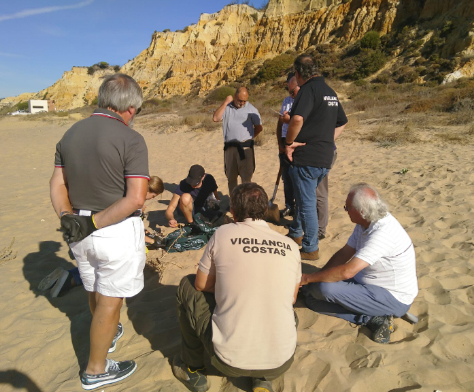
During the opening day, the importance of working together with one of the most important sectors for the Spanish economy in the fight against this problem was highlighted. About twenty innovative experiences were shared and the necessary actions to develop them were agreed. In addition, a citizen science demonstration action took place on the beach of the Parador in Mazagon.
The seminar concluded with a waste collection and data collection activity on Castilla beach, in Huelva, as well as a session to share and propose aspects of local improvement and innovation in the fight against marine litter.
The Biodiversity Foundation of the Ministry for Ecological Transition coordinates LIFE INTEMARES, a project that aims to achieve effective and coherent management of our marine Natura 2000 Network. The General Directorate of Sustainability of the Coast and the Sea of the same ministry, the IEO, the Spanish Fisheries Confederation, SEO/BirdLife and WWF-Spain participate as partners. It has the financial contribution of the European Union’s LIFE programme, among other sources of funding.
Do you want to know more about the LIFE IP INTEMARES project?
You can follow our twitter @LifeIntemares and through the hashtag #Intemares find out all the news and marine news. You can also check the website intemares.es, where you will find all the information about the project.
