


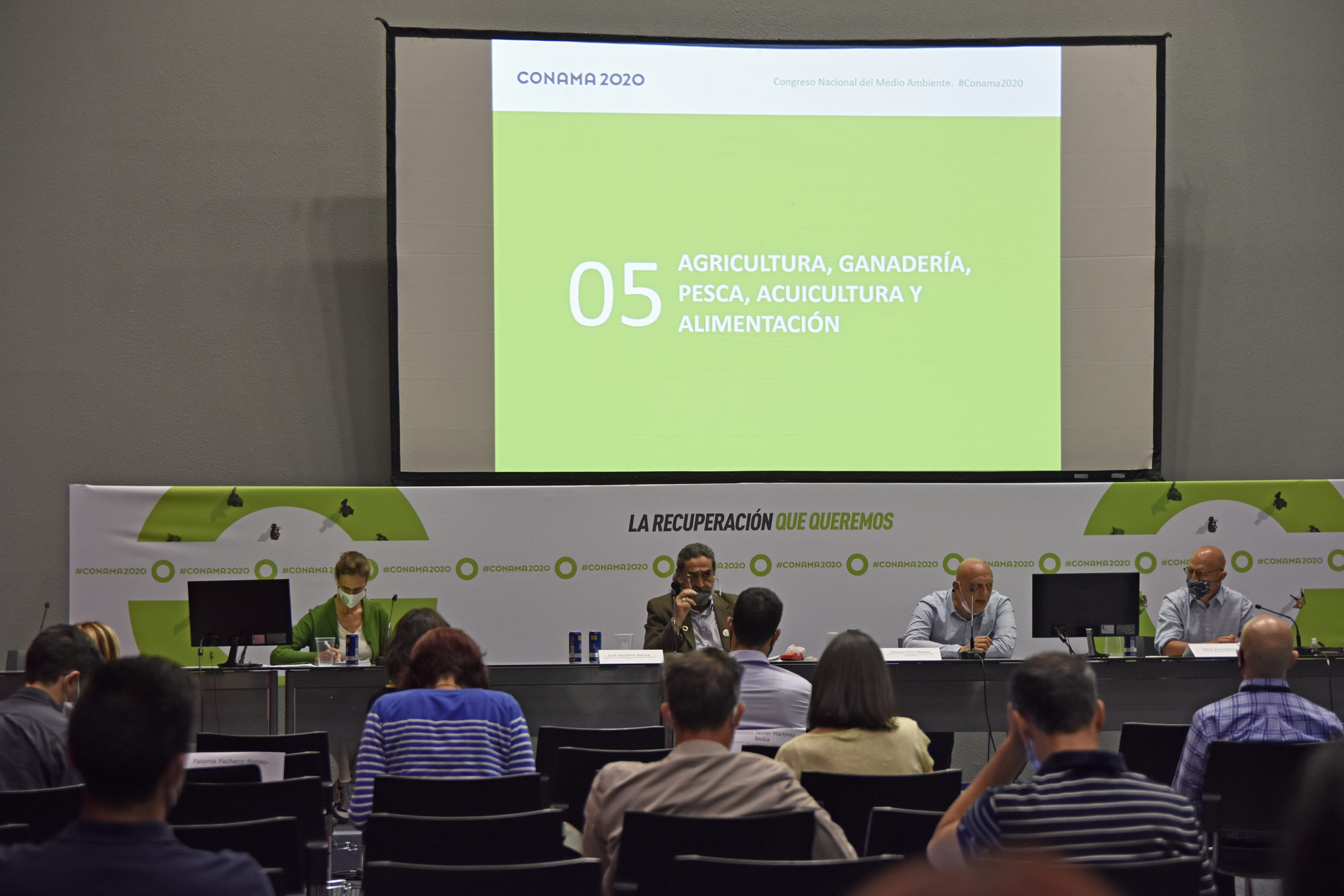


We have presented the methodology “Risk analysis of the marine protected areas of the Natura 2000 Network against climate change” within the framework of the National Congress of the Environment (CONAMA).
We have presented the methodology “Risk analysis of the marine protected areas of the Natura 2000 Network against climate change” within the framework of the National Congress of the Environment (CONAMA).
This work, carried out by the Institute of Environmental Hydraulics of the University of Cantabria (IHCantabria), is part of the collaboration agreement between the Spanish Office for Climate Change and the Biodiversity Foundation of the Ministry for Ecological Transition and the Demographic Challenge, for initiatives in the field of adaptation to climate change and is a contribution to the LIFE INTEMARES project.
The report presents a methodology for analysing the risk of climate change in marine protected areas. It has been developed through a participatory process with specialists and managers of marine protected areas and aims to guide managers in the implementation of procedures for assessing the risk associated with climate change in marine protected areas, which can be adapted to the needs and characteristics of each protected area.
In addition, this methodology is applicable to the marine Natura 2000 Network, as well as to other protection figures, such as Marine Protected Areas. The final methodology designed is based on the model and conceptual framework of the Intergovernmental Panel on Climate Change (IPCC).
ADAPTATION MEASURES IN MARINE PROTECTED AREAS
Assessing the risk to climate change is an essential preliminary step in designing and implementing adaptation measures in marine protected areas, adapted to the characteristics of each area and minimising the risks to climate change.
In this sense, within the framework of the LIFE INTEMARES project, the methodology will be applied in different marine areas belonging to the Natura 2000 Network of the five Spanish marine demarcations. A set of criteria have been defined for the selection of marine protected areas as pilot areas, with the aim of obtaining the greatest possible representativeness from the biogeographical and ecological point of view and from the point of view of habitat and species conservation objectives.
The study highlights the importance of guaranteeing the participation of all administrations and key actors, such as the scientific community, NGOs, sea users and socio-economic sectors in the process of defining, prioritizing, designing and implementing adaptation measures from the outset.
From the point of view of the planning of marine protected areas, the objective is that these adaptation measures designed are incorporated into the management plans, thus moving towards an effective management of marine protected areas that includes adaptation to climate change.
EFFECTIVE MANAGEMENT OF PROTECTED AREAS
The LIFE IP INTEMARES project, coordinated by the Biodiversity Foundation of the Ministry for the Ecological Transition and the Demographic Challenge, is moving towards a change in the effective management model of the marine areas of the Natura 2000 Network, with the active participation of the sectors involved and with research as basic tools for decision-making.
The ministry itself, through the Directorate-General for Biodiversity, Forests and Desertification; the Regional Government of Andalusia, through the Ministry of Agriculture, Livestock, Fisheries and Sustainable Development, as well as the Environment and Water Agency; the Spanish Institute of Oceanography; AZTI; the University of Alicante; the Polytechnic University of Valencia; the Spanish Fisheries Confederation, SEO/BirdLife and WWF‐Spain. It has the financial contribution of the LIFE Program of the European Union.
