


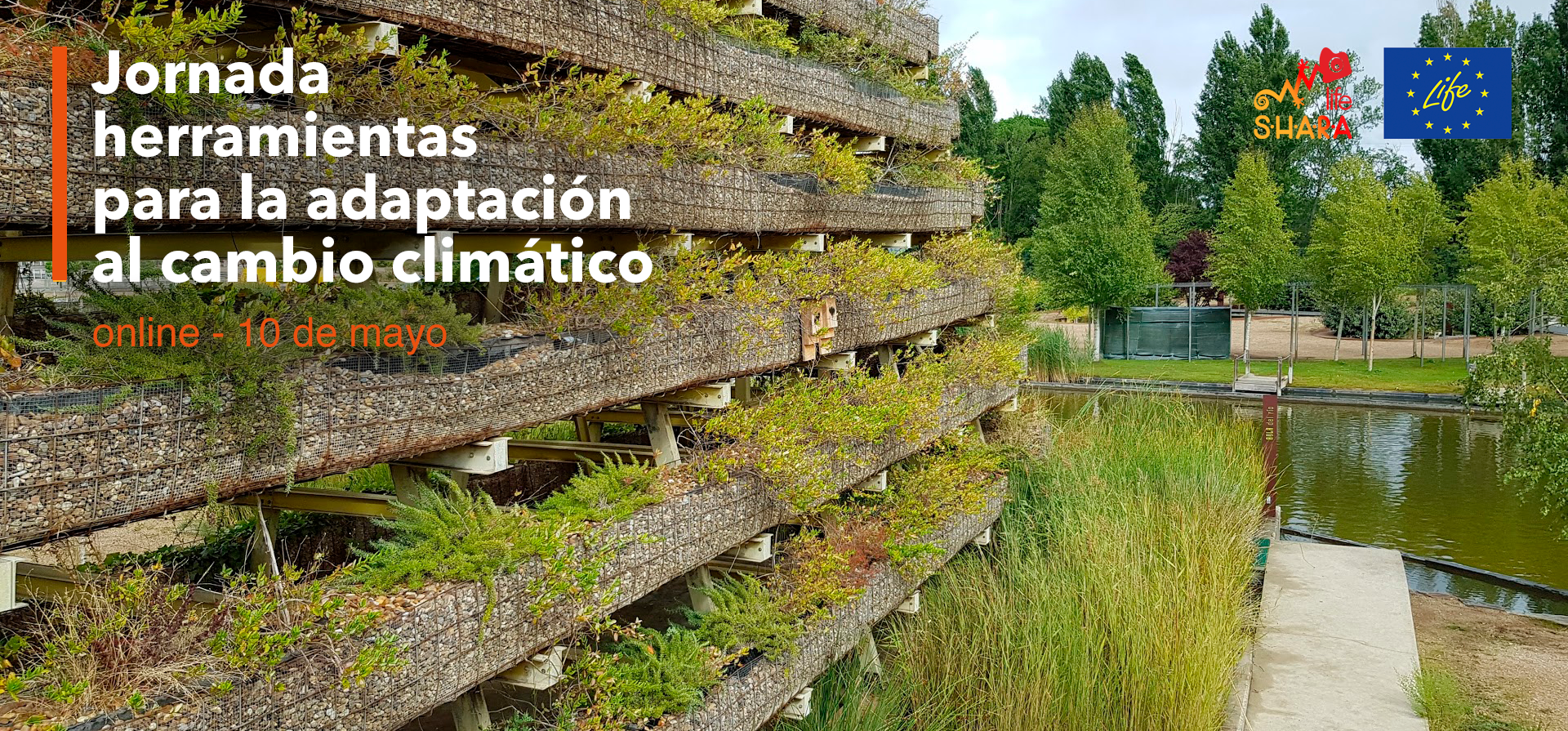


This is the second session of the four that will be held over the course of the next few months to promote tools for adaptation to climate change with a regional perspective and that will end with a conference at the national level.
A telematic conference on tools for adaptation to climate change with a regional focus was held today and focused on the Canary Islands. Organised by the Biodiversity Foundation and the Spanish Office for Climate Change of the Ministry for Ecological Transition and the Demographic Challenge, this is the second session of the four that will be held over the course of the next few months within the framework of LIFE SHARA to promote tools for adaptation to climate change with a regional perspective and which will end with a conference at the national level.
The conference was inaugurated by the director of the Spanish Office for Climate Change (OECC), Valvanera Ulargui; the director of the Biodiversity Foundation, Elena Pita; and José Antonio Valbuena, Minister of Ecological Transition, Fight against Climate Change and Territorial Planning of the Government of the Canary Islands.
The director of the OECC stressed that “the PNACC is going to provide a response to society, focusing on protecting the most vulnerable, women and children, and the most vulnerable territories” and highlighted “the profitability of well-planned adaptation policies and measures, because they not only help to reduce risks, but also to reduce risks. but they generate economic returns.”
The director of the Biodiversity Foundation remarked that “climate change is a driver of biodiversity loss and nature is strongly impacted by this phenomenon although, at the same time, it is an important provider of solutions”, and focused on “nature-based solutions as a tool to address global challenges”.
Finally, the representative of the Government of the Canary Islands drew attention to “the risk position of the island territories in the face of climate change and how the Canary Islands are working on different laws and instruments of climate action”.
During the session, which was attended by more than90 participants from different fields, the international context, responses to climate change, impacts, risks and adaptation measures, and the National Plan for Adaptation to Climate Change 2021-2030 were presented. Different tools of the AdapteCCa Platform have also been presented, such as the climate change scenario viewer, which highlights its applicability to adaptation plans at different levels, as it allows different projections and scenarios on the impacts of climate change on aspects such as temperature variability or the amount of rainfall, that can be included in these resilience strategies.
All these tools make it possible to create an inspiring climate for the development and creation of new preventive or corrective activities against the effects of climate change and have been complemented by the presentation of three adaptation initiatives developed in the Canary Islands.
THREE ADAPTATION PROJECTS IN THE CANARY ISLANDS
Javier López, senior lecturer at IHCantabria-University of Cantabria, has presented the LIFE-Garachico project, a climate change adaptation initiative co-financed by the LIFE Programme with respect to coastal flooding due to climate change through flexible strategies in urban areas of Macaronesia, reducing the level of flood risk. The main objective of this project, which has not yet started and is led by the Canary Islands government, is to develop adaptation strategies in island urban environments in which the assumption of higher levels of risk and specific interventions at the urban level prevail instead of large infrastructures, in order to increase the resilience of coastal urban environments. It is a demonstrative project, transferable to the entire Macaronesian coastline and with an innovative component through citizen participation in coastal management and the inclusion of the insurance sector.
On the other hand, Jesús González, senior technician at GESPLAN, and Aridane González, from the University of Las Palmas de Gran Canaria, have explained a project of joint planning, monitoring and observation, improvement of knowledge and awareness of risks and threats of climate change in Macaronesia: PLANCLIMAC, which will help to know the evolution of the climate in advance, as well as the continuous monitoring of natural and territorial resources through multi-observation systems and diagnostic processes. PLANCLIMAC, in which the governments of the Canary Islands, the Azores, Madeira and Cape Verde are involved, proposes the constitution of the Macaronesian Climate Change Observatory and the establishment of relations with entities with similar purposes.
To end the day, Nicolás Ferrer, from Cartográfica de Canarias S.A. (GRAFCAN), shared the progress of PIMA Adapts coasts in the Canary Islands, a project of the Canary Islands government that belongs to the National Plan for Adaptation to Climate Change and is developed by GRAFCAN. It is an initiative to assess the impacts of climate change on the coasts of the Canary Islands, taking into account the specificities of the island territories. The project focuses on the study of sea level rise and water temperature, as well as erosion, and the consequences that these threats will have on the Canary Islands coast, taking into account socio-economic aspects.
ABOUT LIFE SHARA
LIFE SHARA “Awareness and knowledge for adaptation to climate change” is a project of the Ministry for the Ecological Transition and the Demographic Challenge, through the Biodiversity Foundation, the Spanish Office for Climate Change, the Autonomous Agency for National Parks and the State Meteorological Agency, and of which the Portuguese Environment Agency is also a member. The project is co-funded by the European Commission through the LIFE programme.
The LIFE SHARA project aims to collaborate in the construction of a society better adapted to climate change, cooperating with all the actors involved, generating knowledge and increasing social awareness. It does so through platforms such as AdapteCCa, which has, among other tools, a module of practical cases, an image bank with more than 440 photographs or a viewer of climate change scenarios that, incorporated into management processes, can be very useful to address adaptation to climate change in Spain.
Do you want to know more about the LIFE SHARA project? Here you have all the information.
