


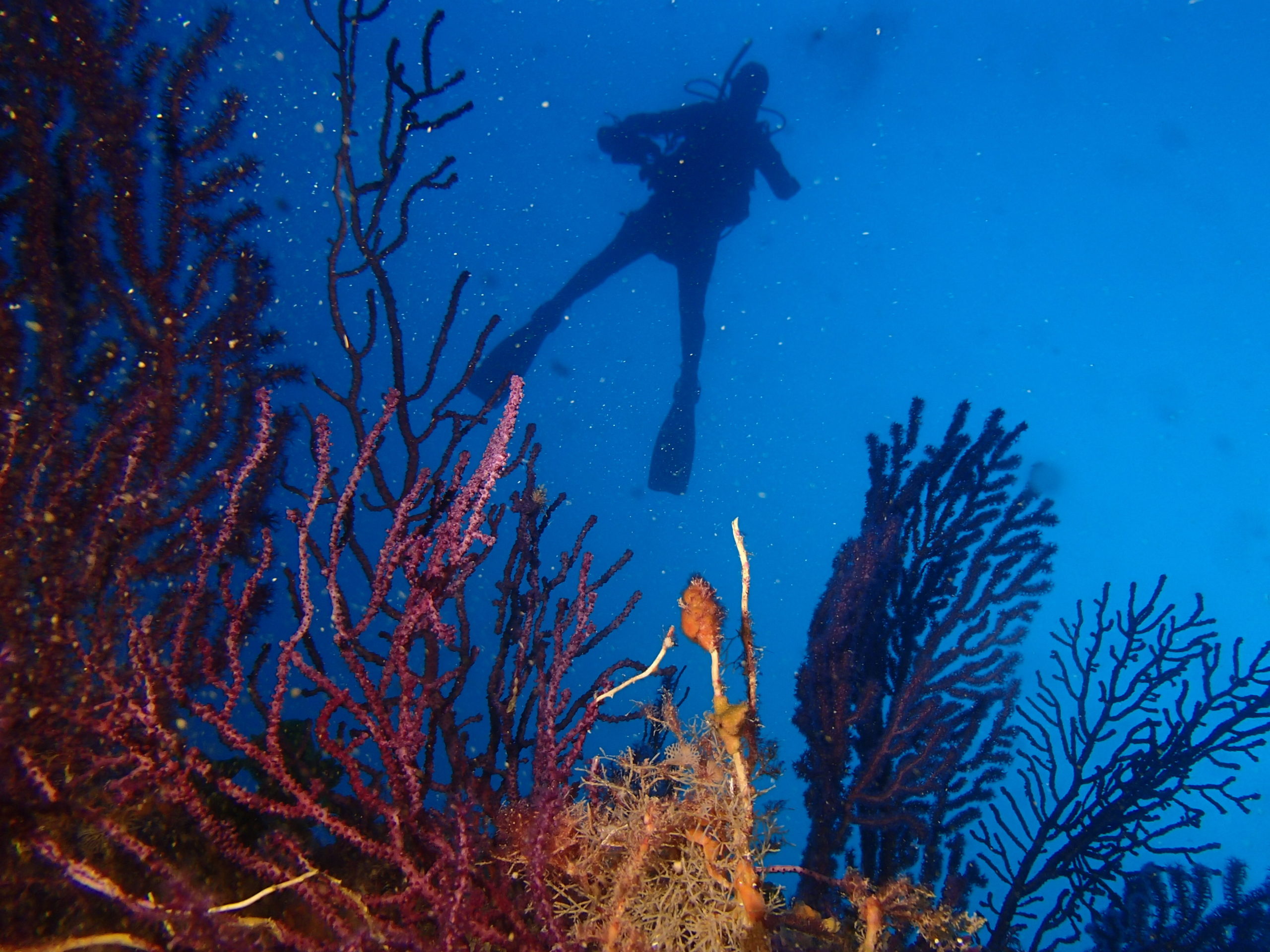


The LIFE INTEMARES project, coordinated by the Biodiversity Foundation of the Ministry for the Ecological Transition and the Demographic Challenge, has concluded the oceanographic campaign aimed at increasing knowledge of marine species and habitats in the depths of the Columbretes Islands.
The LIFE INTEMARES project, coordinated by the Biodiversity Foundation of the Ministry for Ecological Transition and the Demographic Challenge, has concluded the oceanographic campaign aimed at increasing knowledge of marine species and habitats in the depths of the Columbretes Islands, located about 60 km east of Castellón.
A research team from the Spanish Institute of Oceanography, a partner in the project, has studied in detail the species that inhabit depths close to 100 metres with the aim of improving knowledge of this marine space, which is part of two areas declared a Site of Community Importance (SCI), and thus obtain scientific information that will serve to adapt management plans.
Specifically, they have analysed the spatial coverage and the types of deep habitats of the archipelago, which allows them to complete and improve the information obtained in the first expedition, about a year ago.
Among the habitats studied are areas with gaseous upwellings, a unique hydrothermal complex associated with the presence of an algae endemic to the western Mediterranean, Laminaria rodriguezii, common at depths below 70 meters but exceptionally at a depth of 40 meters in Columbretes. Gorgonians and maërl (coral algae) bottoms have also been observed in a very good state of conservation.
With all the information collected, an extensive and accurate bionomic mapping will be carried out, in which the habitats and species of the area will be represented on a map and will be the basis on which the management plans in this area will be drawn up.
SCIENCE-BASED MANAGEMENT
Science is one of the basic pillars of the LIFE INTEMARES project to move towards the effective management of marine protected areas. With this objective, since the beginning of the project in 2017, oceanographic campaigns have been carried out to find out about the habitats and species present in new spaces for their possible declaration as Natura 2000 Network spaces. In this area, Cabo Tiñoso in Murcia, Cap Bretón in the Basque Country and the seamounts of Mallorca have been explored.
LIFE INTEMARES
The LIFE INTEMARES project is moving towards the objective of achieving effective management of the marine areas of the Natura 2000 Network, with the active participation of the sectors involved and with research as the basic tools.
The Biodiversity Foundation of MITECO coordinates the project. The ministry itself, through the Directorate-General for Biodiversity, Forests and Desertification; the Regional Government of Andalusia, through the Ministry of Agriculture, Livestock, Fisheries and Sustainable Development, as well as the Environment and Water Agency; the Spanish Institute of Oceanography; AZTI; the University of Alicante; the Polytechnic University of Valencia; the Spanish Fisheries Confederation, SEO/BirdLife and WWF-Spain. It is supported by the LIFE Program of the European Union.
