


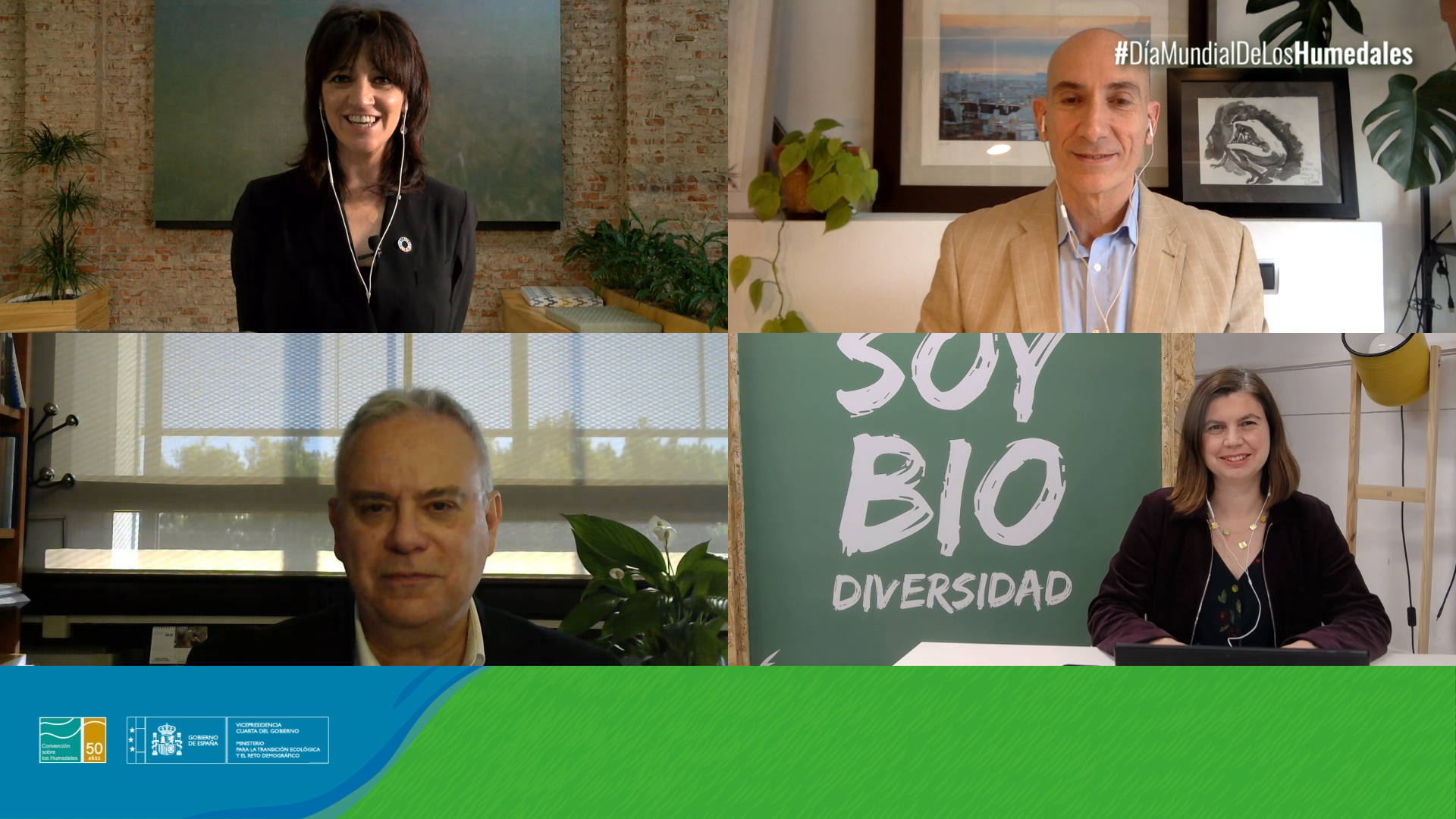


The Vice-President and Minister for the Ecological Transition and the Demographic Challenge, Teresa Ribera, has presented, on the occasion of World Wetlands Day, the Government’s commitment to promote the recovery of wetlands. Spain has set itself the goal of recovering 20,000 hectares of wetlands by 2030, which will complement the 18,000 hectares already restored in recent decades.
With 75 areas occupying more than 300,000 hectares, Spain is the third country with the most wetlands included in the Ramsar Convention, which this year celebrates its 50th anniversary, only behind the United Kingdom and Mexico, which demonstrates our country’s strong commitment to the conservation of these ecosystems and their restoration.
In 25 years, at least 18,000 hectares of wetlands have been recovered and important achievements have been made in its conservation, but great challenges remain and new challenges remain to reverse its loss and degradation. The Vice-President highlighted the Spanish Government’s firm will to take decisive action in the field of catering. “It is not only a matter of properly conserving wetlands, but of continuing to undertake the progressive restoration of all those who can recover the structure and functions lost by human action,” he explained.
To this end, the objective is to achieve the recovery of another 20,000 hectares of wetland, as well as the partial restoration of three of the largest Spanish wetlands lost in the past: Laguna de la Janda, Laguna de Antela and Mar de Campos.
This objective is aligned with European biodiversity policies. The EU’s 2030 Biodiversity Strategy specifies the obligation for European countries to improve at least 30% of the habitats and species in the worst state of conservation, including those in wetlands.
In turn, the Strategic Plan for the Conservation of Natural Heritage and Biodiversity and the update of the Strategic Plan for the conservation and sustainable use of wetlands, both in the drafting phase, plan to include objectives related to the management, conservation and restoration of wetlands.
To achieve these objectives, funds from the Recovery, Transformation and Resilience Plan will be channelled through the Directorate-General for Biodiversity, Forests and Desertification, which will be used for the execution of projects of this type presented by the regional administrations, as well as through the calls for aid from the Biodiversity Foundation (MITECO).
Elena Pita, its director, highlighted during the event the importance of working in coordination and promoting alliances to integrate the actors in this task and achieve success in the process of wetland recovery. Along these lines, he stressed “three key factors to face this challenge and promote action: management, financing and knowledge to introduce innovative solutions. The Foundation’s calls for aid in 2021 will be aligned with this objective and will support, as one of the priority lines, the recovery of wetlands”.
