


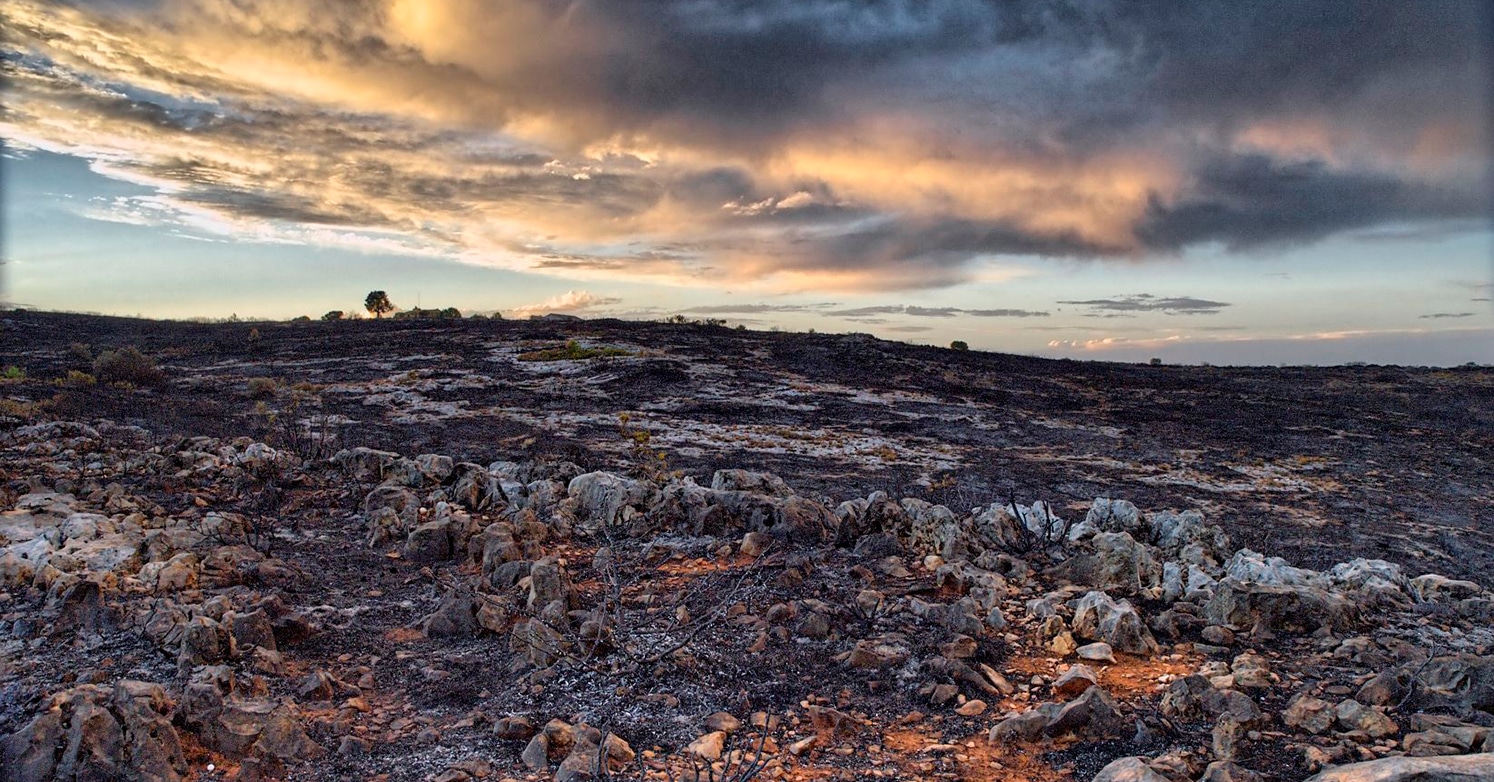


The Government, at the request of the Ministry for the Ecological Transition and the Demographic Challenge (MITECO), has approved the National Strategy to Combat Desertification (ENLD), thus updating the National Action Programme to Combat Desertification published in 2008
The Government, at the request of the Ministry for the Ecological Transition and the Demographic Challenge (MITECO), has approved the National Strategy to Combat Desertification (ENLD), thus updating the National Action Programme to Combat Desertification published in 2008.
This new Strategy ensures compliance with Spain’s commitments as part of the United Nations Convention to Combat Desertification (UNCCD), while establishing a framework for policies and initiatives to combat this threat at the national level, ensuring coordination between them and their effectiveness.
The general objective is to contribute to the conservation and improvement of the natural capital associated with the lands of the arid, semi-arid and dry sub-humid zones of Spain and to move towards neutrality in land degradation through the prevention and mitigation of desertification and the restoration of degraded areas.
Desertification and land degradation particularly affect Africa, but also Europe, particularly the Mediterranean region. 74% of the Spanish territory is located in arid, semi-arid or dry sub-humid lands and, therefore, susceptible to being affected by desertification processes.
The Strategy, in its diagnosis, identifies numerous drivers of desertification in Spain, including economic causes, such as the intensification of agriculture and livestock, and the overexploitation of water resources; social, such as the depopulation of rural areas and the abandonment of forest land; and environmental, such as climate change and forest fires.
Likewise, the impacts of desertification also entail economic, social and environmental costs: from the loss of soil productivity or the decrease in agricultural benefits to the aggravation of depopulation, the reduction of cultural heritage, the loss of biodiversity or the exacerbation of climate change.
The ENLD identifies five main scenarios affected by desertification in Spain: crops affected by erosion, irrigated areas affected by desertification, landscapes associated with unsustainable livestock intensification, abandoned agricultural land and forests with insufficient management.
Responding to the weaknesses and threats of the SWOT analysis carried out as part of the diagnosis, the document includes the proposal of numerous actions and measures to be carried out until 2030 around three axes: Territory, Institutional training and governance and Actions for the improvement of knowledge, transfer and participation of society.
These include the implementation of a plan for the restoration of land affected by desertification; the development of a network of pilot and demonstration projects to combat desertification; the implementation of a national soil inventory; the application of good practices in sustainable land management in the agricultural, forestry and water resources sector; the establishment of a National Council and Committee to Combat Desertification; the elaboration of a law on the conservation and sustainable use of soils; the preparation of an atlas of desertification in Spain; the establishment of a platform for consultation and exchange of information; the organization of participatory tables and workshops and the promotion and support of international initiatives within the scope of the United Nations Convention to Combat Desertification.
The implementation of the Strategy will be developed through two four-year National Action Programmes. The programmes will contain the specific actions to be carried out by the General State Administration within the framework of its competences during their validity. The first work programme will be approved within the first year after the approval of the ENLD and will cover the period 2023-2026, while the second programme is scheduled to be developed in the period 2027-2030.
CHALLENGE OF GLOBAL AND NATIONAL RELEVANCE
The Strategy has been drawn up in a participatory manner, with the collaboration of other ministries, the Autonomous Communities, scientific institutions and non-governmental organisations. Its publication takes place in a year in which desertification is having special global and national relevance. The fifteenth Conference of the Parties to the UNCCD took place in May in Abidjan , Côte d’Ivoire, and was attended by Spain’s Secretary of State for the Environment, Hugo Morán.
On the other hand, this year Spain has hosted the World Day to Combat Desertification and Drought and, together with the UNCCD secretariat, organized a commemorative event in Madrid on June 17, which was attended by the President of the Government, Pedro Sánchez; the Secretary General of the United Nations, António Guterres; the executive secretary of the UNCCD, Ibrahim Thiaw; the European Commissioner for the Environment, Oceans and Fisheries, Virginijus Sinkevičius; the president of COP15, Alain-Richard Donwahi; Vice President Teresa Ribera and environmental activist Patricia Kombo.
