


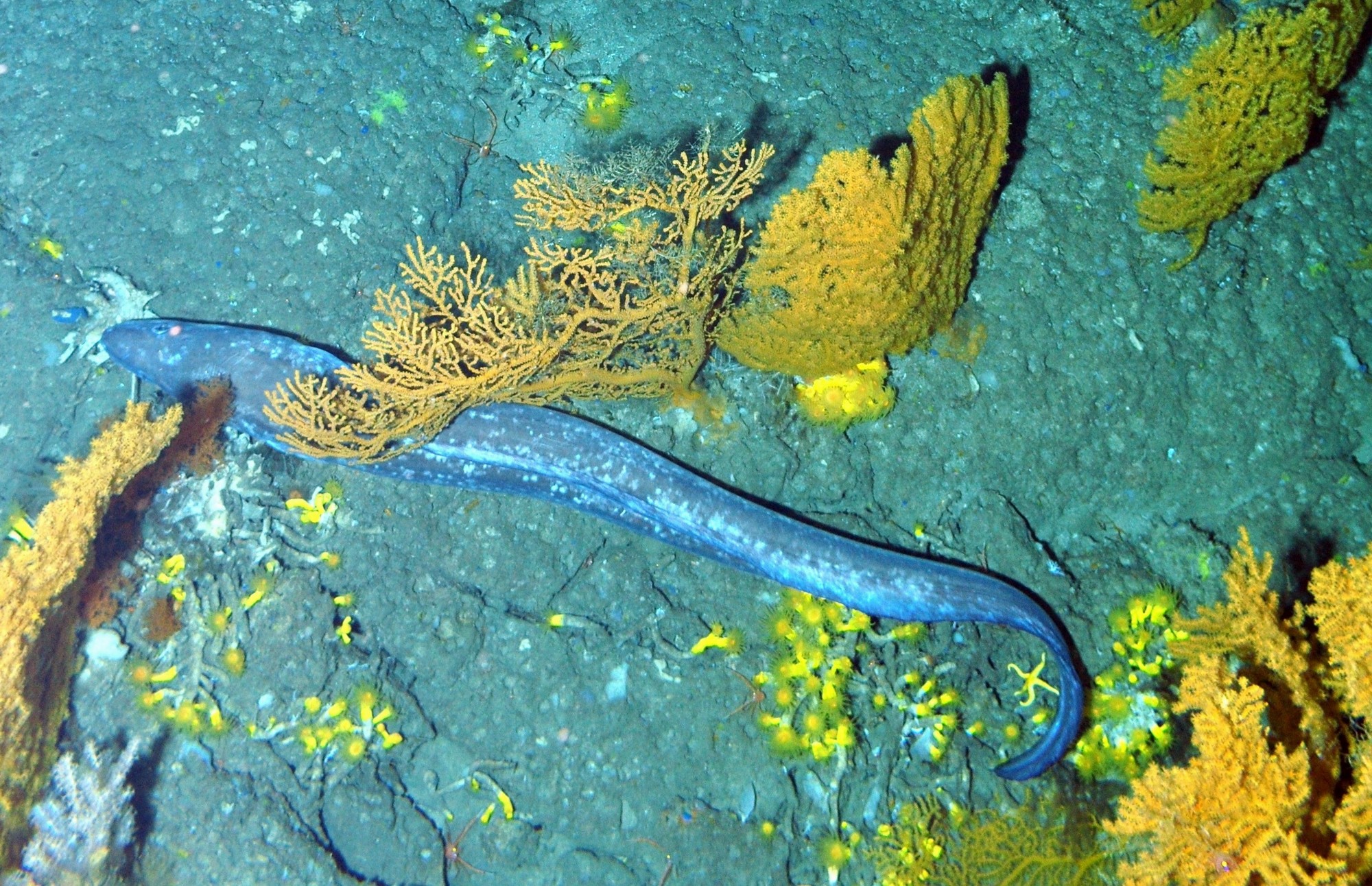


We have presented to the sectors and people who use the sea the measures included in the second management plan of the Marine Protected Area and Special Area of Conservation of “El Cachucho”, within the framework of the LIFE INTEMARES project, which we coordinate from the Biodiversity Foundation of the Ministry for Ecological Transition and the Demographic Challenge. It is one of the most naturally rich protected marine areas in our seas, located about 65 kilometres off the Asturian coast.
Science and participation have been the basis for the approval of the second management plan of this space. To this end, and also within the framework of LIFE INTEMARES, a participatory process in order to promote collaboration and effective participation of stakeholders in the decision-making of the Natura 2000 Network. The technical conference, held on Friday, is also part of this process and has served to publicize the main advances of the management plan, share the next steps in terms of the application of management measures and scientific monitoring of the space, and evaluate the effectiveness of the participatory process developed.
For its presentation, the meeting was attended by the General Directorate of Biodiversity, Forests and Desertification of the Ministry for Ecological Transition and the Demographic Challenge (MITECO); the General Directorate of Sustainable Fisheries and the General Directorate of Fisheries Management and Aquaculture of the Ministry of Agriculture, Fisheries and Food (MAPA); the Spanish Institute of Oceanography (IEO-CSIC); as well as the Federation of Fishermen’s Guilds of the Principality of Asturias (FECOPPAS).
CONSERVATION MEASURES
The second management plan, approved in 2021, updates the conservation measures to be carried out in this area declared a protected area in 2011, when its first management plan was approved in turn. The scientific knowledge obtained over the last decade through the campaigns and scientific studies of the Spanish Institute of Oceanography (IEO) has been the starting point and cornerstone for the development of the update of the management plan.
The new planning aims to improve the current management tool of the protected area to achieve the conservation of its natural values, thanks to a regulation of uses and activities to ensure their compatibility with the habitats and marine species present.
Likewise, this plan includes the expansion of the Marine Protected Area and the Special Area of Conservation “El Cachucho” by 26,714 hectares, so that the hectares that are part of the maximum protection zone amount to 261,664, an area closed to fisheries with gear that is in contact with the bottom.
To learn in detail about the different activities that are regulated from now on and the participatory process that has been carried out, an infographic and a complementary brochure have been published with all the information on the second management plan of “El Cachucho”.
SPACES FOR DIALOGUE
During the period of work for the preparation of this second management plan, and thanks to the implementation of a participatory process, more than 200 people and more than 50 entities from all sectors involved in the management and use of “El Cachucho” have been actively participated, including the professional fishing sector, the scientific community, public administrations and NGOs.
Thanks to this, it has been possible to know and collect proposals on how to improve management, facing the new challenges to make the development of socio-economic activities compatible in a sustainable way and seeking the conservation of ecosystems.
EFFECTIVE MANAGEMENT OF PROTECTED AREAS
The LIFE INTEMARES project is moving towards the objective of achieving effective management of the marine areas of the Natura 2000 Network, with the active participation of the sectors involved and with research as the basic tools.
The Biodiversity Foundation of the Ministry for Ecological Transition and the Demographic Challenge coordinates the project. The ministry itself, through the Directorate-General for Biodiversity, Forests and Desertification; the Regional Government of Andalusia, through the Ministry of Agriculture, Livestock, Fisheries and Sustainable Development, as well as the Environment and Water Agency; the Spanish Institute of Oceanography; AZTI; the University of Alicante; the Polytechnic University of Valencia; the Spanish Fisheries Confederation, SEO/BirdLife and WWF-Spain. It is supported by the LIFE Program of the European Union.
