


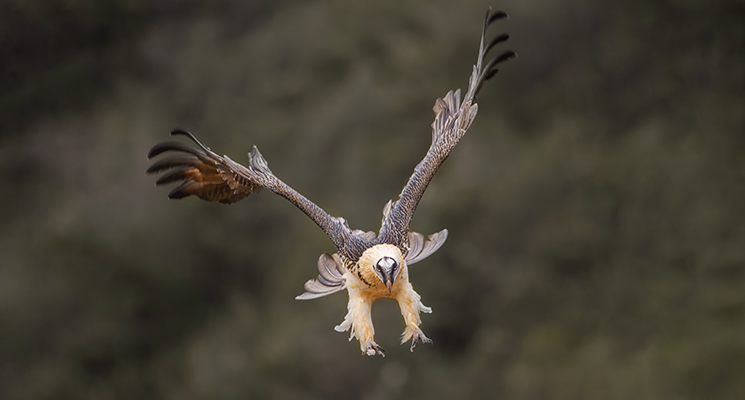


One more year, as every first Saturday of September, we pay tribute to these fundamental birds for biodiversity on International Vulture Day. The objective of this date, promoted since 2006, is to value these species that are of vital importance for ecosystems and raise awareness of their conservation status around the world.
One more year, as every first Saturday of September, we pay tribute to these fundamental birds for biodiversity on International Vulture Day. The objective of this date, promoted since 2006 by the Hawk Conservancy Trust, the Birds of Prey Program of The Endangered Wildlife Trust and the support of the Vulture Specialist Group of the IUCN Species Survival Commission, is to value these species that are of vital importance to ecosystems and raise awareness of their conservation status around the world.
These populations of necrophagous birds provide vital ecosystem services such as cleaning up the environment by consuming carrion and other organic waste from the environment. Through this action, they help avoid the risks of spreading pathogens among animals and their transmission to humans. In addition, due to their consumption of dead animals, they also contribute to the reduction of greenhouse gas emissions and economic savings, since they avoid the removal of carcasses in rural areas for subsequent treatment in industrial plants.
There are 23 species of vultures in the world, of which 16 are threatened and included in the IUCN red list. At the national level, Spain concentrates more than 90% of specimens in all of Europe and is the main enclave worldwide for the protection of these birds.
Among the most common are four species; the bearded vulture (Gyapetus barbatus) with about 133 reproductive units; the Egyptian vulture (Neoprhon pernopterus), with a stable population of 1,500 pairs; the black vulture (Aegypius monachus) with approximately 2,500 pairs; and the griffon vulture (fulvus) with about 30,000 breeding pairs.
One of the latest milestones in terms of necrophagous species is, precisely, the increase in their populations in Spain in the last decade thanks to the measures put in place for the feeding of these birds.
Specifically, Royal Decree 1632/2011 has contributed to improving the situation of these species, including vultures, by facilitating the availability of carrion. This is stated in the latest report on the evaluation of compliance with this regulation published by the Ministry for the Ecological Transition and the Demographic Challenge.
The document has been prepared by the working group on feeding of necrophagous species made up of representatives of MITECO and the autonomous communities and experts, and reflects the actions that have been carried out in 2018 and 2019 to improve the availability of food for these species, identified as priorities at European level.
In addition, a total of 14 autonomous communities have approved their own plans to delimit protection areas for the feeding of necrophagous species, which currently extend over 61% of the national territory.
Currently, vultures face various threats worldwide due to factors such as collisions with wind turbines or electrical infrastructure, habitat degradation or bait poisoning, so it is still necessary to work to reduce threats and ensure the adoption of active management measures that allow the recovery and conservation of species.
For all of the above, the Biodiversity Foundation has supported through our calls for aid more than 20 projects that carry out various actions that contribute directly or indirectly to improving the conservation status and protection of these species, of which three of them are currently being executed.
The Foundation for the Conservation of the Bearded Vulture (FCQ) is developing the “Programme of actions for the consolidation of territorial populations of bearded vultures in the mountains of the centre and north of the peninsula”, a project that aims to facilitate the recovery process of the species through measures that improve natural productivity, the settlement of new territories and the improvement of trophic resources. all aimed at achieving its comprehensive recovery.
Last year 2020 was a milestone in the slow Iberian recovery of this species that began in the 1990s with the favourable evolution of the population in the Pyrenees and the reinforcement of specimens in reintroduction projects (Picos de Europa, Cazorla, Castellón Iberian System and Alps), which resulted in the natural recolonisation of a breeding pair of the Iberian System or the birth of the first chick in the reintroduced population of the Picos de Europa.
The Nature and Man Foundation (FNYH) is working on the project “Private reserves and other actions for the conservation of the black vulture, the Iberian imperial eagle and the black stork in the Iberian West”, an initiative that, among other awareness-raising and dissemination actions, aims to improve the habitat of necrophagous species such as the black vulture, as well as other threatened wild birds such as the black stork and the Iberian imperial eagle to guarantee their conservation in western Iberia within the Natura 2000 Network spaces. To carry out these actions, the entity benefits from the stewardship agreements already signed with farms in this area and the creation of private conservation reserves within the scope of the project.
Finally, the Rural Nature Association is developing the initiative “Consolidation of the black vulture colony in the Catalan Pyrenees and dispersion to new territories in Aragon”, which focuses on the reintroduction of this bird whose presence in the area was historical. Currently, there is evidence of 50 specimens in the colony and 12 breeding pairs, all in the Boumort SPA. This makes it possible for the next step to be the expansion of the colony into nearby territories in Aragon and Catalonia. Other actions that are contemplated have to do with the increase of the supplementary feeding points of the species and the improvement of its habitat to facilitate the expansion of the colony towards the Aragonese Pyrenees.
