


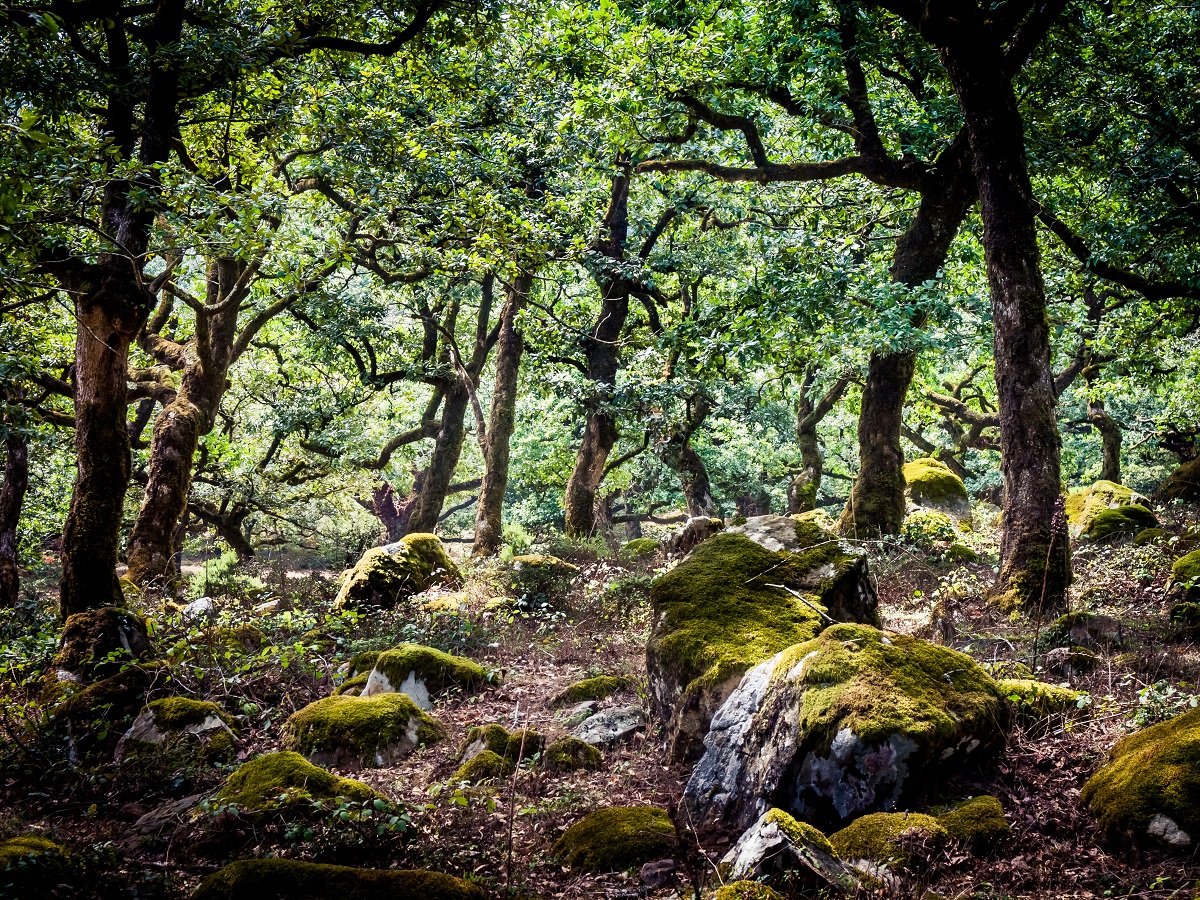


Every March 21 we celebrate the International Day of Forests, a date proclaimed in 2012 by the United Nations General Assembly with the aim of promoting the importance of all types of forests and trying to raise awareness and promote their conservation.
Every March 21 we celebrate the International Day of Forests, a date proclaimed in 2012 by the United Nations General Assembly with the aim of promoting the importance of all types of forests and trying to raise awareness and promote their conservation.
With the slogan “Forests: sustainable consumption and production” in 2022, it is intended to call on society to promote the choice of sustainable wood as a favorable action for the planet and people, since despite the ecological, economic and social benefits provided by forests, they are currently still threatened by causes such as deforestation. the effects derived from climate change or the overexploitation of its resources.
Despite the fact that forests cover just over 30% of the world’s land surface, they are home to more than 80% of animal and plant species. These forest masses act as carbon sinks, absorbing the equivalent of approximately 2,000 million tons of carbon dioxide per year. In addition, many rivers and streams originate in forests, where trees act as filters and provide clean water suitable for drinking.
Also, globally, more than 1.6 billion people depend on forests for their survival, providing energy, food or medicine. It is estimated that more than half of the world’s economic output depends on ecosystem services, including forest services. According to data from the United Nations, the forest sector generates jobs for at least 33 million people and it is estimated that half of the world’s entire population uses non-wood forest products (seeds, resins, fibres, etc.) to improve their well-being and livelihoods. In addition, replacing less sustainable materials with renewable wood and products derived from trees could contribute to the reduction of the carbon footprint.
The report, The State of the World’s Forests (2020) prepared by the Food and Agriculture Organization of the United Nations (FAO) and the United Nations Environment Programme (UNEP) highlights that agricultural expansion remains the main cause of deforestation and forest fragmentation and the associated loss of forest biodiversity.
Between 2015 and 2020, the global deforestation rate is estimated to be 10 million hectares per year and the area of primary forests has decreased by more than 80 million hectares since 1990. In addition, more than 100 million hectares of forests would be affected by forest fires, pests, diseases, invasive species, droughts and adverse weather events.
In the same way, the report warns that despite the fact that forests and forest stands are composed of more than 60,000 different tree species, 20,000 of them are included in the Red List of Threatened Species of the International Union for Conservation of Nature (IUCN) and more than 8,000 are classified as threatened on a global scale (Critically Endangered, Endangered or Vulnerable).
The document also highlights the value of forest restoration, highlighting that, if properly executed, it would help restore habitats and ecosystems, create employment and income and be an effective nature-based solution to climate change.
The Biodiversity Foundation of the Ministry for the Ecological Transition and the Demographic Challenge has contributed, since its inception, to the direct and indirect improvement of the conservation status and protection of forests, providing support to numerous initiatives for the development of various actions such as the promotion of responsible forest management, forest sustainability, as well as the importance of responsible purchasing of forest products. It has also contributed to promoting the generation of scientific knowledge, promoting awareness and dissemination in society about the need to conserve forests or promoting actions that have sought to reduce greenhouse gas emissions and mitigate the effects of climate change through reforestation and forest conservation. In addition, it has been possible to contribute to the preservation of these spaces and the improvement of their natural heritage and biodiversity also in areas of high natural value included in the Natura 2000 Network.
In line with these objectives, the Foundation has supported more than 60 projects through calls for grants, allocating more than 4 million euros. Two of them are currently under construction.
Thus, the Global Nature Foundation (FGN) is carrying out an initiative that seeks to increase the resilience of southern European forests to the effects of climate change, through an adaptive management model. The model seeks to include instruments for better decision-making in forest management, which also take into account climate change indicators. It also seeks to collect reforestation actions on agricultural land and the transfer of results that allow the development of policies and strategies at regional, national and European level.
For its part, the Centre for Forest Science and Technology of Catalonia (CTFC) is working on monitoring the effects of extreme drought on the structure and plant biodiversity of Mediterranean shrub formations in the east of the peninsula. To this end, it is developing an alert system by adapting the Medfate simulator, which allows the visualization and prediction of the evolution of these species based on different climate scenarios.
