

A new oceanographic campaign has begun in the protected areas of the Avilés and El Cachucho Submarine Canyon System with the aim of developing new technologies and methodologies for monitoring vulnerable and deep species and habitats, within the framework of the LIFE INTEMARES project, coordinated by the Biodiversity Foundation of the Ministry for Ecological Transition and the Demographic Challenge.
A new oceanographic campaign has begun in the protected areas of the Avilés and El Cachucho Submarine Canyon System with the aim of developing new technologies and methodologies for monitoring vulnerable and deep species and habitats, within the framework of the LIFE INTEMARES project, coordinated by the Biodiversity Foundation of the Ministry for Ecological Transition and the Demographic Challenge. Innovation is one of the cornerstones of the project to move towards a new management model for the marine Natura 2000 Network.
This campaign is part of one of the pilot projects that will allow comprehensive monitoring to be carried out that includes the periodic evaluation of the state of conservation of the marine areas of the Natura 2000 Network, including the Site of Community Importance (SCI) Avilés Submarine Canyon System and the Special Protection Area (SAC) and Marine Protected Area (MPA) El Cachucho.
Until April 19, a research team from the Spanish Institute of Oceanography (IEO-CSIC) will collect data and scientific information with the aim of testing a new long-term image acquisition system for monitoring the conservation status of vulnerable habitats and species. The main source of data will be images obtained in areas that are considered biodiversity hotspots in the two study areas.
On the one hand, a lander will be used, a quantitative and non-invasive sampling system that is positioned on the bottom and left to work statically and autonomously for intervals of one or several days. It has a high-resolution camera that shoots at constant configurable intervals and a bait system to attract the mobile fauna present in the study area.
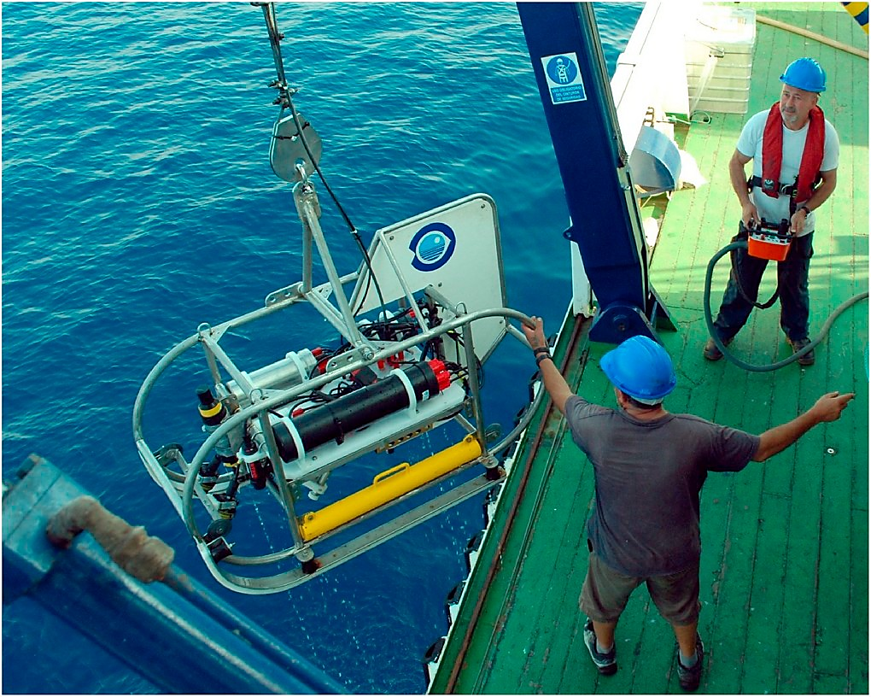
In addition, transects will be carried out with the Politolana ROTV (Remotely Operated Towed Vehicle) remotely operated towed vehicle, which can be operated to a maximum depth of 2,000 meters and will allow direct visual information to be obtained in non-accessible areas, which could house vulnerable communities.
In addition, a new method of marking deep-sea sharks will be implemented through the precise anchoring of a trap designed specifically for this purpose in the SAC El Cachucho.
LARGE UNDERWATER CANYONS
The region where the Avilés Submarine Canyon System is located is located off the western coast of Asturias. In this structurally complex area, there are three large submarine canyons -Avilés, El Corbiro and La Gaviera-, as well as a marginal platform -Canto Nuevo- and a massive rocky structural high -Agudo de Fuera-. In addition to the canyon system, three other zones can be differentiated in this area, such as the continental shelf, the continental slope and the abyssal plain.
Among the main ecological values recorded in this SCI are important cold-water coral reef settlements. The area is being studied in the LIFE INTEMARES project for the preparation of its management plan and its proposal as a Special Area of Conservation (SAC), thus reinforcing its protection.
This oceanographic campaign will also go into El Cachucho, one of the most naturally rich protected marine areas in our seas, located about 65 kilometres off the coast of Ribadesella. This large seamount rises to more than 3,575 meters, below sea level. It is a protected area that is home to more than 740 species and
It has great cultural and fishing value. Due to its natural wealth, it has been declared a Marine Protected Area and Special Area of Conservation of the Natura 2000 Network and has been included in the OSPAR Convention. Its management plan has been updated.
MANAGEMENT OF PROTECTED AREAS
The LIFE INTEMARES project is moving towards the objective of achieving effective management of the marine areas of the Natura 2000 Network, with the active participation of the sectors involved and with research as the basic tools.
The Biodiversity Foundation of the Ministry for Ecological Transition and the Demographic Challenge coordinates the project. The ministry itself, through the Directorate-General for Biodiversity, Forests and Desertification; the Regional Government of Andalusia, through the Ministry of Agriculture, Livestock, Fisheries and Sustainable Development, as well as the Environment and Water Agency; the Spanish Institute of Oceanography; AZTI; the University of Alicante; the Polytechnic University of Valencia; the Spanish Fisheries Confederation, SEO/BirdLife and WWF-Spain. It is supported by the LIFE Program of the European Union.