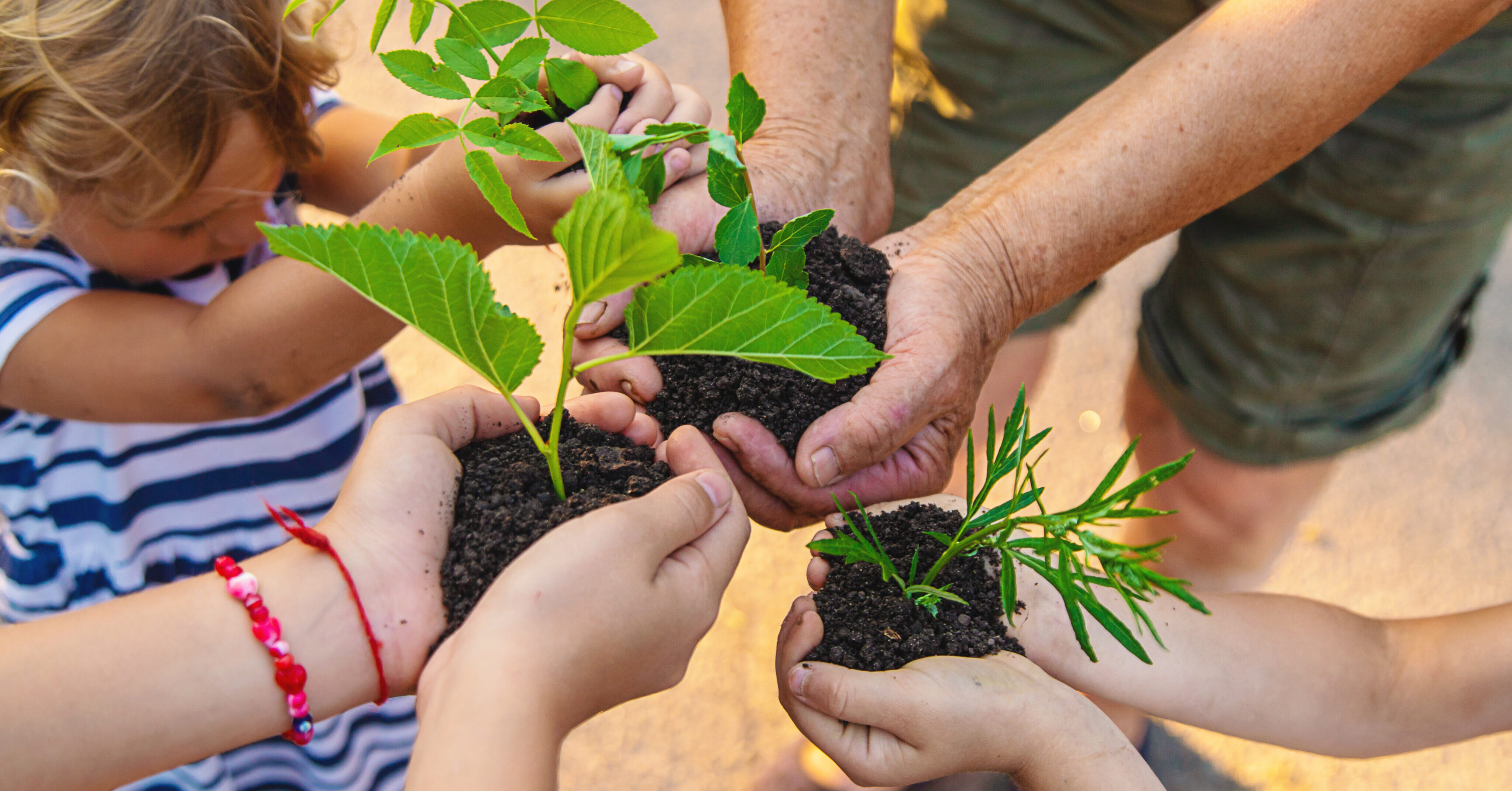


The Belgrade Charter, adopted at the 1975 International Seminar on Environmental Education , laid down the fundamental principles of environmental education and established January 26 as World Environmental Education Day. This milestone brought together representatives from more than 60 countries under the International Environmental Education Programme of UNESCO and UNEP. More than half a century later, this commemoration is still fully valid: environmental education is key to providing citizens with the skills, knowledge and tools necessary to tackle climate action and build resilient societies.
EDUCATIONAL CHALLENGES IN THE FACE OF THE CLIMATE EMERGENCY
Education systems are not advancing at the speed demanded by the climate crisis. UNESCO’s latest monitoring report reveals that while around 50% of the curricula analysed address the environment in a general way, climate change-specific content barely reaches 21%. However, youth activism drives tangible change beyond the classroom. Since 2012, student pressure in the United States has led to 141 higher education institutions withdrawing their investments from fossil fuel-related sectors.
At the national level, there are still significant knowledge gaps. A new report by the Just Transition Observatory that deals with the perception of the ecological transition in Spain (2025) points out that, although almost half of young people understand the concept, 29% say they never hate talking about it. This figure underlines the need to strengthen pedagogical work among the new generations.
Education stands as an indispensable engine of social transformation, where teaching and sustainability must advance hand in hand. This vision is shared by the teacher and writer César Bona, who maintains that, “the great change is going to come from the schools upwards because education is where everything begins, what we are and what we want to be, and sustainability is where we have to go.” During her intervention in the ninth episode of Naturally, the podcast of the Biodiversity Foundation, Bona defended the need to place childhood and adolescence at the center of the action.
STRATEGIES FOR TRANSFORMATION AND ACTION
In this context, the European Sustainability Competence Framework (GreenComp) underlines the need to integrate systems thinking and collective action into educational models. The current challenge transcends the mere inclusion of theoretical content on climate change, it requires transforming schools into learning spaces that connect with their environment. To develop these skills, active methodologies such as project-based learning, gamification, direct contact with nature and the analysis of real cases are committed.
For its part, the Ministry for the Ecological Transition and the Demographic Challenge (MITECO), together with the Ministry of Education, Vocational Training and Sports (MEFPD), prepared the Environmental Education Action Plan for Sustainability (PAEAS), whose Work Programme for 2025 began its implementation that year and will continue in the following years.
The Biodiversity Foundation plays a backbone role in this strategy and acts as a bridge between technical knowledge and action. The Foundation materialises these guidelines through initiatives such as the promotion of a citizen science programme in the marine environment or the training of public administration personnel in areas such as urban renaturation, marine management and climate change. Likewise, the entity reinforces its commitment to combining art and nature through exhibitions at its headquarters in Seville, which seek to inspire citizens to actively participate in the protection of the environment.
In addition, the Foundation coordinates or participates in projects such as LIFE Marbled Teal, LIFE INTEMARES or LIFE A-Mar Natura 2000, which integrate specific environmental education actions. An outstanding example is the LIFE ECOREST educational programme in Catalonia, which brings the biodiversity of the deep seabed closer to the classroom. Similarly, through the Pleamar Programme, the Foundation supports projects such as IRTA’s LEVABENTOX, which gives talks on marine microscopic life with practical demonstrations, or the University of Alicante’s CAMBIA initiative, which organises workshops to make visible the historical role of women in oceanography.
Beyond knowledge transfer, environmental education is a powerful tool for building a resilient future. The goal must be to promote transformative learning that prioritizes life within the limits of the planet and makes us aware as agents of change.