

We currently support 27 projects that are developed in our National Parks, the most prestigious protection figure in our country. Historically, we have supported more than 100 projects.
The first European national parks were declared in Sweden on May 24, 1909. To commemorate this day, the EUROPARC Federation, a pan-European organisation that brings together institutions dedicated to nature conservation and protected natural areas from 38 countries, has been promoting the celebration of European Parks Day since 1999.
The good management of protected areas not only contributes to improving the state of species and habitats, but also provides a multitude of services to society as a whole, visitors and inhabitants. The recent health crisis has made the need for and human dependence on healthy spaces even more visible. For this reason, the “new generation” of parks is called upon to face new global challenges to which to respond locally, with new approaches that enrich the progress achieved, with the incorporation of new generations of active, creative and committed people.
To address these new challenges, EUROPARC-Spain is organising today, coinciding with European Parks Day, a webinar, within the framework of the ADAPTASALUDEA project, which has our support, and which will analyse the current state of protected areas in Spain, providing relevant cases that show the contribution of protected areas to climate change. the promotion of human health and environmental education for sustainability.
In addition to this initiative, the Biodiversity Foundation currently supports 26 projects that are developed in our National Parks, the most prestigious protection figure in our country. Historically , we have supported more than 100 projects.
The Foundation for the Conservation of the Bearded Vulture works in the Picos de Europa National Park, as part of the programme of actions for the consolidation of the territorial populations of bearded vultures (Gypaetus barbatus) in the mountains of the centre and north of the peninsula, where the first chick was born in the population reintroduced in this area. The project aims to facilitate the recovery process of the species through measures that improve natural productivity, the settlement of new territories and the improvement of trophic resources, all of them aimed at achieving its comprehensive recovery.
In the Atlantic Islands of Galicia Maritime-Terrestrial National Park, we collaborate with different entities in different projects framed in the Pleamar Programme, co-financed by the European Maritime and Fisheries Fund (EMFF). One of them is iGENTAC, which works on the development and application of non-invasive tagging-recapture techniques that can be incorporated into monitoring plans for populations of marine organisms in marine protected areas.
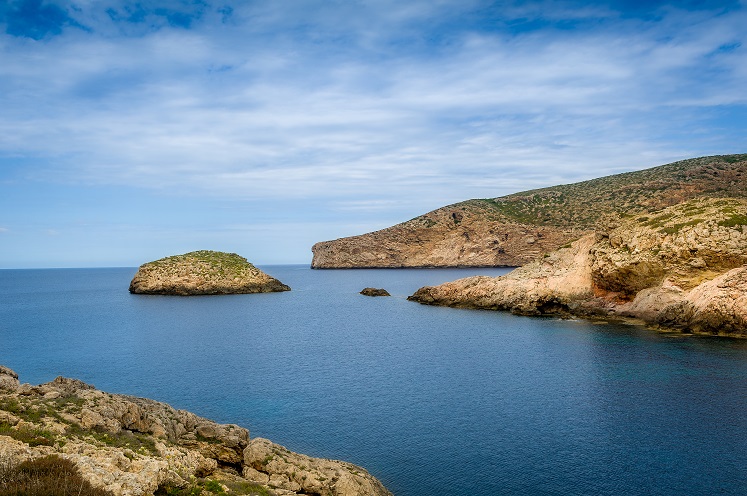
On the other hand, also within the Pleamar Program, we support initiatives in the Cabrera Archipelago Maritime-Terrestrial National Park. Thus, for example, the University of Girona is carrying out the second part of the DESMARES project, which aims to make artisanal fishing in the western Mediterranean compatible with the conservation of the shag, a species currently classified as vulnerable, and which at the same time is a bioindicator of the fish stock.