

From the Foundation we collaborate with the recovery of the bearded vulture through the project Recovering Lost Territories
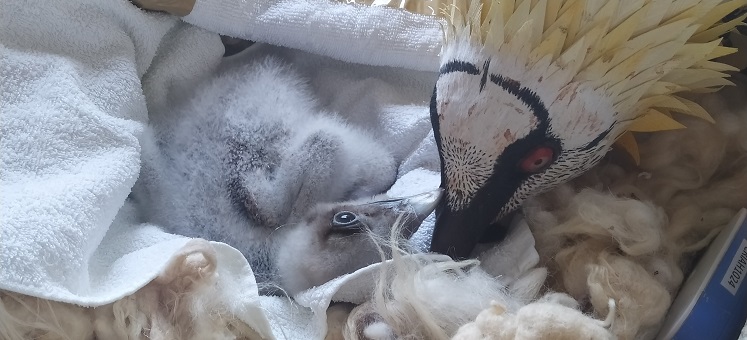
This 2020 season, the hatching of five specimens of bearded vultures rescued at risk in the Aragonese Pyrenees has been successfully achieved. This action has been possible thanks to the bearded vulture breeding program developed at the Center for Rescue and Breeding in Human Isolation (CRIAH), managed through a collaboration agreement between the Government of Aragon and the Foundation for the Conservation of the Bearded Vulture (FCQ). This species is threatened and extinct in most of the European countries where it lived until the middle of the last century.
The Biodiversity Foundation, of the Ministry for Ecological Transition and the Demographic Challenge, is currently collaborating with the recovery of the bearded vulture through the project Recovering Lost Territories: “Programme of actions for the identification of new areas of settlement of bearded vultures in the mountains of the centre and north of the peninsula”.
The CRIAH, located in the facilities of the Government of Aragon in La Alfranca de Pastriz, has received in recent months a total of 10 eggs from nests in the Aragonese Pyrenees, all of them considered to be at “high risk” of failure. Finally, five of them turned out to be fertilized, these being the ones that have hatched thanks to the assistance of the veterinarians and experts in bearded vulture breeding at the center.
According to the team of caretakers of the Foundation for the Conservation of the Bearded Vulture, the first days of the chicks born in the CRIAH are very delicate and require permanent attention, which is why they have been monitored and cared for day and night.
To avoid direct contact, and consequently, the imprint of the chicken with the technicians, the continuous interactions of the keepers during this period have been carried out by means of naturalized lures of great realism.
After the chicks exceed the first weeks of life, have reached their natural physiological capacity for thermoregulation that usually occurs around 19 to 22 days, and begin to fledge, the young will be transferred to the Ordesa y Monte Perdido National Park to continue their development there.
This stage forms the second phase of behavioural learning in the presence of the wild bearded vultures that frequent the supplementary feeding point installed there, and supplied thanks to the staff of the National Park itself.
Once this phase is completed, it is expected that between the months of June and July they can be transferred to the Picos de Europa National Park for release within the program of reintroduction of the bearded vulture in the Cantabrian Mountains. These five specimens would join the 23 that populate the area, as well as the first chick born in the wild in Picos de Europa after 70 years of absence of the species.