

The United Nations proclaimed March 21 as the International Day of Forests. Its celebration pays tribute to its importance and tries to raise awareness about it.
In 2012, the United Nations General Assembly proclaimed March 21 as the International Day of Forests. Its celebration pays tribute to its importance and tries to raise awareness about it.
The theme for 2020 is “Forests and biodiversity”, as these spaces are home to around 80% of the world’s terrestrial biodiversity, cover a third of the earth’s surface and play a fundamental role in the life of the planet. Forests and other forest areas are composed of more than 60,000 species of trees. In addition, morethan a billion people depend directly on forests for food, shelter, energy and income.
Unfortunately, worldwide, deforestation is advancing at a rate of 13 million hectares per year and is responsible for between 12 and 20% of greenhouse gas emissions and contribute to global warming. Therefore, in 2020, which has been called the “Super Year of Nature”, we must join forces to reverse the trend of deforestation and forest loss.
In our country, according to the report “Environmental Profile of Spain 2018”, published by the Ministry for Ecological Transition and the Demographic Challenge, the Spanish forest area grew by 1.2% between 2004 and 2018. 55.2% of the total national area (27.9 million hectares) is made up of forests, of which more than 66% had forests. The remaining 9.5 million hectares are mainly treeless or sparsely wooded areas.
From the Biodiversity Foundation, aware of the importance of these spaces for life on the planet, through our calls for grants we have supported nearly 60 projects for the conservation of forests, allocating almost 4 million euros.
Thus, the Association for Spanish Forest Certification (PEFC ESPAÑA) is working in the Monfragüe National Park to increase the replacement rate of the imperial eagle due to the problems of deterioration of the mass of holm oaks and cork oaks. The improvement of the trees that they are carrying out may influence the imperial eagle, the black vultures, the eagle owl and the black storks that nest in this space.
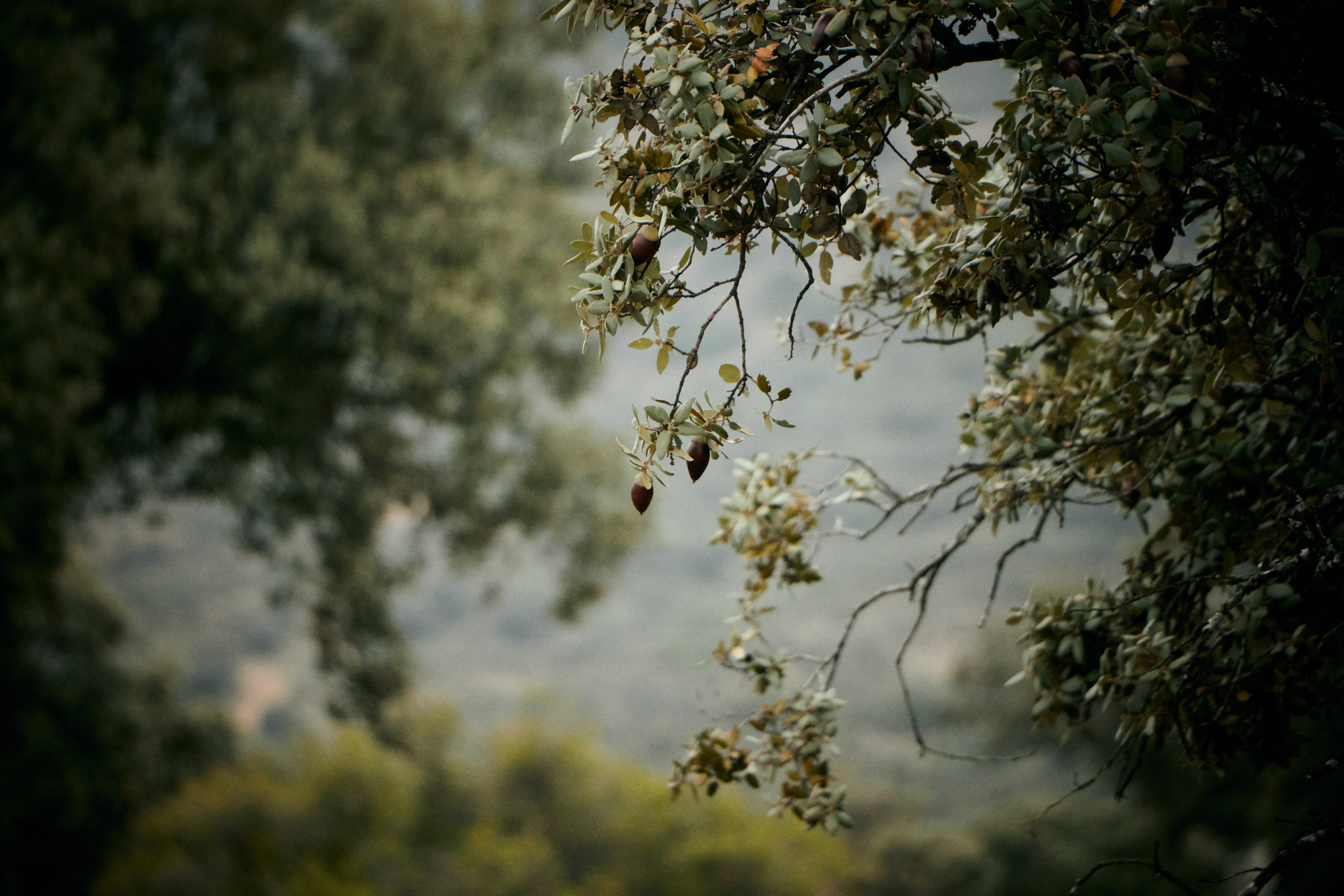
Another example is the Centre for Energy, Environmental and Technological Research (CIEMAT), which is developing the MODICO project, whose objective is to develop predictive tools for forest management planning in Spain, through dynamic modelling that allows the pressure exerted by the effects of air pollution on forest ecosystems in the Natura 2000 Network to be assessed in Spain, starting with the holm oak groves. The holm oak forest (forest of Quercus ilex) it represents an ecosystem and landscape characteristic of the Mediterranean region and is listed as a habitat of Community Interest within the framework of the Habitats Directive. In addition, the holm oak is the species with the highest surface representation, occupying more than 27% of Spanish forests. There are 2.6 million hectares of holm oak and another two million hectares in pastures, where it is the dominant species.