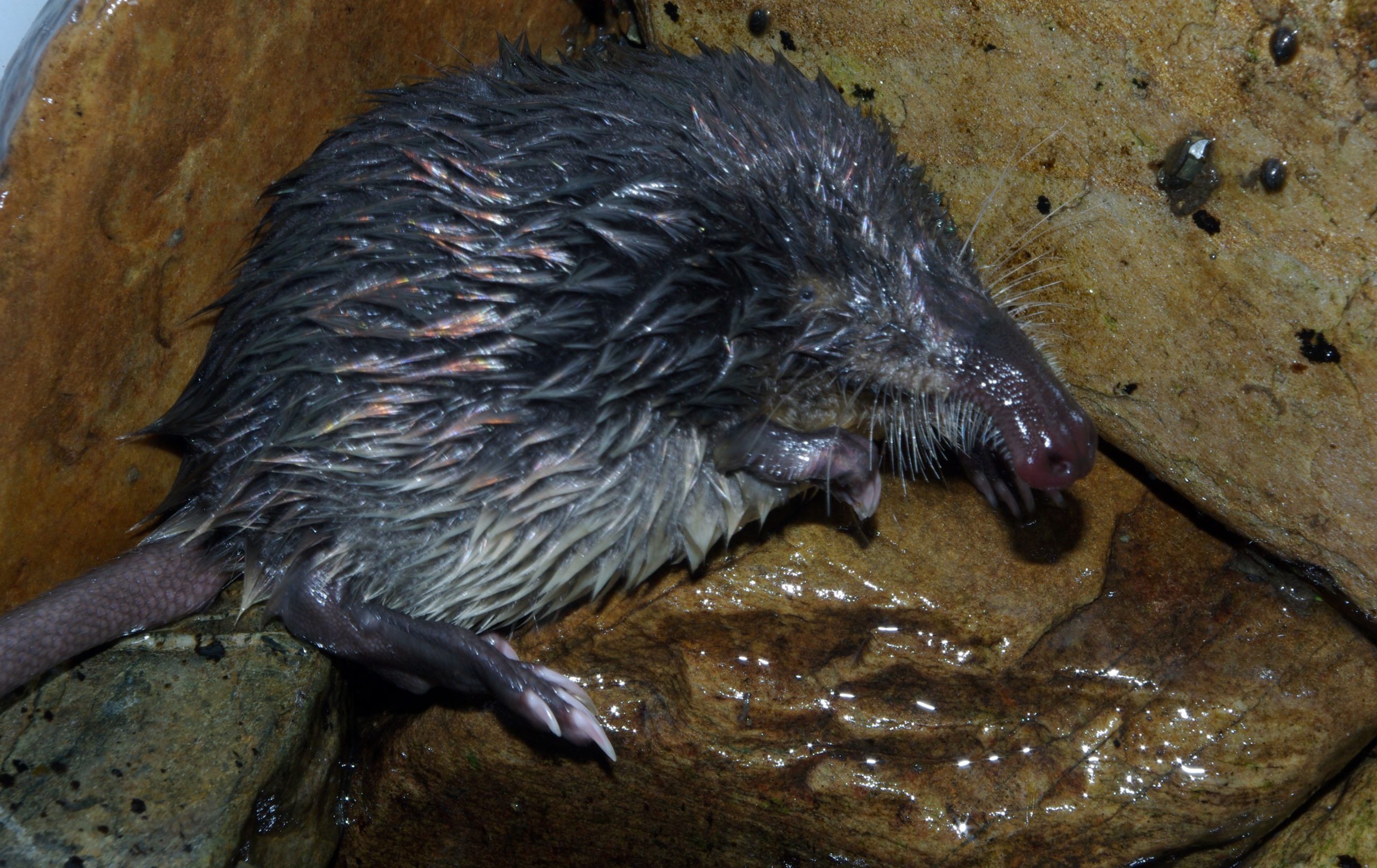


Within the framework of the actions of the LIFE+ DESMANIA project, a project coordinated by the Biodiversity Foundation of the Ministry of Agriculture, Food and the Environment, nearly 1,000 sections and 5,000 km of river have been prospected and analysed to locate this species, of which 250 of these sections have been in the Central system. These tasks, managed by the Natural Heritage Foundation of Castilla y León, have consisted of the detailed analysis of the river and riverside habitat, with favourable characteristics for the presence of the species. The application of standardized protocols for sampling the excrement of the Iberian desman and the use of novel laboratory techniques have been key to the success of the detection of the species.
The work in which technicians and environmental agents from the Junta de Castilla y León have participated with great involvement, assisted by experts, have been a success, as the objectives set with these results have been achieved. The rediscovery of this threatened species, classified as endangered, in the Central system, is great news for the conservation of the Iberian desman, since it was believed to be extinct since the last studies were carried out in 2008.
The last reports of Iberian desman in the headwaters of the Tormes River (Ávila) date back almost two decades, during which time the species has been confined to the best-preserved river habitats in the Gredos Regional Park. The sub-basin, where this endangered species has been located, occupies a large part of its river network, constituting the largest population nucleus of this endangered species in the Central system. Based on the densities observed, it could house several hundred specimens, a hope for the recovery of the species in the Central system.
Following this discovery, the partners of the LIFE+ DESMANIA project have concluded the basic information documents of the project, relating to the monitoring and analysis of desman populations, the technical document for the improvement and conservation of its habitat and models of sustainable management of the species have been generated. On this basis, actions will be implemented to improve habitat, such as the correction or elimination of structures in rivers or the reforestation of riverbanks, actions that will also have a positive impact on all users of the river environment and water resources.