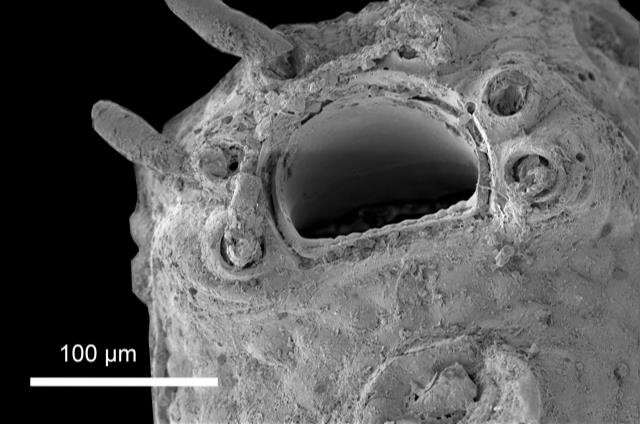


Scientists from the Spanish Institute of Oceanography (IEO), the National Museum of Rio de Janeiro and the University of Seville have discovered two new species of bryozoans in the mud volcanoes of the Gulf of Cadiz, within the framework of the LIFE INTEMARES project.
The group of researchers led by Laís V. Ramalho, Carlos M. López-Fé, Ángel Mateo Ramírez and José Luis Rueda have named one of the bryozoans Microporella funbio, in homage to the Biodiversity Foundation of the Ministry for Ecological Transition and the Demographic Challenge “for its important work in the protection of natural heritage”. The other species discovered has been named Antropora gemarita, in allusion to the IEO’s Marine Geosciences Research Group.
The depths of protected marine areas in Spain hide a diversity of valuable species that, thanks to scientific research, are beginning to come to light.
These small aquatic invertebrates play an important role in the marine ecosystem. Bryozoans are a piece of the food chain in various marine ecosystems. Starfish, urchins, molluscs and fish feed on them. In addition, they are biobuilders of habitats by creating carbonate structures together with other organisms, mainly on reefs. They also have the ability to deposit calcium carbonate in the environment, forming microhabitats that serve as a refuge for polychaetes, small crustaceans, and even fish.
Its benefits are also being analyzed in the field of health. Recent studies have shown that some species of marine bryozoans are excellent sources of substances of pharmacological interest.
Both species discovered form colonies of numerous individuals, called zooids, and reproduce through the formation of swimming larvae, which can circulate in areas far from the one inhabited by their parents, so they can colonize new areas with similar environmental characteristics.
Habitats of high ecological value
The bryozoans discovered have been found in the Gazul mud volcano, one of the most biodiverse in the Site of Community Importance (SCI) Mud volcanoes in the Gulf of Cadiz. This protected marine area is home to habitats of high ecological value, such as cold-water coral reefs and aggregations of large sponges. Numerous species new to science have previously been found in this SCI, such as sponges and molluscs, as well as about thirty bryozoans, including another new species called Reteporella victori, in honor of the scientist Víctor Díaz del Río, who carried out important research on these mud volcanoes.
Great effort in research
These new bryozoan species were collected within the framework of the previous LIFE+ INDEMARES project (2009-2014), in which 49 marine protected areas were declared. The study of these small invertebrates has been possible thanks to the current LIFE INTEMARES project, which is moving towards a better knowledge of these marine protected areas, as well as a change in the effective management model of the marine areas of the Natura 2000 Network, with the active participation of the sectors involved and with research as basic tools for decision-making.
The Biodiversity Foundation of the Ministry for the Ecological Transition and the Demographic Challenge coordinates this integrated project, in which the Ministry’s Directorate-General for Biodiversity, Forests and Desertification, IEO, CEPESCA, SEO/BirdLife and WWF-Spain participate as partners. It has the financial contribution of the European Union’s LIFE programme, among other sources of funding.