

A new campaign has begun within the framework of the LIFE INTEMARES project to evaluate the effects of fishing in the Avilés canyon.
The Avilés canyon is once again the subject of study in a new oceanographic campaign of the LIFE INTEMARES project that begins today. On this occasion, researchers from the Spanish Institute of Oceanography (IEO) will study the effects of gillnet fishing aimed at catching monkfish.
Until August 13, scientists will explore the seabed of this area located north of the Asturian coast with the main objective of determining the effects of scratching, gillnetting made up of several cloths of net joined together.
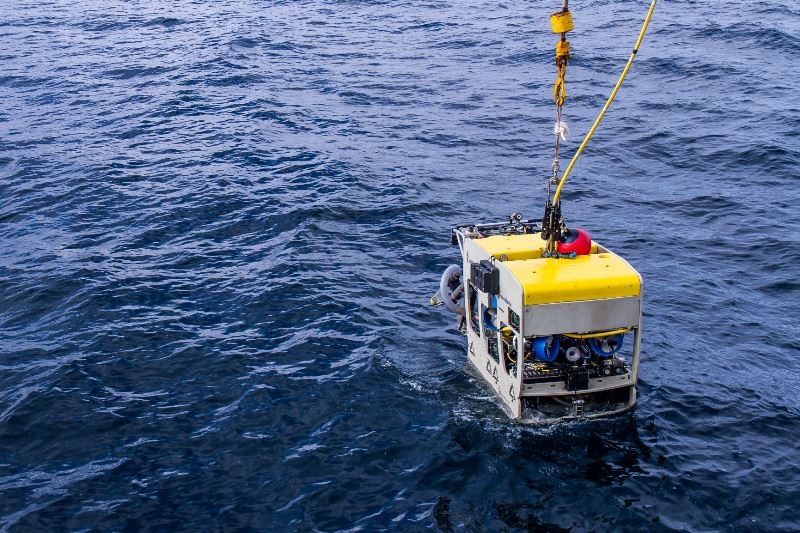
To this end, they will assess the environmental status of the area before and after the interactions of this fishing technique, through the use of a remotely operated vehicle. In addition, they have the participation of a professional fishing boat from the Asturian fleet, the result of collaboration with the Federation of Fishermen’s Guilds of the Principality of Asturias.
This is the second campaign to be carried out in the Avilés canyon within the framework of LIFE INTEMARES, after the first one in 2018 focused on evaluating the interactions of fishing gear such as longline and gillnet in this area, which is home to a great wealth of biodiversity with vulnerable species, such as corals and sponges.
This work aims to maximise the protection of habitats, minimising the effects on fishing activities, so that the conservation of marine ecosystems is compatible with social and economic development.
The data obtained in these campaigns will contribute to improving scientific knowledge on the effects of bottom fishing activities on habitats in this marine area of the Natura 2000 Network, and will serve to develop the future management plan for the area, based on a solid scientific basis.
This study is part of the action of the LIFE INTEMARES project aimed at diagnosing the impact of human activities and climate change on the marine Natura 2000 Network and proposing measures to control, eliminate and mitigate its effects.
The Biodiversity Foundation of the Ministry for Ecological Transition coordinates this project, in which the General Directorate of Sustainability of the Coast and the Sea of the same ministry, the IEO, the Spanish Fisheries Confederation, SEO/BirdLife and WWF-Spain participate as partners. It has the financial contribution of the European Union’s LIFE programme, among other sources of funding.
Do you want to know more about the oceanographic campaigns of LIFE IP INTEMARES?
You can follow our twitter @LifeIntemares and through the hashtag #Intemares find out all the news and marine news. You can also consult the intemares.es website, where you will find all the information about the project.