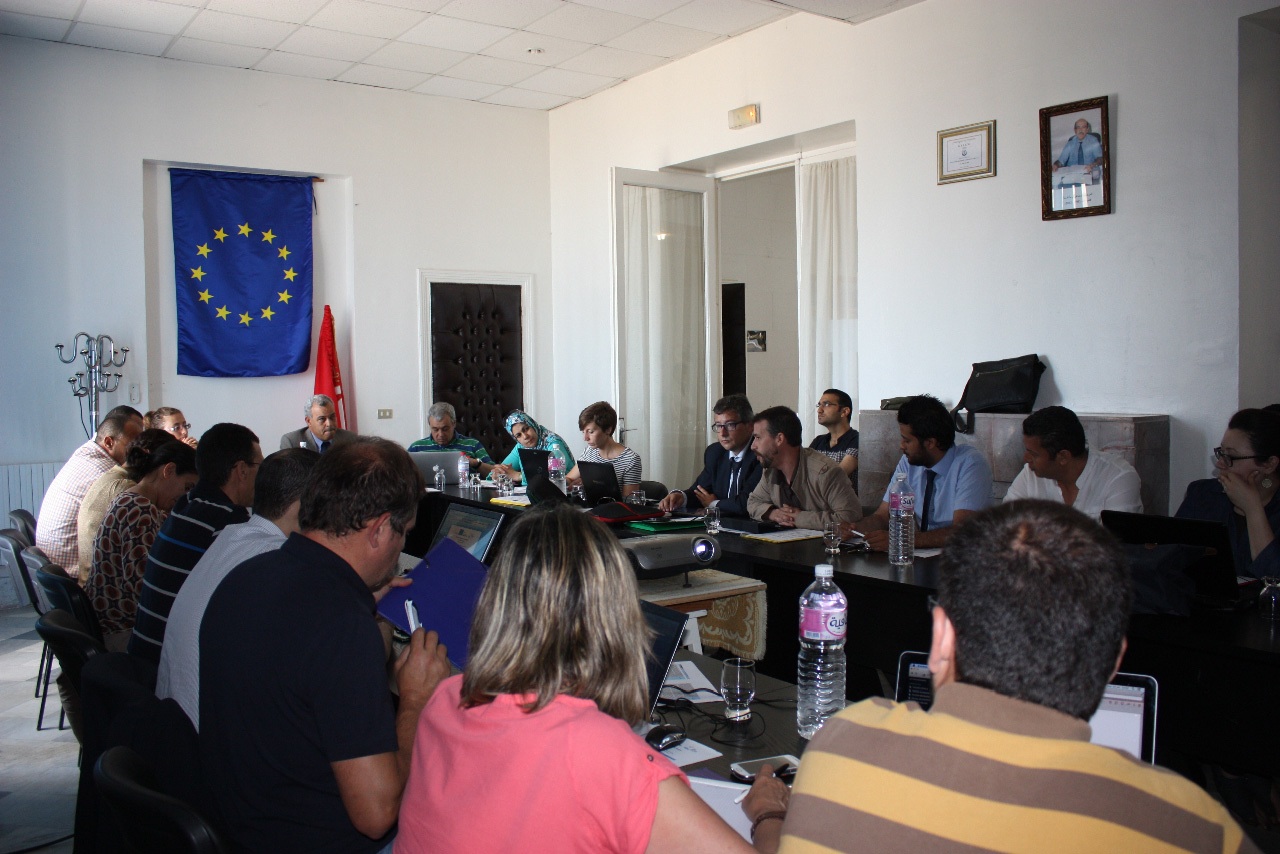
Spain, Italy and Tunisia have held at the National Institute of Marine Sciences and Technologies of Tunisia the second Management Committee of the ECOSAFIMED project of the European ENPI Mediterranean Basin Programme, in which progress has been made in the preparation of oceanographic campaigns to assess the possible impacts of artisanal fishing on the seabed.
The Ministry of Agriculture, Food and Environment (MAGRAMA), through the Biodiversity Foundation, coordinates this cross-border initiative in which the Institute of Marine Sciences of the Higher Council for Scientific Research ICM-CSIC, the National Institute of Marine Sciences and Technologies of Tunisia and the University of Genoa participate.
Since 10 June, the participating partners have been working on the objectives of the project “Conservation of ecosystems and sustainable artisanal fisheries in the Mediterranean Basin (ECOSAFIMED)”, which aims to provide and promote practical recommendations to ensure the sustainability of artisanal fisheries in the Mediterranean.
During the meeting, the actions undertaken since the beginning of the project in January 2014 were evaluated and those that are planned for the coming months were planned. Among these actions, the oceanographic campaigns that the project partners will carry out during the months of July and August stand out.
In the case of Spain, the study areas are located in the Balearic Islands and Catalonia; in Italy, in Lazio and Sicily, while in Tunisia, the areas of La Galite and the Esquequis Bank near the regions of Nabeul, Ariana and Jendouba will be studied. In these oceanographic campaigns, underwater robotics (ROV, Remoted Operated Vehicle) will be used to study seabed communities.
In order to know the relationship between the state of the community and the artisanal fishing effort, artisanal fisheries will also be evaluated for each study area.
During the meeting, the roadmap for the next seminars and meetings with sectors involved in the project was also drawn, including artisanal fishing associations and local communities.
Likewise, the actions undertaken during this first semester have been reviewed. In this initial stage, among other actions, the possibility of promoting marine stewardship actions as a conservation strategy to promote the participation of civil society, the fishing sector and administrations in the planning, management and conservation of the marine ecosystems of the Mediterranean basin has been evaluated and studied.
The meeting of the Management Committee, held in Tunis, was attended by representatives of the Ministry of Agriculture, Food and the Environment, the Directorate-General for Fisheries and Aquaculture of the Tunisian Ministry of Agriculture, the Tunisian Association for the Development of Artisanal Fisheries (ATDEPA) and the Tunisian Union for Agriculture and Fisheries. all of them, entities that support and collaborate in the project.
12/06/2014
Spain, Italy and Tunisia prepare oceanographic campaigns in artisanal fishing areas
Share on:


12/06/2014
Spain, Italy and Tunisia prepare oceanographic campaigns in artisanal fishing areas
Share on: