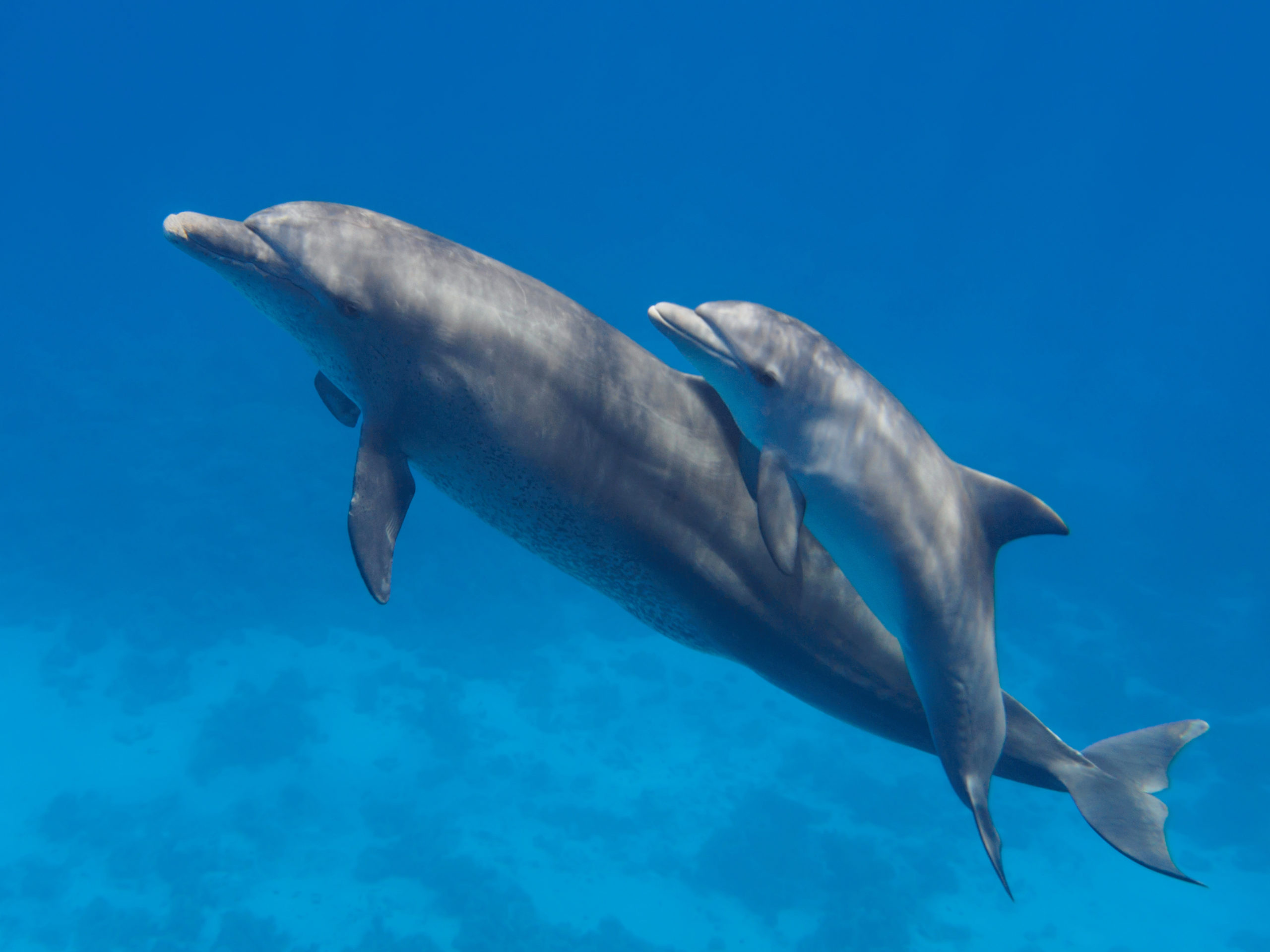


The bottlenose dolphin (Tursiops truncatus) is one of the most studied and distributed cetaceans in the world and although until recently only one species was targeted, today the general opinion differentiates between the Atlantic bottlenose dolphin and the Indo-Pacific bottlenose dolphin, although as with many species of whales, dolphins and porpoises, Taxonomic classification can be a complicated and disputed matter. The average size of bottlenose dolphins is between 3 and 4 meters, weighing between 130 and 300 kg.
The coloration of its skin can vary depending on the geographical area in which it lives, although the basic pattern is dark gray on the back and white or pink in the ventral region, it may also have small spots dotted on the body. Sometimes, encounters or fights between specimens of the same species, collisions with boats, failed shark attacks or skin pathologies, cause characteristic wounds and marks. This gives rise to unique patterns in each specimen that are quite useful in the identification of bottlenose dolphins since the markings on the fins and dorsals act as the fingerprints of each cetacean. These mammals generally occupy coastal waters and sometimes enter rivers through large estuaries. Other individuals inhabit more open and oceanic waters.
In Spain, the bottlenose dolphin is abundant on almost all Spanish coasts, both on the Peninsula and on those of the Canary and Balearic Islands. The diet of these dolphins is very varied, hake, sea bream, squid, octopus or prawns make up their diet. The presence of bottlenose dolphins on the coasts is an indicator of their good health, as they become bioindicators that guarantee the existence of a good food chain and the healthiness of the seas. The direct and indirect action of man can endanger the species by actions such as accidental capture or by water pollution that poses a threat to its habitat. Due to these dangers, the bottlenose dolphin is listed as a “vulnerable” species on the IUCN Red List of Threatened Species (2012), the National Catalogue of Threatened Species and the List of Wild Species under Special Protection (2011).
In order to improve the situation of the species, the Biodiversity Foundation of the Ministry of Agriculture, Food and Environment has coordinated the LIFE+ Indemares project which, together with the collaboration of many other entities, has worked to protect our seas and the threatened pelagic species that inhabit them, such as in this case the bottlenose dolphin. through the declaration of 10 new Sites of Community Interest that are home to this species. In addition, the Association of Naturalists of the Southeast with the collaboration of the Biodiversity Foundation has carried out a project whose main objective is to improve the knowledge of the state of bottlenose dolphin populations and thus collaborate in the conservation of these cetaceans in the regions of Andalusia and Murcia.