The European Commission has visited the main actions within the framework of the LIFE+ Cantabrian Capercaillie project, coordinated by the Biodiversity Foundation of the Ministry of Agriculture, Food and the Environment, and which aims to halt the decline of the species and contribute to its conservation.
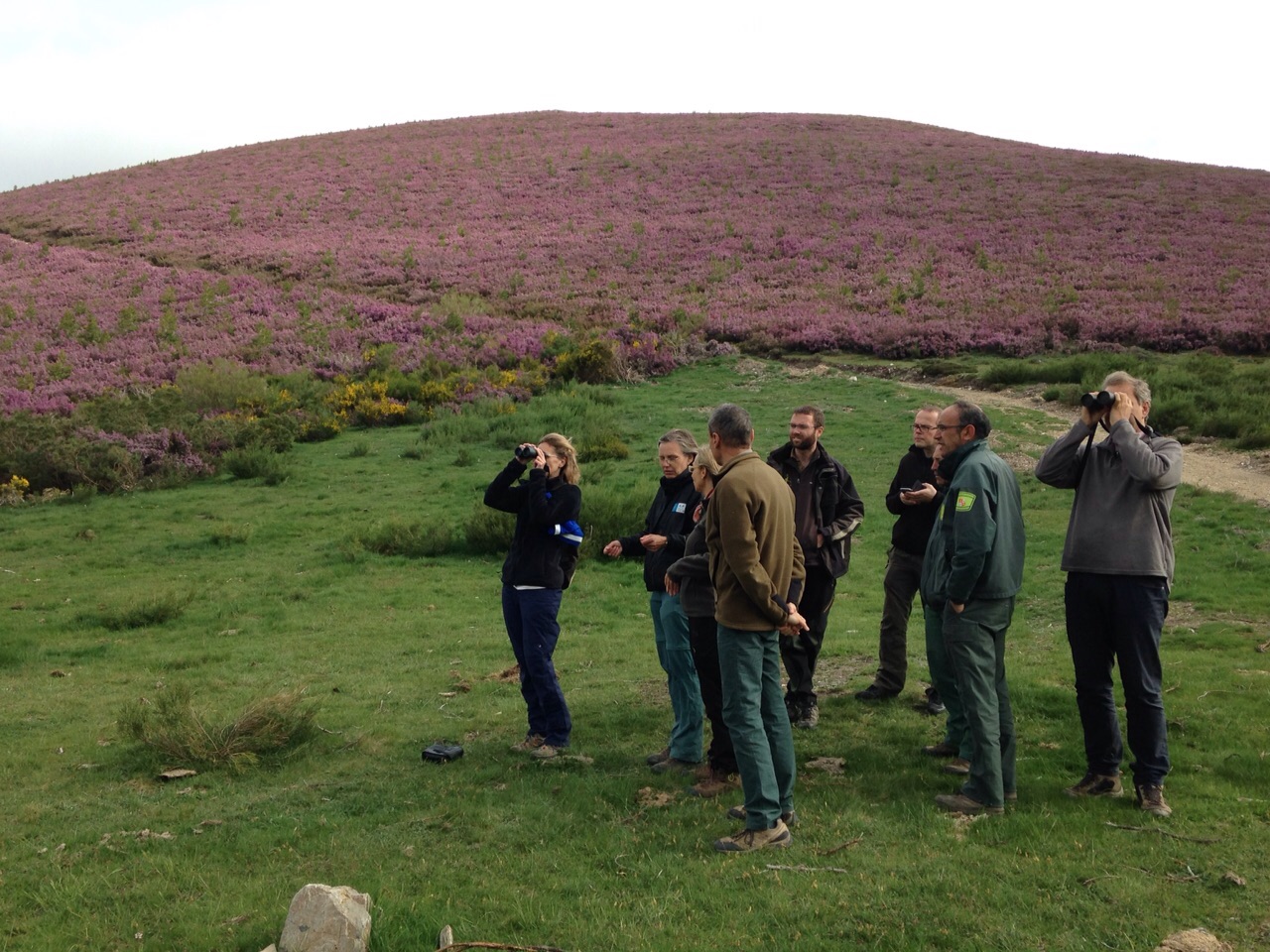
Representatives of the Biodiversity Foundation and the project partners have shown Dorte Pardo, from the LIFE Unit of the Directorate-General for the Environment of the European Commission, the main actions undertaken through a tour of the eastern and western slopes of the Cantabrian mountain range.
In Asturias, they have visited the facilities of the breeding center and genetic reserve of the Cantabrian capercaillie, located in the National Park of Redes in the municipality of Sobrescobio. Currently, it houses three males and eleven females and is equipped with services for incubation, birth, breeding and reproduction of specimens. In addition, it has a space for acclimatization to the outdoor environment and a release park.
The European Commission has also been able to learn in situ about habitat management actions in the Picos de Europa, Omaña and Alto Sil Special Protection Areas (SPAs). To date, action has been taken on 230 hectares to create a more favourable environment for the Cantabrian capercaillie. Thus, selective clearing of scrub and tree treatments have been carried out to encourage the growth of blueberries and other shrubs, key in the capercaillie diet.
During the tour of the Picos de Europa SPA, they have also been able to observe the actions promoted to reduce the impact of the subelectric station located in the Port of Panderrueda, in the Collado de la Vieja. Through the LIFE+ Cantabrian Capercaillie, it will be possible to eliminate the noise and nuisance it causes to the species.
In the Picos de Europa SPA in Castilla y León, the release park where three females from the breeding centre were released in October 2014 has been visited. On the other hand, during the visit to the Fuente del Narcea and Ibias SPA, the two radiotagged specimens have been monitored. The signals they emit reach a receiver with which the agents manage to locate their exact location. This action allows the collection of relevant information for the conservation of the species.
The project, coordinated by the Biodiversity Foundation, is 50% co-financed by the European Union through the LIFE+ funds, and has as partners the Autonomous Communities of Cantabria, the Principality of Asturias and Castilla y León, the latter through the Natural Heritage Foundation of Castilla y León; the Inter-regional Consortium for the coordinated management of the Picos de Europa National Park; SEO/BirdLife, Tragsa and Tragsatec and with funding from the Autonomous National Parks Agency and the Iberdrola Foundation.
12/05/2015
The European Commission visits the actions of the LIFE+ Cantabrian Capercaillie project
Share on:


12/05/2015
The European Commission visits the actions of the LIFE+ Cantabrian Capercaillie project
Share on: