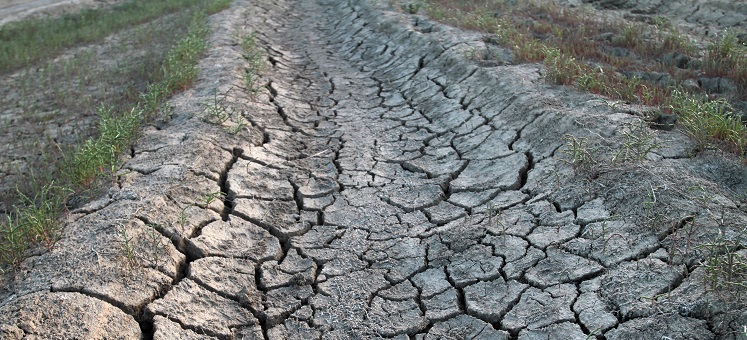


The Intergovernmental Panel on Climate Change (IPCC) has just published the second part of its assessment report, which addresses the impacts, adaptation and vulnerability to climate change. The IPCC warns in the document that climate change has caused substantial, increasingly irreversible impacts on terrestrial, freshwater and marine ecosystems. The first part of the delivery of the report was presented last August.
The Intergovernmental Panel on Climate Change (IPCC) has just published the second part of its assessment report, which addresses the impacts, adaptation and vulnerability to climate change. The IPCC warns in the document that climate change has caused substantial, increasingly irreversible impacts on terrestrial, freshwater and marine ecosystems. The first part of the delivery of the report was presented last August.
This second part of the assessment report collects the most up-to-date data on climate change impacts, risks and vulnerabilities to climate change. The document points out that, in the event that global warming reaches or exceeds the level of 1.5 °C in the short term, climate hazards will inevitably grow, with multiple risks for both ecosystems and humans.
The group of experts that has prepared the document stresses that climate change has already caused significant, increasingly irreversible impacts on terrestrial, freshwater and marine ecosystems. Both the structure and functioning of ecosystems have suffered significant deterioration. Thus, almost half of the species assessed worldwide have moved, either towards the poles or towards higher altitude areas, in the case of terrestrial species. In recent years , hundreds of local extinctions have been recorded caused by the increase in maximum temperatures.
The document also stresses the fact that global warming and the increase in extreme weather events have reduced water and food security, which is an obstacle to meeting the Sustainable Development Goals. Climate change and ocean acidification have also negatively affected seafood production in some regions.
The text stresses that, beyond the impact on ecosystems, global warming has repercussions in the field of physical and mental health. The latter has been particularly affected as a result of rising temperatures, as extreme events can cause trauma, which is coupled with the negative impact that the loss of livelihoods and culture resulting from climate change has on people. As groups that are particularly vulnerable to the impacts of climate change on health, the report points to children, women, the elderly or those with fewer economic resources, among others.
The effects of climate change also directly affect the economy. Thus, there are growing economic impacts and losses attributable to global warming and extreme weather events. In this sense, sectors with direct exposure to the climate, such as agriculture, forestry, fisheries, energy or tourism, are the most affected.
The report stresses that the vulnerability of people and ecosystems to climate change varies substantially due to geographical factors, socioeconomic differences, lack of equality or inadequate governance systems. Between 3,300 and 3,600 million people live in contexts that are highly vulnerable to climate change.
In relation to the progress in the planning and development of climate change adaptation measures, the report reflects some of them, although it insists that many initiatives prioritise risk reduction immediately and in the short term, missing opportunities for more lasting adaptation.
The authors of this second installment confirm the effectiveness of adaptation measures to reduce the risks derived from climate change, an effectiveness that, they warn, will decrease if warming continues to increase.
SPANISH COLLABORATION
Six Spanish experts have collaborated in the preparation of the second installment of the report. The scientists Elena Ojea (University of Vigo), Marta Rivera (University of Vic), José Manuel Moreno (University of Castilla-La Mancha), Jofre Carnicer (University of Barcelona), Cristina Tirado-von der Pahlen (University of California-Los Angeles) and Cristina Linares Gil (Carlos III Health Institute) have contributed their experience in the chapters on oceans and coastal ecosystems, adaptation in Europe, health and well-being in communities, poverty and sustainable development, among others.