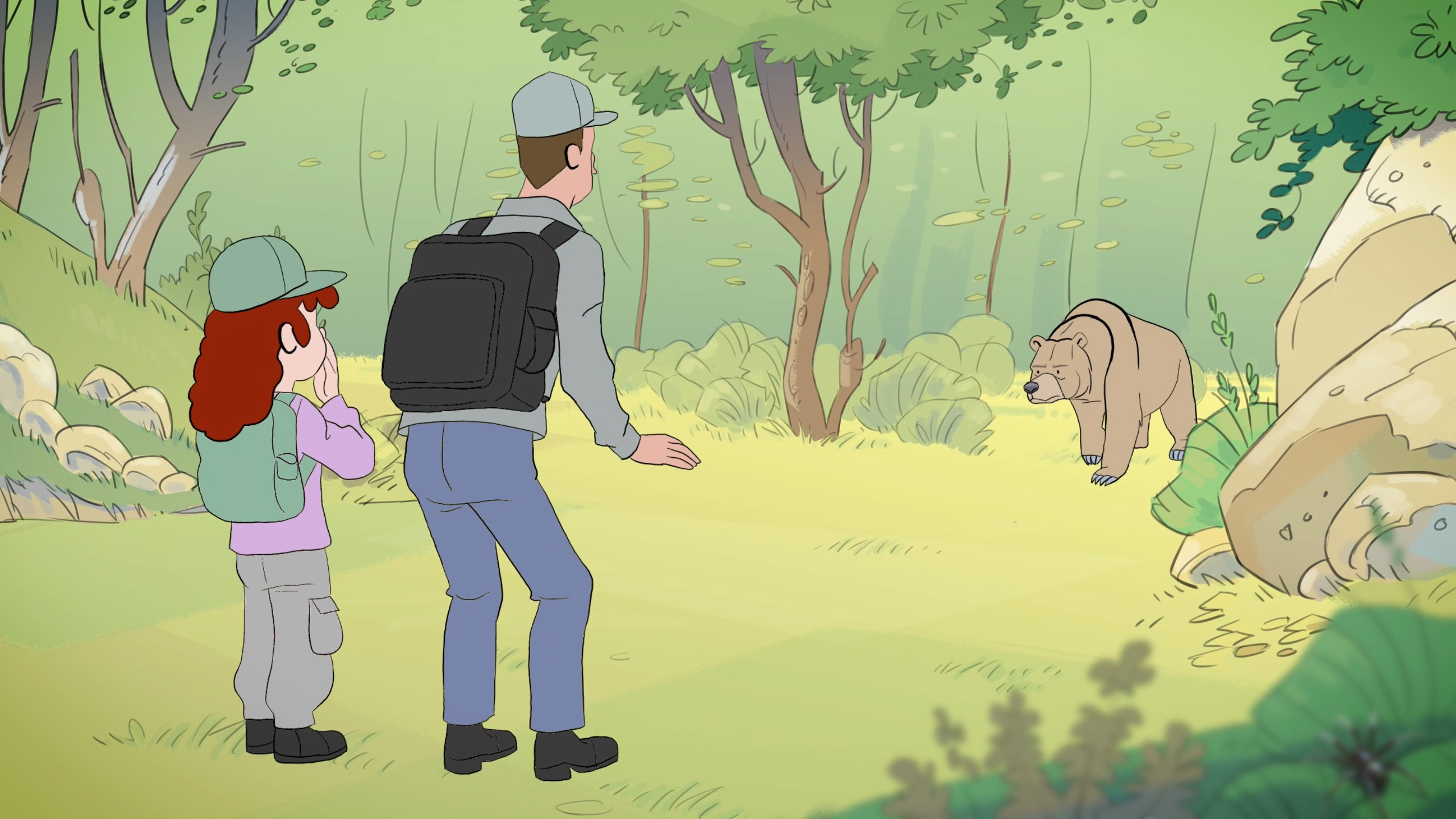


The LIFE Bears with a Future project, in which the Biodiversity Foundation participates as a partner, has published a video showing some tips for touring the bear forests, favoring the safety of both visitors and the brown bear specimens themselves. This audiovisual piece aims to promote compatibility between recreational activities in nature and the presence of bears in a context such as the current one, in which both leisure activities and the bear population are increasing.
The LIFE Bears with a Future, co-financed by the European Commission, is coordinated by the Brown Bear Foundation (FOP) and has as partners with, in addition to the Biodiversity Foundation of the Ministry for Ecological Transition and the Demographic Challenge (MITECO), the Natural Heritage Foundation of the Junta de Castilla y León. The Government of the Principality of Asturias and the Tierra Pura Foundation also participate as collaborators.
The video, with a duration of 4.30 minutes, tells the story of two groups of visitors who behave in very different ways while walking through a bear forest. On the one hand, a father with his daughter, who act responsibly and enjoy hiking, and on the other hand, a couple with inappropriate behaviors that puts the bears and themselves at risk. The counterpoint between the two serves to emphasize what should be done and what should not be done, to avoid a chance encounter with a bear, and to know how to act if, even so, this exceptional situation were to occur.
OBSERVING BEARS WITH DISTANCE AND RESPONSIBILITY
Among the recommendations, you should always use the authorized paths and trails. It is not advisable to go into thick vegetation or follow bear trails. Nor should you approach dead animals, which can be a source of food for the bear and other species. In addition, dogs should be kept on a leash and food scraps should not be thrown away. If you find a bear on the road, it is advisable to slow down, activate hazard lights and waitfor the animal to leave the road.
In Europe, bears avoid contact with people and usually detect their presence well in advance, discreetly moving away from the place without the person noticing in most cases. However, in the face of that fortuitous encounter, one should never react aggressively or shout, or try to reach out, which he would identify as a threat. It is essential to observe bears from a distance and responsibly.
WIDE DISSEMINATION
This audiovisual piece is part of the information campaign of the LIFE project Bears with a future, which develops different conservation actions for the Cantabrian bear in climate change scenarios. The rise in winter temperatures is expected to have an impact on hibernation, shortening or even suppressing it, which will cause more bears to be active in the mountains.
The information campaign will be intensified from this spring throughout the Cantabrian bear distribution area, with special emphasis on those spaces that receive the greatest influx of visitors. For this reason, the video will be made available to hiking and mountain sports federations in the Cantabrian communities; information points for national and natural parks, as well as for all groups involved in conservation or leisure activities in bear forests. In addition, it is designed to be disseminated not only in the Cantabrian mountain range, but also in the Pyrenees and other bear mountains in Europe.
The execution of this audiovisual piece has been carried out by The Glow Animation Studio, from the production company Glow, recognized, among other awards, with the European Film Award and a Goya from the Spanish Academy of Motion Picture Arts and Sciences. The original idea and script have been conceived by the FOP. The audiovisual piece is made with traditional techniques, with image-to-image treatment, to recreate more faithfully the natural movements of the characters and animals.