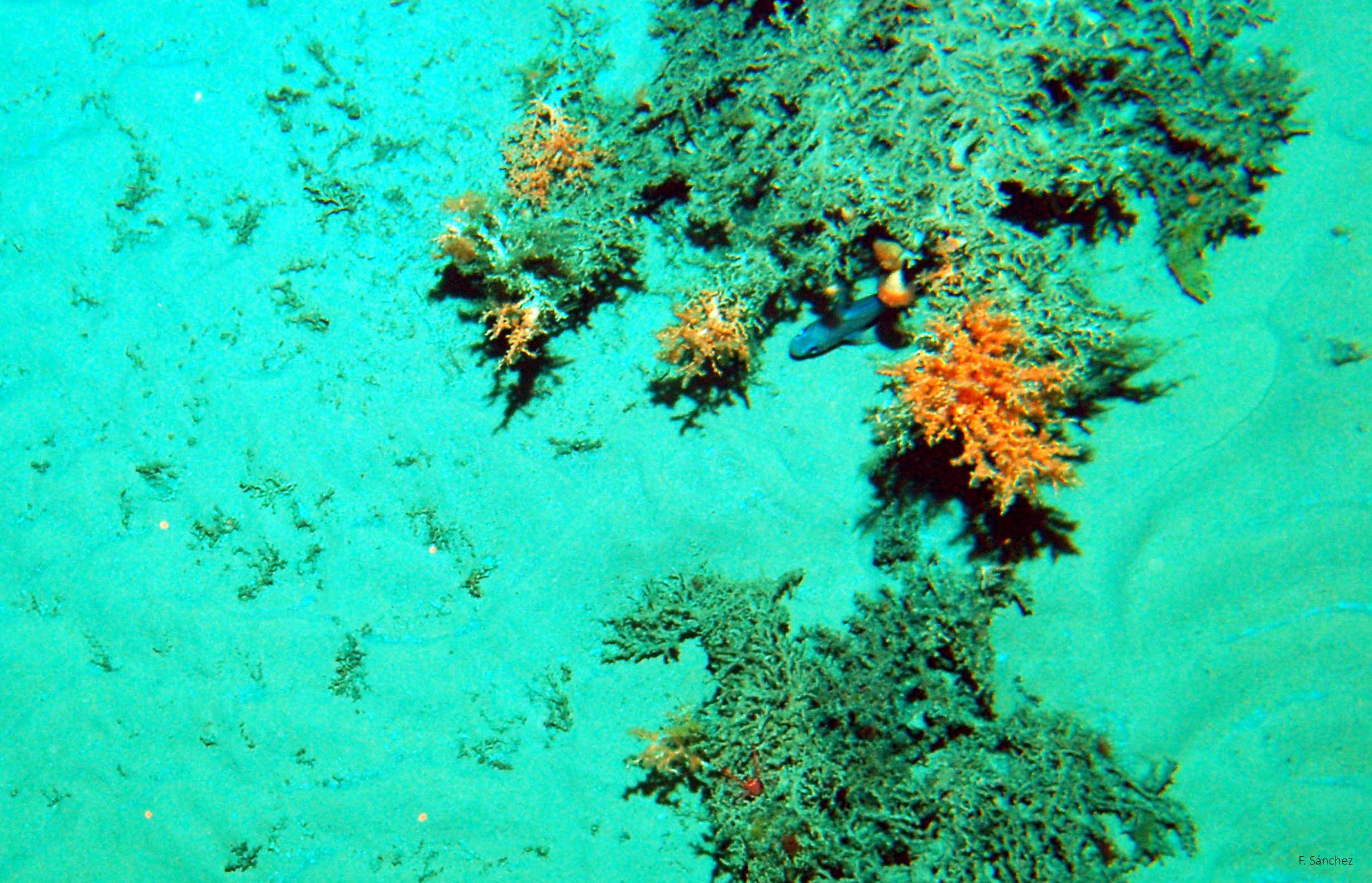


Within the framework of the LIFE+ INDEMARES project, coordinated by the Biodiversity Foundation of the Ministry of Agriculture, Food and the Environment, 20 species new to science and an important presence of coral reefs in the Bank of Galicia have been identified.
The Banco de Galicia is a deep seamount located in the northwest of the Iberian Peninsula, 180 kilometers from the Galician coast. Its summit is between 650 and 1,500 meters deep and its slopes, with high slopes, fall from this summit to the abyssal plains located at a depth of 4,000 meters.
The main ecological value identified in the area are the reefs that include the cold-water white corals of the species Lophelia pertusa and Madrepora oculata located in the sands of the top of the bank, between 780 and 1,000 meters, in the form of scattered spots, and on the rocky summit of Mount Rucabado, in a denser form. as well as the mixed communities formed on deep rock by these same species together with bamboo corals, black corals, gorgonians, solitary scleractinias and large sponges.
The relief of this seamount modifies the bottom currents, causing the deep waters to rise loaded with nutrients. This enrichment of the waters above the bank allows for high productivity, which together with the number of environments present on the slope of the bank create a true oasis of biodiversity in the middle of the sea, which favours the presence of different species of cetaceans, such as the bottlenose dolphin, turtles and seabirds such as the Madeira storm petrel. More than 790 species from different groups, such as molluscs, worms, polychaetes, corals, fish and urchins, have been identified and catalogued. Vulnerable species such as sharks, large, slow-growing predators, are also prevalent in the waters and bottoms of the seamount.
Due to the distance of the bank from the main pressure sources, the degree of conservation is very high. Although it is a place far from the direct impact of human activities, the proper management of activities such as fishing, maritime traffic and the possible laying of submarine cables is vital to prevent the generation of serious impacts that modify oceanographic conditions or alter biodiversity.
For all these reasons, thanks to the results of the LIFE+ INDEMARES project, an area of more than one million hectares of high ecological value is protected thanks to the results of the LIFE+ INDEMARES project.