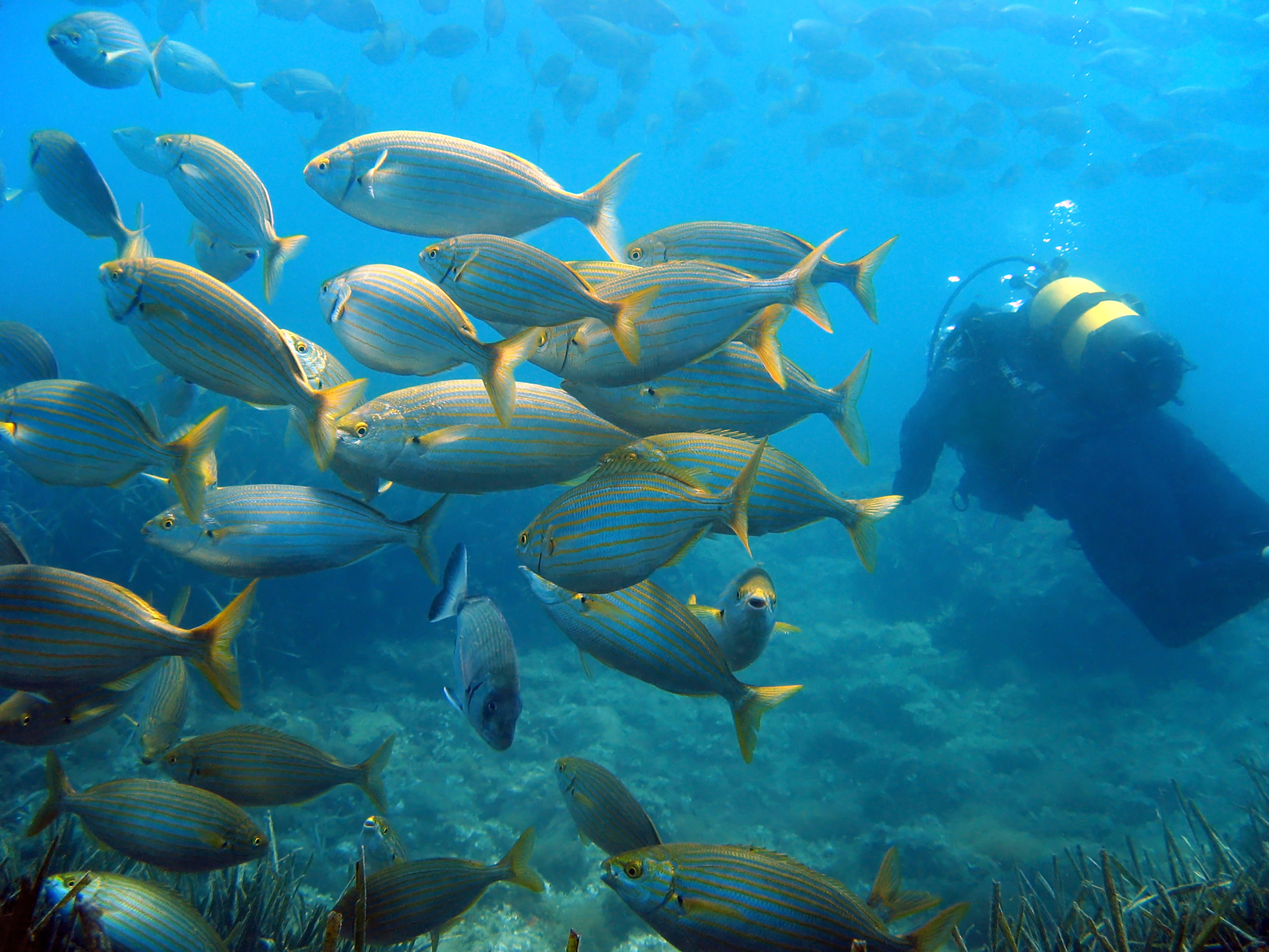


This is one of the conclusions drawn from a technical report that analyses the results of 175 marine projects that we have co-financed in recent years.
Spain consolidates its contribution to the priorities established in national and international regulations on marine conservation. This is one of the conclusions drawn from a technical report that analyses the results of 175 marine projects that we have supported in recent years. These projects have a direct effect on the application of European regulations governing the protection of biodiversity, including the Habitats and Birds directives, as well as the Convention on Biological Diversity and the Strategic Plan for Natural Heritage and Biodiversity of Spain 2011-2017.
In this line, he points out that they are also “solidly aligned” with the search for “Good Environmental Status in 2020” of the Framework Directive on the Marine Strategy of the European Union.
Governance, the protection of habitats and species, the effective management of marine spaces and innovative approaches are the most addressed issues among the 26 major commitments made by Spain. The marine projects analysed also follow these patterns, in particular, LIFE INTEMARES, which responds “precisely” to the priorities established by international conservation policies.
The diversity of partners and beneficiaries working on the study, planning and coordinated management of the marine areas of the Natura 2000 Network in Spain is one of the most internationally valued aspects of LIFE INTEMARES, which stands out as a case study and example of governance, according to the report.
In addition to pursuing the establishment of Natura 2000 marine areas in Spain, the project addresses some of the most complex issues such as participatory planning, integrated marine governance, sustainability of productive activities and science-based adaptive management. As highlighted in the report, this is a greater advance than what has been achieved by most countries in the world.
This report has analysed 175 marine projects co-financed by the Biodiversity Foundation through the general call for grants and the Pleamar Programme, which has the contribution of the European Maritime and Fisheries Fund (EMFF). The beneficiary organizations of the projects are 50% NGOs, followed by universities, public research centers and producer associations.
The five marine demarcations have received attention proportional to their surface, with a certain predominance of the Gulf of Cadiz and the Mediterranean Sea. Two out of three projects are linked to marine areas of the Natura 2000 Network and the same proportion is found in research on species. Among the faunal groups, the work carried out with cetaceans and sea turtles stands out, followed by birds. Marine habitats also stand out as one of the most attended topics.
The theme of the projects has also evolved. The number of initiatives focused on conserving emblematic species has fallen by a third in recent years. On the other hand, the coverage of more cross-cutting objectives such as fishing, participation, citizen science, volunteering, the state of marine conservation and its main impacts has increased, and even doubled.
53% of marine projects have taken steps in the integration of sectoral policies, particularly by working with the fishing and tourism production sectors on the coast, taking into account pressures and impacts such as noise, pollution or aquaculture.
TOWARDS 30% PROTECTION
Having reached nearly 13% of marine protected area, Spain is one of the few countries that has exceeded the coverage threshold committed to the Convention on Biological Diversity (CBD), established at 10%. Globally, the current average coverage is 7.4% and has significant gaps in representativeness, according to the analysis.
As defined by the Government in the Declaration of Climate and Environmental Emergency, efforts are aimed at achieving 30% protection by 2030 through the declaration of new marine protected areas and effectively managed, following the European Union’s Biodiversity Strategy. 10% of these spaces should be designated under a comprehensive protection figure, without activity or human impact. In Spain, this type of area only accounts for 0.2% of the marine protected area.
Among other challenges for the future, Spain has made it a priority to achieve the effective management of marine protected areas. 6% of that 13% of the marine protected area has a management plan, but only in half of these areas is the plan being applied, the study stresses. In addition, it adds that there are ecological shortcomings with the representativeness of marine protected areas, connectivity and the declaration of integral protection zones.
For this reason, LIFE INTEMARES is carrying out participatory processes for the preparation of management plans for all marine protected areas and an analysis of the insufficiency of the declaration of marine areas within the framework of the Natura 2000 Network is being prepared.
EFFECTIVE MANAGEMENT
The LIFE INTEMARES project advances towards a better knowledge of marine protected areas, with the aim of achieving an effective management of the marine spaces of the Natura 2000 Network.
The Biodiversity Foundation of the Ministry for the Ecological Transition and the Demographic Challenge coordinates this integrated project, in which the Ministry’s Directorate-General for Biodiversity, Forests and Desertification, IEO, CEPESCA, SEO/BirdLife and WWF-Spain participate as partners. It has the financial contribution of the European Union’s LIFE programme, among other sources of funding.