

Today we celebrate World Food Day, a date promoted by the Food and Agriculture Organization of the United Nations (FAO) that this year aims to support awareness and action around the world in favor of those who suffer from hunger and the need to guarantee healthy diets for all people.
Today we celebrate World Food Day, a date promoted by the Food and Agriculture Organization of the United Nations (FAO) that this year aims to support awareness and action around the world in favor of those who suffer from hunger and the need to guarantee healthy diets for all people. The theme in 2021 focuses on “Our actions are our future“, highlighting the idea that the future of food is in our hands. To this end, it proposes the transformation of agri-food systems, a complex term that refers to the food we choose, the way we produce, prepare, cook and store it, making us an integral and active part of the functioning of the system.
In addition, it focuses on the transformation towards a sustainable agri-food system that would make it possible to reduce food waste, a more resilient supply chain in the face of extreme weather events, price spikes or pandemics, while limiting environmental degradation or climate change. According to FAO, better production would result in “better nutrition, a better environment and a better life for all people”. That is why there is an urgent need to implement sustainable agri-food systems that are capable of feeding 10 billion people by 2050.
To achieve this solution, FAO calls on governments to adopt innovative policies that encourage the sustainable production of affordable nutritious food and promote farmer participation. In addition, the organization stresses the need to involve the private sector, civil society, international organizations and academia to join efforts aimed at sustainable production, reduction of food waste, mitigation of climate change and the effects caused by the loss of biodiversity and thus improve the well-being of the world’s population.
In line with the above, the Biodiversity Foundation of the Ministry for Ecological Transition and the Demographic Challenge is working on different projects that pursue sustainable production and applied innovation in various food sectors.
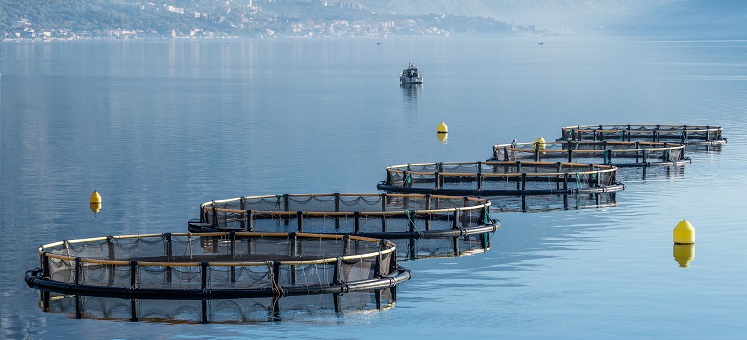
On the one hand, within the framework of the Pleamar Programme we support different initiatives that develop innovative actions focused on aquaculture. The University of Valencia is developing, through the ANITEST project, a method for assessing infectivity for anisakis-free aquaculture that will generate guides and protocols with representative data that will be shared with all the sectors involved. The GLORiA initiative, carried out by the University of Alicante, aims to provide aquaculture with management tools that generate resilience to climate change. To this end, it seeks to advance in the establishment of plans for the prevention and management of marine fish escapes due to extreme weather events that damage aquaculture facilities. With this objective, the project aims to involve the production sector, regional administrations and fishermen’s guilds to reduce these fish losses and mitigate the socioeconomic and environmental impact that escapes can cause.
The FISHFLOC project aims to develop innovative technical and scientific knowledge on new, more sustainable technologies applicable to marine fish farms, in order to diversify farmable species and reduce organic emissions in their effluents. On the other hand, the FITOGEL initiative seeks to improve the yield in clam farming in a sustainable way on the Mediterranean coast through the use of phytoplankton gels. Finally, the ALGADIET II project of the Spanish Institute of Oceanography is working on the development and optimisation of new functional feeds based on the use of algae meal and probiotics for the fattening of species such as turbot.
In the field of the green economy, within the framework of the Empleaverde Programme, we support projects such as (r9)Alimenta developed by Fundació Espigoladors, which is currently working on training and education on issues related to the problem of food waste for workers in the agri-food sector, social entities and public administration to achieve more sustainable food systems.
The Regulatory Council of the Jamón de Teruel Designation of Origin is also carrying out an initiative that seeks to improve the sustainability skills of professionals in the ham sector throughout the production process: from breeding to distribution. In this way, it aims to address the transformation of the sector to reduce environmental impact, improve management and implement eco-design in the production process. Finally, in the agricultural and livestock field, the Andanatura Foundation develops INNOAGRO 3.0 to train workers from SMEs, micro-SMEs and/or self-employed workers and owners of agricultural and livestock farms to transform their production towards a sustainable and profitable business model.