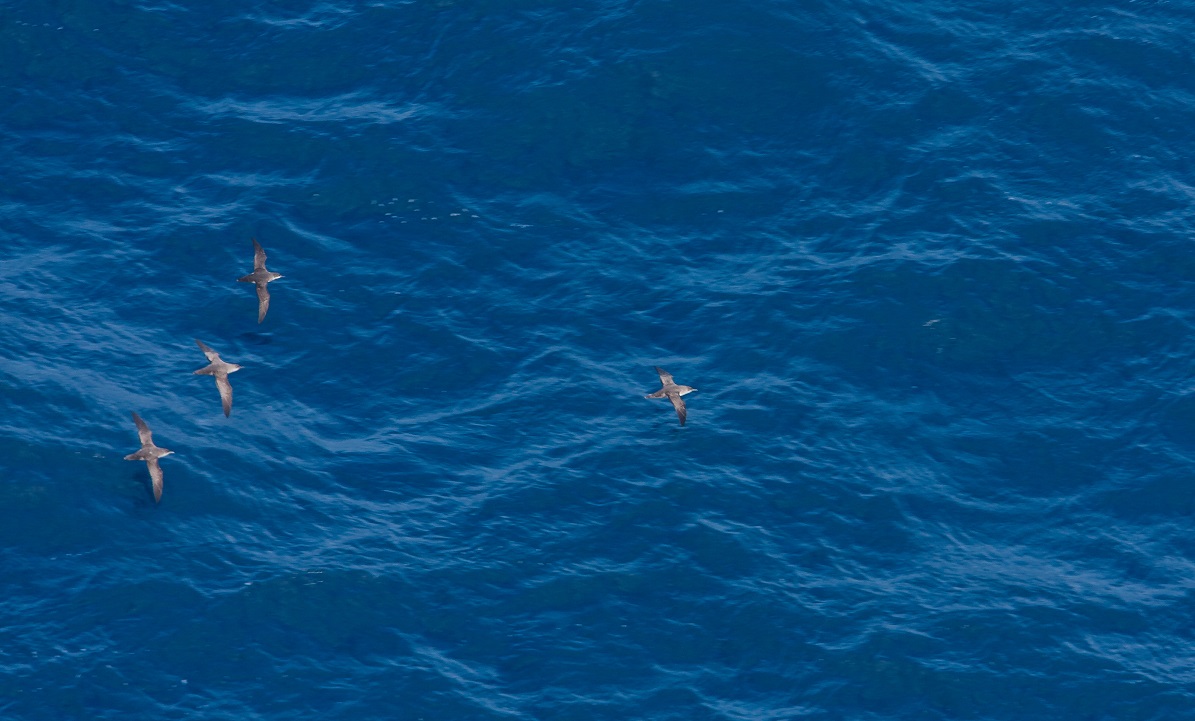


World Migratory Bird Day, an event proclaimed by the UN in 2006 from the union of two of its treaties such as the Convention on the Conservation of Migratory Species of Wild Animals (CMS) and the African-Eurasian Migratory Waterbird Agreement (AEWA), seeks to raise awareness of the importance of working for the conservation of migratory birds and their habitats.
World Migratory Bird Day, an event proclaimed by the UN in 2006 from the union of two of its treaties such as the Convention on the Conservation of Migratory Species of Wild Animals (CMS) and the African-Eurasian Migratory Waterbird Agreement (AEWA), seeks to raise awareness of the importance of working for the conservation of migratory birds and their habitats. It is celebrated today, May 14, although it will have a second celebration on October 8, being the only international day that is celebrated on two dates, the second Saturday of May and October, respectively.
In 2022, and under the slogan “Dark nights, safe migrations”, this day focuses on the problem of light pollution and its negative consequences for these birds. According to the CMS definition , light pollution is ” artificial light that alters the natural patterns of light and darkness in ecosystems”, a global problem that affects, according to data from the organisation itself, more than 80% of the world’s population, which lives under an “illuminated sky”.
In this context, the use of artificial light to illuminate streets, homes, shops and other buildings and buildings continues to increase, drastically modifying the natural environment and influencing numerous species. With respect to birds, light pollution can alter their behaviour by influencing their migration, search for food, vocal communication and energy expenditure.
Therefore, migratory birds, and especially those that migrate at night, are especially threatened by light pollution, since excess artificial light can repel them, attract them and disorient them, altering their course, especially when there are low clouds, fog or rain and they have to fly at a lower altitude. This, according to CMS, can lead to exhaustion and puts their lives at risk, since every year light pollution contributes to the death of millions of birds by colliding with buildings, communication towers and other well-lit infrastructure.
The organization highlights that long-distance migratory birds, such as the blackcap (Setophaga striata), the Asian short-tailed warbler (Urosphena squameiceps) or the great Asian plover (Charadrius veredus), can start and end their migrations in areas with relatively low levels of light pollution, but during the course of the migration they may have to fly over urban areas that have high levels of light artificial. Likewise, many other nocturnal migratory birds such as ducks, geese and songbirds can also have their natural biological rhythms affected by light pollution. Finally, seabirds, such as petrels and shearwaters, are also threatened by this problem because artificial light can attract them to dangerous situations near land and boats.
The Biodiversity Foundation of the Ministry for the Ecological Transition and the Demographic Challenge has contributed, since its inception, to the protection and improvement of the conservation status of birdlife in general and migratory birds in particular, supporting projects that, directly or indirectly, are in line with this purpose. Thus, initiatives have been promoted for the development of conservation actions for endangered species, such as the bittern (Botaurus stellaris) or the marbled teal (Marmaronetta angustirrostris), for which we also promote different actions with the aim of reversing their situation through the LIFE Marbled Teal. It has also contributed to the conservation and restoration of key natural habitats for migratory birds and other wildlife, and has promoted the generation of scientific knowledge on terrestrial, marine and coastal biodiversity. In addition, actions have been promoted to improve the management of the Special Protection Areas for Birds (SPAs) and it has been possible to encourage and promote the sustainable management of livestock, agriculture, fishing, hunting and forestry uses in Natura 2000 Network areas.
In this way, the Biodiversity Foundation has supported more than 40 projects dedicated to improving the conservation status of migratory birds through calls for aid and subsidies, to which almost four million euros have been allocated. Currently, seven of these projects are under implementation.
Thus, the Spanish Ornithological Society (SEO/BirdLife) is developing an initiative that seeks to raise awareness of the situation of procellariform birds, the most endangered seabirds on the planet, as well as to implement conservation strategies for four species of this group: the Mediterranean Cory’s shearwater (Calonectris diomedea), the Atlantic Cory’s shearwater (Calonectris borealis), the Mediterranean shearwater (Puffinus yelkouan) and the Balearic shearwater (Puffinus mauretanicus). The latter is listed in the Spanish Catalogue of Threatened Species (CEEA) as an “Endangered” species, while the Mediterranean Cory’s shearwater is already considered “Vulnerable” on the same list.
Likewise, the GIC Association (Research and Conservation Group) is carrying out population reinforcement work of the three species of storm petrel nesting in the Canary Islands: the European storm petrel (Hydrobates pelagicus), the Madeira storm petrel (Hydrobates castro) and the white-breasted storm petrel (Pelagodroma marina)). These actions will also make it possible to define the areas in the sea that are important for the development of these species for their subsequent inclusion in the Natura 2000 Network as Special Protection Areas for Birds (SPAs).
For its part, the SteLar DELTA project, developed by the Cory’s cooperative (Research and Conservation of Biodiversity) that we support through the Pleamar Programme, seeks to contribute to efficient fisheries management, from the trophic point of view of seabirds, of the Ebro Delta marine SPA, the most important in the Spanish Mediterranean. To this end, an analysis of the diet, spatial availability of food, reproductive success and trophic needs of the populations of five species of birds will be carried out: common tern (Sterna hirundo), sandwich tern (Thalasseus sandvicensis), little tern (Sternula albifrons), Audouin’s gull (Ichthyaetus audouinii) and yellow-legged gull (Larus michahellis).