BIOTER-LAB. Circular Bioeconomy Laboratory in Rural Territories through the Valorization of Agroforestry Resources.
FEDER
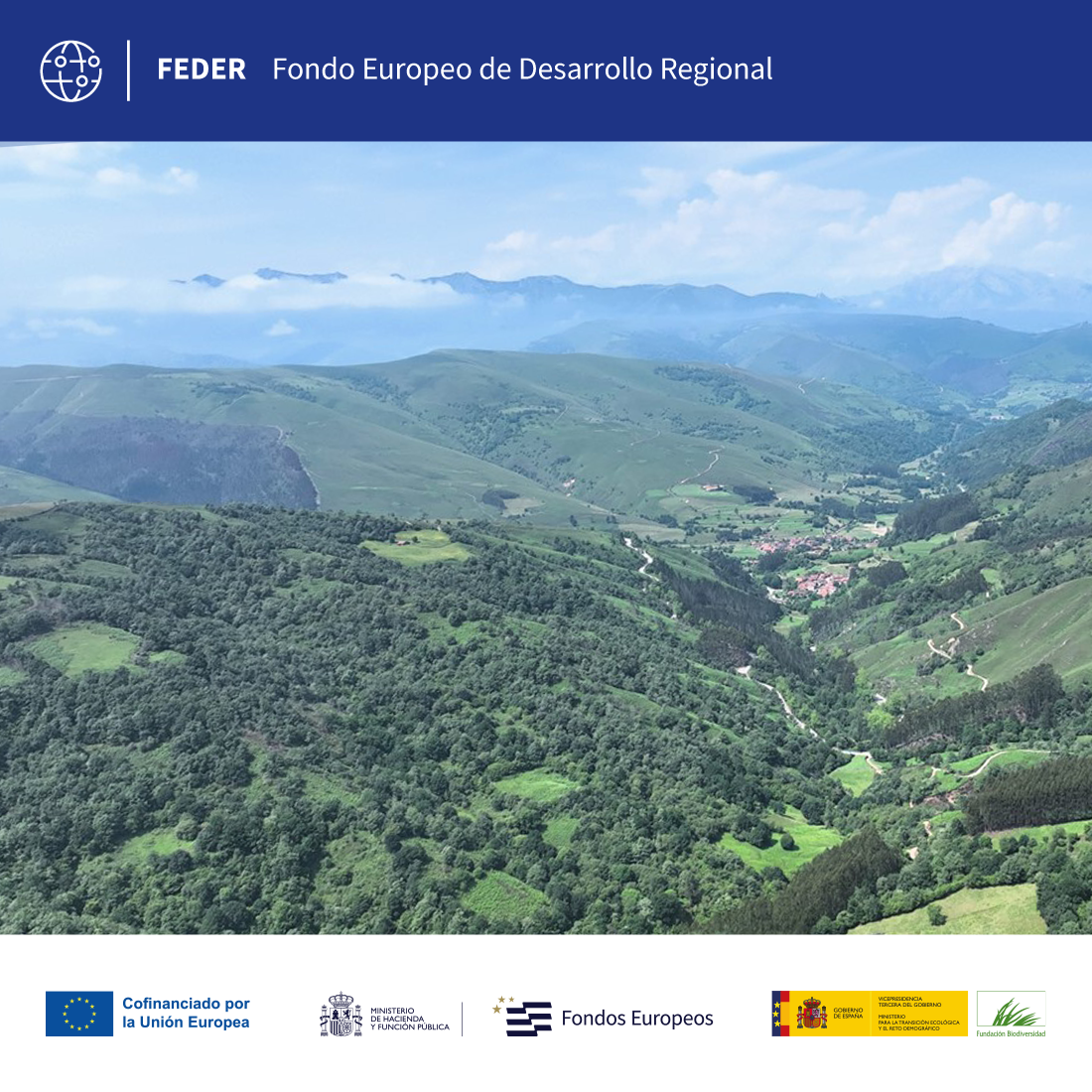
The project aims to create an interregional circular bioeconomy laboratory to valorise low-value agroforestry resources (especially scrubland) and reduce the risk of fires, improving biodiversity and rural economic activity. To this end, it carries out a territorial analysis by region with biodiversity censuses and will select 6 pilot areas where it will carry out preventive silvicultural work and biomass extraction with animal traction and light machinery. In addition, it promotes the valorisation of biomass in biocomposites, biochar and extracts for feed and biofertilisers, with validation with companies and semi-industrial pelletisation (300 kg/h), incorporating Life Cycle Analysis and a dissemination plan with more than 10 days. All this is intended to achieve results related to innovation, fire prevention and forest management of 50 ha pilot in Cantabria, 5 ha in Galicia and 5 ha in Castilla y León.
Line of action:
Terrestrial ecosystemsStatus:
En ejecuciónLocation:
Cantabria, Soria and Zamora (Castilla y León) and Ourense, Pontevedra and A Coruña (Galicia)Geographic scope:
EspañaExecution date:
2026End date:
2028Duration:
18/02/2026 - 31/08/2028Total budget:
€1,191,940.05Amount of aid from the Biodiversity Foundation:
€715,164.03Component Technology Center Foundation (CTC)
Galicia Automotive Technology Centre Foundation (CTAG)
CEDER-CIEMAT Research Center
To develop and implement a comprehensive model of self-sustainable circular bioeconomy in rural areas, focusing the project on the territories of Cantabria (MRS), Castilla y León (Sanabria-Zamora) and Galicia (El Barco de Valdeorras-Ourense), aimed at the extraction and efficient recovery of unused forest residues and shrubs of leguminous species, through innovative and sustainable methodologies and technologies. This model will mitigate the risk of fires and other natural risks (such as floods), promote biodiversity, encourage green employment and population fixation, preserve soil quality by preventing soil degradation and enhance ecosystem and socio-economic services linked to rural tourism and agricultural uses.
- Carry out a comprehensive analysis of the selected territories, identifying and prioritizing areas with a high risk of fires, loss of biodiversity and unvalued forest resources, using environmental, legal and potential use criteria.
- Optimize the forestry value chain by developing on-site densification and logistics technologies.
- Implement high-efficiency cascade valorization of biomass in biocomposites, controlled-release fertilizers based on biochar and plant extracts.
- To make forest management compatible with ecological restoration, designing and implementing pilot plans that integrate multifunctional green firebreaks, promoting biodiversity.
- Align the model with European policies, the Sustainable Development Goals, the European Green Deal and the 2030 Biodiversity Strategy.
- Enhance socio-economic impact and gender equality (green employment).
- Generate a framework of replicability and territorial scalability.
- Analysis of the territory.
- Development of pilot actions in the territory.
- Valorization of resources.
- Evaluation of the solutions developed along the value chain.
- Communication, dissemination and awareness.
- Coordination and management.
The removed biomass will be recovered in three lines: sustainable biocomposites, biochar for controlled-release fertilizers and amino acid extracts for feed and biofertilizers. These results will be validated with early adopter companies in Cantabria, while CEDER-CIEMAT will carry out semi-industrial pelletization (300 kg/h). The project operates in four pilot territories: the Mancomunidad Reserva del Saja (Cantabria), Sanabria (Zamora), Valdeorras (Ourense) and Barbanza (A Coruña), and incorporates a Life Cycle Analysis and a dissemination plan with more than 10 days to guarantee replicability.
- Analysis and selection of areas of the territories at risk of fires and loss of biodiversity, for subsequent action.
- Orderly and prioritized compilation of the different zones/areas of the territory with problems: fires and loss of biodiversity.
- Analysis and selection of the territory’s forest resources
- Silvicultural actions and extraction of resources in the areas of the territory.
- Environmental impact analysis of the life cycle of developments.
- Analysis of the social and economic impact of developments.
- Integration of equality and gender perspective in the different phases.
- Dissemination of results through actions aimed at the general population, social entities, public administrations and industry.
- Implement technical and administrative management processes to ensure the execution of the rest of the project’s actions and meet the objectives set.
BIOTER-LAB. Circular Bioeconomy Laboratory in Rural Territories through the Valorization of Agroforestry Resources.

 back to search