Mediterranean mysticetes: distribution, migration and conservation of fin whales (Balaenoptera physalus) in Spanish waters (MysticMed)
FEDER
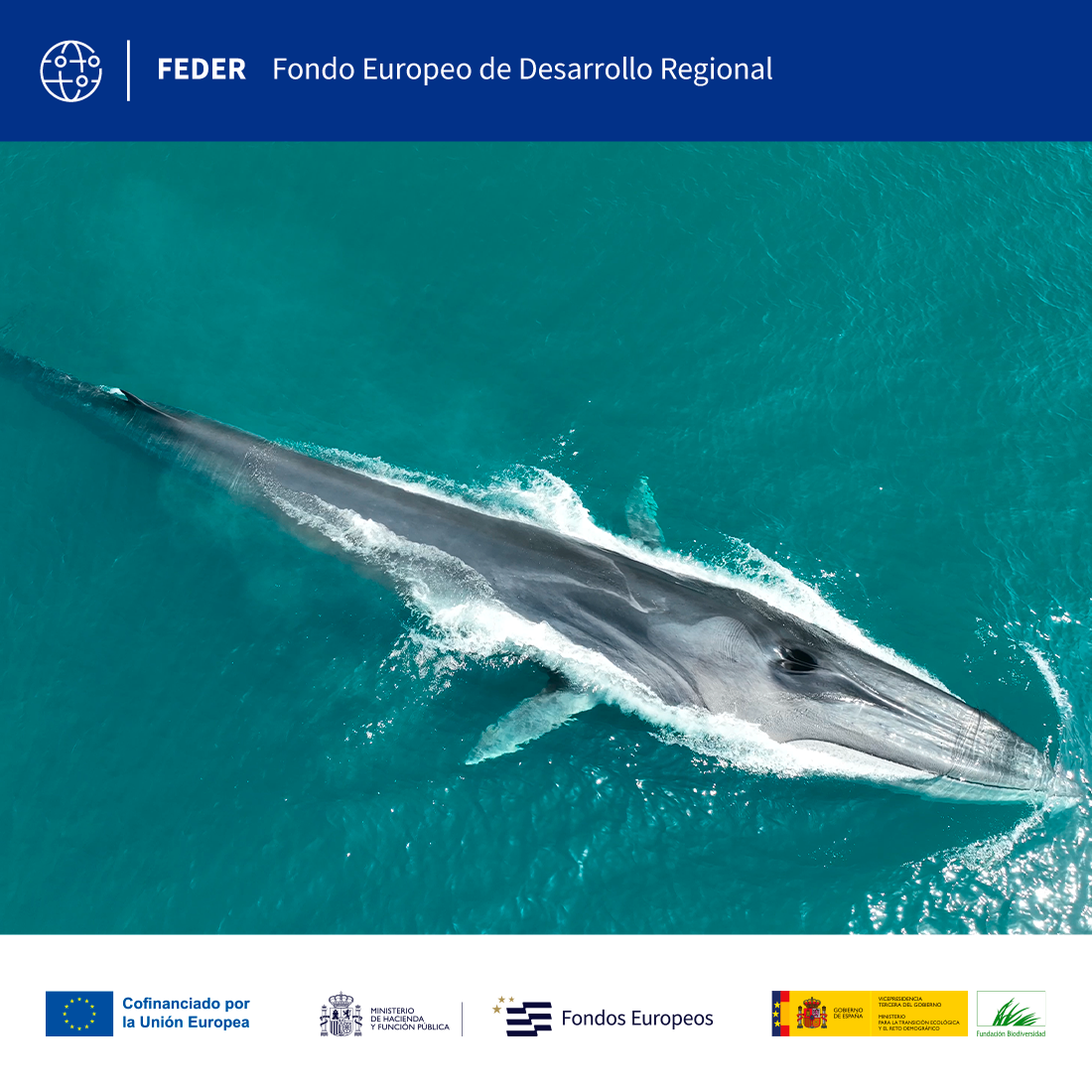
The fin whale (Balaenoptera physalus), the only mysticette regularly present in the Mediterranean, is listed as “Endangered” by the IUCN in this region. Important gaps in knowledge persist about their distribution in Spanish waters during autumn and winter, a key period for their reproduction. The project seeks to improve this knowledge in three areas: the south of the Levantine-Balearic demarcation, the Alboran Sea and Atlantic waters off Galicia. Satellite monitoring, photo-identification, observation and ecological modelling techniques will be used. Overlap with protected areas and threats such as maritime traffic and climate change will be analysed. As an innovation, an automated acoustic detection pilot system will be implemented for early warnings of the presence of fin whales and reduction of collisions. Hotspots will be identified, the impact of climate change assessed, and the results will be applied to marine management and conservation of this keystone species.
Line of action:
Marine ecosystemsStatus:
En ejecuciónLocation:
Valencia and AndalusiaGeographic scope:
EspañaExecution date:
2026End date:
2028Duration:
16/01/2026 - 30/09/2028Total budget:
€538,083.12Amount of aid from the Biodiversity Foundation:
€388,826.12University of Seville
This project will directly contribute to the knowledge and conservation of the only mysticette regularly present in the Mediterranean, improving the scientific basis for decision-making in the management of the conservation of this species and of protected marine areas. It will contribute to the objectives of the Marine Strategy Framework Directive and will be applicable to the Mysticetes Conservation Plan and the development of RAMPE. The project includes assessing how different climate change scenarios will affect the distribution of fin whales in the EEZ of Spanish waters. This may influence the designation of new protected areas that are critical for fin whale conservation, as those areas that may be critical now may not be critical or may change with climate change. Therefore, knowing the possible changes in the distribution and use of the habitat are necessary for adaptation in mysticet conservation plans.
Improvement of knowledge about spatial-temporal distribution patterns, habitat use, and identification of critical areas for the conservation of fin whale (Balaenoptera physalus) in Mediterranean and Atlantic waters in order to implement an integrated management of this threatened species based on the best possible scientific knowledge.
- Satellite tagging, and photoidentification to know winter migratory movements, feeding areas and important areas for reproduction in Mediterranean and Atlantic waters.
- Population size estimate.
- Distribution models and effect of climate change.
- Automated acoustic detection and early warning pilot system.
- Consensus proposals for the management of fin whales and critical areas for their conservation.
- New scientific knowledge: scientific publications.
- Raising awareness of the importance of fin whales in the conservation of marine ecosystems in the Mediterranean and the threats it faces.


Mediterranean mysticetes: distribution, migration and conservation of fin whales (Balaenoptera physalus) in Spanish waters (MysticMed)

 back to search