TRANSFERS. Transformation and renaturalization of transhumance areas for the sustainability of cattle trails in Spain.
FEDER
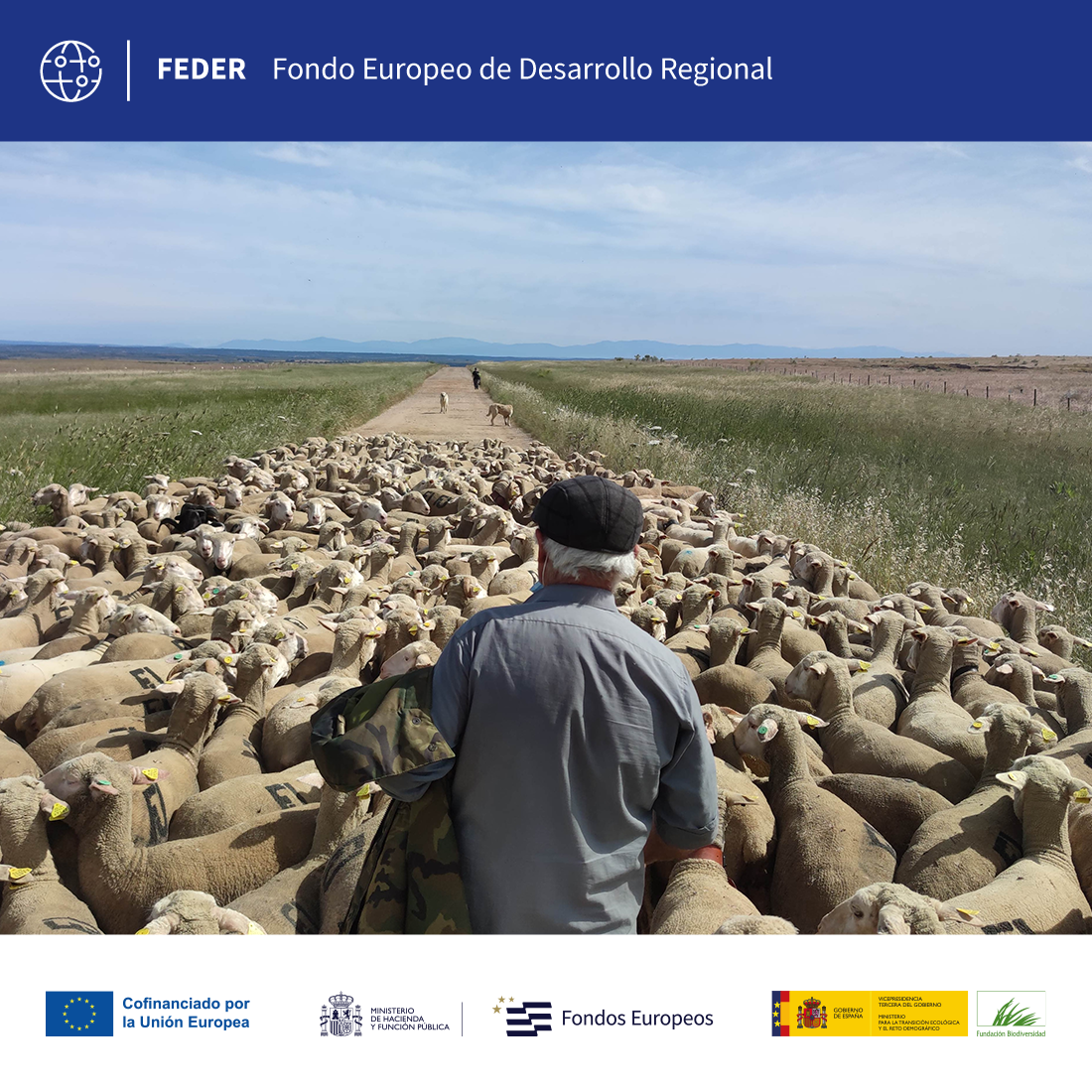
This project works to restore and improve cattle trails nationwide, promoting transhumance as a sustainable practice and encouraging citizen participation. To this end, it carries out a renaturation in 3 pilot areas with forage species (24 ha), shrubs (in 3 km of borders) and shade trees (3 ha), and the installation of 3 smart cisterns and 3 coastal areas. In addition, a Transhumant Office will be established and 3 declarations of interest of transhumant livestock farms are planned. All this is intended to achieve results related to biodiversity conservation (restoration of 10,370 ha and biodiversity monitoring in 29 ha), the transferability of knowledge (200 workshops, an exhibition, 8 popular days) and the promotion of traditional livestock practices through redemption agreements and other types of planned grazing.
Line of action:
Terrestrial ecosystemsStatus:
En ejecuciónLocation:
Andalusia (Jaén), Aragón (Teruel), Castilla-La Mancha (Ciudad Real and Cuenca), Extremadura (Badajoz and Cáceres), Castilla y León (Salamanca and Zamora)Geographic scope:
EspañaExecution date:
2026End date:
2028Duration:
18/02/2026 - 31/08/2028Total budget:
€1,816,224.53Amount of aid from the Biodiversity Foundation:
€1,434,038.57Association for the Defence of Nature and Resources of Extremadura (ADENEX)
Transhumance and Nature Foundation
Oxygen Foundation
This project will focus on promoting the development of the bioeconomy, promoting innovation, improvement and consolidation of green infrastructure, connectivity, restoration of degraded ecosystems and multifunctional landscapes, with the aim of increasing biodiversity and its conservation, adaptation to climate change, prevention of forest fires and the fight against desertification. at the same time generating opportunities and employment in rural areas and contributing to the fight against the demographic challenge.
The project aims to promote the restoration, improvement and sustainable management of cattle trails and surrounding areas as green infrastructure, promoting the bioeconomy, transhumance and social participation, with a focus on biodiversity, the application of Nature-Based Solutions (NBS), and adaptation to climate change.
3 pilot areas will be selected where forage species will be planted on 24 ha and shrubs will be planted on 3 km of boundaries and shade trees on 3 ha. 3 smart cisterns will be installed and 3 basins will be built through bioconstruction. A socio-economic and ecological impact study, bibliographic review, ecological accreditation and environmental monitoring will be carried out on 355,000 km², as well as biodiversity monitoring on 29 ha. There will be 200 workshops with 5,000 students, a traveling exhibition in 32 locations, 4 didactic units and an environmental volunteering program. There will be 64 volunteers on two livestock roads (Vizana/Sanabresa and Conquense) and 8 popular days with talks, routes and workshops for between 600 and 800 participants.
The recovery of transhumance will also be promoted in the “El Valdío” mountain (412ha) in Cáceres and in the Páramos Corcos (10,000ha) in Burgos and Segovia, including forestry, livestock and signage improvements. 10,370 ha will be restored and 3 declarations of interest by transhumant livestock farms are planned. Tourist and cultural activities will be promoted, with 2 archaeological excavations, 8 information panels, 1 cultural itinerary and 8 local product fairs. A Transhumant Office, a census of transhumant people and a cartographic viewer of 13 cattle trails or 11,000 km will be created. A governance pilot will be launched that will include at least 5 administrative agreements. A comprehensive communication strategy will be developed.
- Ecological restoration of livestock trails and transhumant areas, improving biodiversity and the resilience of the territory.
- Improvement in livestock resources bequeathed to transhumant activity.
- Creation of new green infrastructures for the improvement of biodiversity, livestock and tourist use.
- Environmental awareness of the Intangible Cultural Heritage of Transhumance.
- Collaboration between transhumant workers at the national level.
- Reduction of gender gaps, guaranteeing inclusion and equity in all project actions.
- Carbon footprint.
- Dissemination, communication and transfer of the project.
- Adequate management and coordination of the project and achievement of the planned objectives.

TRANSFERS. Transformation and renaturalization of transhumance areas for the sustainability of cattle trails in Spain.

 back to search