


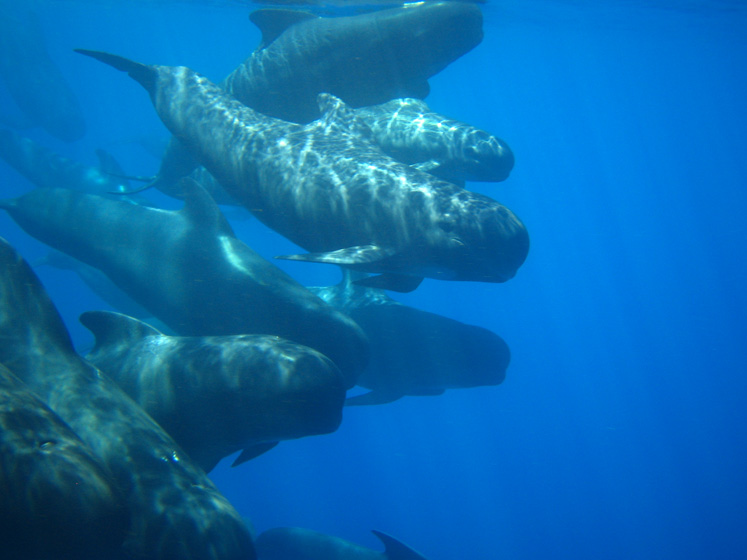


The Ministry for the Ecological Transition (MITECO), together with the coastal autonomous communities and cities, have strengthened the coordination mechanisms for the joint and effective management of the marine areas of the Natura 2000 Network, the largest ecological network in the world for the conservation of biodiversity. The Secretary of State for the Environment, Hugo Morán, chaired, at the headquarters of the Ministry, a meeting that was attended by seven coastal autonomous communities with competences in the management of the marine Natura 2000 Network.
Representatives from Catalonia, Andalusia, the Principality of Asturias, the Region of Murcia, the Valencian Community, the Canary Islands and the Balearic Islands have participated in this second political meeting held within the framework of the LIFE IP INTEMARES project, coordinated by the Biodiversity Foundation of the Ministry for Ecological Transition. Morán was also accompanied by the general director of Sustainability of the Coast and the Sea, Ana Mª Oñoro, as well as the director of the Biodiversity Foundation, Sonia Castañeda.
The Secretary of State for the Environment thanked the autonomous communities for their work and involvement and highlighted the government’s strategic interest in ocean conservation: “If we are able to give a good run to the INTEMARES project, we will add to the good practice of the administrations in marine policies and we will achieve enormous benefits for society”. In the same sense, the general director of Sustainability of the Coast and the Sea has remarked that “it is vital to work in coordination with the autonomous communities to improve the management of the marine Natura 2000 Network”.
Through the LIFE IP INTEMARES project, coordinated by the Biodiversity Foundation, the main challenges, opportunities and threats faced by the Spanish State to guarantee the conservation of the coastline and oceans are being addressed. Spain has almost 13% of its waters protected, already exceeding the international commitment to reach at least 10% by 2020. The protection of these marine spaces and the preservation of sustainable coastal activities are priority lines of action for the Ministry to be addressed jointly by all the actors involved.
In addition to continuing to increase the protected area, the Ministry is working to strengthen actions aimed at knowing and protecting our seabed, ordering the possible uses of marine space compatible with the preservation of biodiversity and providing adequate means for the tasks of surveillance and monitoring of species and habitats.
During the meeting, the joint actions were also taken stock, including the participatory processes for the preparation of the management plans for the marine Natura 2000 Network and the future master plan of the Network of Marine Protected Areas of Spain (RAMPE), as well as the strategies and conservation plans for various marine species of birds. turtles and mammals. Likewise, the roadmap to be followed in the coming years has been established
Do you want to know more about the LIFE IP INTEMARES project?
You can follow the twitter profiles @lifeintemares and @FBiodiversidad, where we inform you of all the news and performances. Shortly, in addition, all the information about the project will be available on a new website on which we are working. And to learn about the progress of what is the largest marine conservation project in Europe, we invite you to subscribe to our newsletter through the following link.
