




Europe Day is celebrated every 9 May, a date that commemorates the Schuman Declaration of 1950, the starting point of a project based on cooperation between countries to guarantee peace and shared prosperity. This logic of joint action is essential to face global challenges such as climate change, biodiversity loss or pollution, which require coordinated responses.
In this context, the European Union has established itself as a strategic actor in the ecological transition, through a common framework that integrates investment, regulation and cooperation. The European Green Deal sets out the roadmap towards a climate-neutral economy, reinforced by key instruments such as the European Climate Law and the 2030 Biodiversity Strategy, which promote ecosystem restoration and the protection of natural capital as the basis for social and economic well-being and resilience.
The data show the urgency of advancing in this transformation. According to the European Environment Agency, only 15% of protected habitats in the European Union have a favourable conservation status. This deterioration also extends to species, with a general trend of biodiversity loss throughout Europe. Added to this is the persistent impact of pollution on health and ecosystems, reinforcing the need to accelerate the transition to more sustainable and resource-efficient production and consumption models.
Faced with this scenario, European public investment plays a decisive role. European funds are a lever to transform the production model, strengthen the resilience of the territories and generate new opportunities linked to the green economy. This financial architecture allows innovation to be oriented towards Nature-Based Solutions, the bioeconomy and the development of green infrastructure.
EUROPEAN FUNDS FOR SUSTAINABLE DEVELOPMENT AND BIODIVERSITY
Within this framework, the Biodiversity Foundation of the Ministry for the Ecological Transition and the Demographic Challenge (MITECO) promotes actions aimed at strengthening the resilience of ecosystems and moving towards a sustainable production model, supported by different European financing instruments. Thus, the Foundation acts as an intermediate management body for European funds such as the European Maritime, Fisheries and Aquaculture Fund (EMFAF), the European Social Fund Plus (ESF+) and the European Regional Development Fund (ERDF).
Thanks to the NextGenerationEU funds, channelled through the Recovery, Transformation and Resilience Plan (RTRP), 73 urban renaturation and river ecosystem restoration projects have been supported with an endowment of 195 million euros. Likewise, 70 bioeconomy initiatives have been supported with an investment of 97 million euros, aimed at the sustainable use of natural resources and rural development. It has also made it possible to promote 17 research projects, along with 14 initiatives aimed at strengthening stranding networks.
The circular economy is another of the major strategic axes promoted through the PERTE. The cross-cutting calls for proposals in 2022 and 2024, together with the specific lines for the textile and plastics sectors, have mobilised more than 450 million euros to promote more sustainable production processes, reduce the consumption of virgin raw materials and promote recycling.
In parallel, ERDF-co-financed initiatives strengthen green infrastructure, bioeconomy and marine conservation. Among them, the call for the renaturation of cities mobilises nearly 40 million euros for 12 urban projects aimed at improving adaptation to climate change and ecological connectivity. The aid to promote the bioeconomy has 42.6 million euros for 27 initiatives linked to the sustainable use of natural resources and green employment. In addition, there are eight projects for the conservation of marine biodiversity with an endowment of six million euros and other lines of support for 17 research projects.
Training and green employment are reinforced through the Empleaverde+ Programme, co-financed by the European Social Fund Plus. The last call has approved 42 projects with an endowment of 12.6 million euros, which will allow more than 12,000 people to be trained. This programme, with an endowment of 44 million euros between 2021 and 2027, plans to execute 106 projects and train some 24,000 people, promoting a climate-neutral, circular economy that generates job opportunities.
In the marine field, the Pleamar Programme, funded by the European Maritime, Fisheries and Aquaculture Fund (EMFAF), supports the transition to a sustainable blue economy. The latest call supports 46 projects with 13.95 million euros, focused on the protection of marine biodiversity and fisheries sustainability.
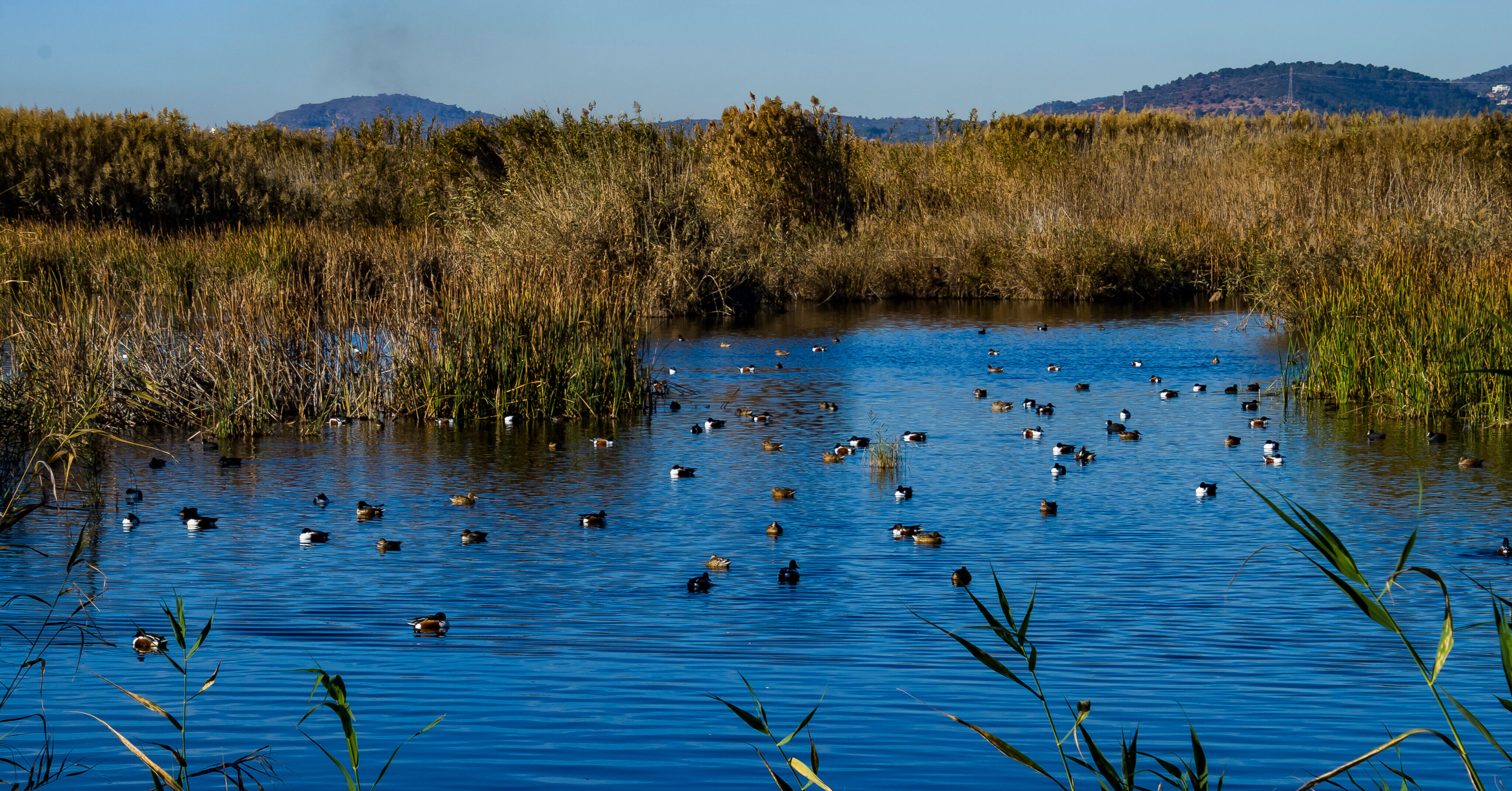
Finally, through the LIFE funds, the main European instrument dedicated to the environment and climate action, the Foundation coordinates strategic projects such as LIFE Wetlands, which will mobilise more than 270 million euros to restore more than 26,100 hectares in the next decade, and LIFE INTEMARES, focused on the effective management of the marine Natura 2000 Network. It also promotes LIFE Custodia, aimed at strengthening collaboration between administrations, social entities and owners through land stewardship as a conservation tool. In parallel, the Foundation participates in LIFE ECOREST, a project focused on the restoration of 30,000 hectares of deep marine habitats. For its part, the now completed LIFE Marbled Teal has contributed to multiplying the breeding population of this critically endangered species by four.
The Foundation also participates in the European partnership Biodiversa+, integrated into Horizon Europe and aligned with the European Union’s 2030 Biodiversity Strategy. This alliance promotes research and innovation projects to halt biodiversity loss and develop nature-based solutions on a European scale.
Europe Day highlights the value of cooperation as an essential tool to address major environmental challenges. The ecological transition is not only a political objective, but a common project that requires investment, innovation and collective commitment. In this context, European funds are consolidated as a strategic lever to protect biodiversity, strengthen the resilience of territories and move towards a sustainable future for all citizens.
