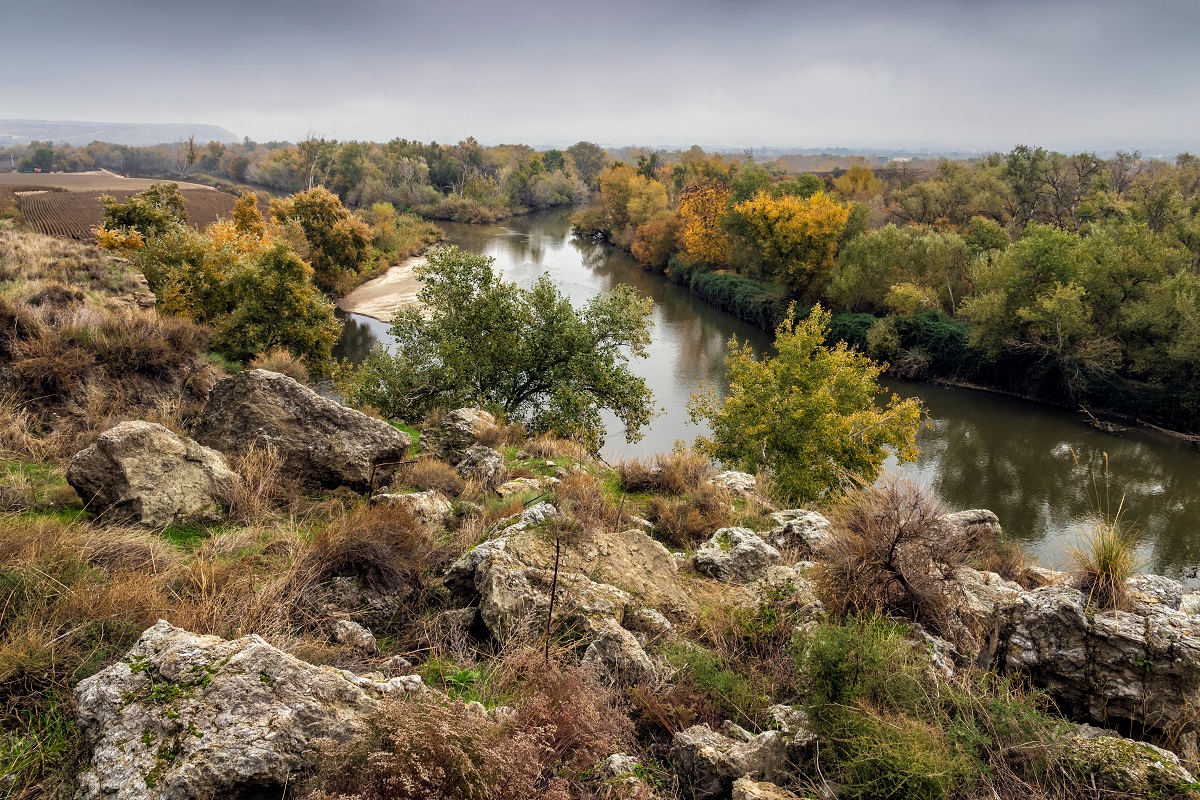


On March 14 we celebrate the International Day of Action for Rivers, an event proclaimed by the Food and Agriculture Organization of the United Nations (FAO) to defend the care and protection of river water bodies around the world and claim their value as a key natural resource.
On March 14 we celebrate the International Day of Action for Rivers, an event proclaimed by the Food and Agriculture Organization of the United Nations (FAO) to defend the care and protection of river water bodies around the world and claim their value as a key natural resource.
Rivers are an essential element of the hydrological cycle and are home to an enormous diversity of fauna and flora. In addition, the water they carry comes mainly from rain, springs and melting snow, making them one of the main sources of clean water on the planet. However, rivers are increasingly threatened by causes such as human activity and overexploitation of livestock, agriculture or industry.
In addition, the construction of dams, canals and other infrastructures results in a fragmentation of river ecosystems, which alters the natural flow of rivers and can endanger the species that inhabit these ecosystems. According to the European Environment Agency (EEA), barriers in rivers are a significant pressure for around 20% of European surface water bodies and it is due to these limits that rivers would not reach good ecological status. The EEA report, “Monitoring barriers and their impacts on European river ecosystems”, stresses the need to remove barriers to help fish migrate and restore sediment transport to improve the continuity of rivers across Europe.
Discharges by polluting substances are another of the threats faced by these ecosystems. A study published in the scientific journal The Proceedings of the National Academy of Sciences (PNAS), which analyzes pollution derived from the activity of the pharmaceutical industry in the world’s rivers, argues that the pollution of river basins poses a global threat to the environment and human health, after analyzing the water of 258 rivers in a hundred countries. including Spain.
The effects of climate change also pose a serious threat to the conservation of river water bodies and their biodiversity. According to the latest report by the Intergovernmental Panel on Climate Change (IPCC), the increase in the frequency of extreme atmospheric phenomena such as droughts, floods or major storms, in addition to the increase in desertification and salinization of aquifers and soils, will produce drastic variations in the flow of rivers, which can damage these ecosystems.
The Biodiversity Foundation of the Ministry for Ecological Transition and Demographic Challenge (MITECO) has been working for years to care for and protect rivers and river ecosystems through different actions that contribute directly and indirectly to meeting this objective.
Until 16 March , a call for grants remains open to promote actions aimed at the restoration of river ecosystemsand the reduction of flood risk in Spanish urban environments, within the framework of the Recovery, Transformation and Resilience Plan (PRTR), and which has an endowment of 75 million euros.
The objective of these grants, aimed at local administrations, is to promote projects such as the implementation of sustainable drainage systems, the improvement of permeability and the increase of the environmental values of rivers in urban areas, actions to mitigate and adapt urban environments to the risk of flooding or reduce the vulnerability of exposed elements in flood zones. All these actions must contribute to the improvement of the ecological status of the river system.