


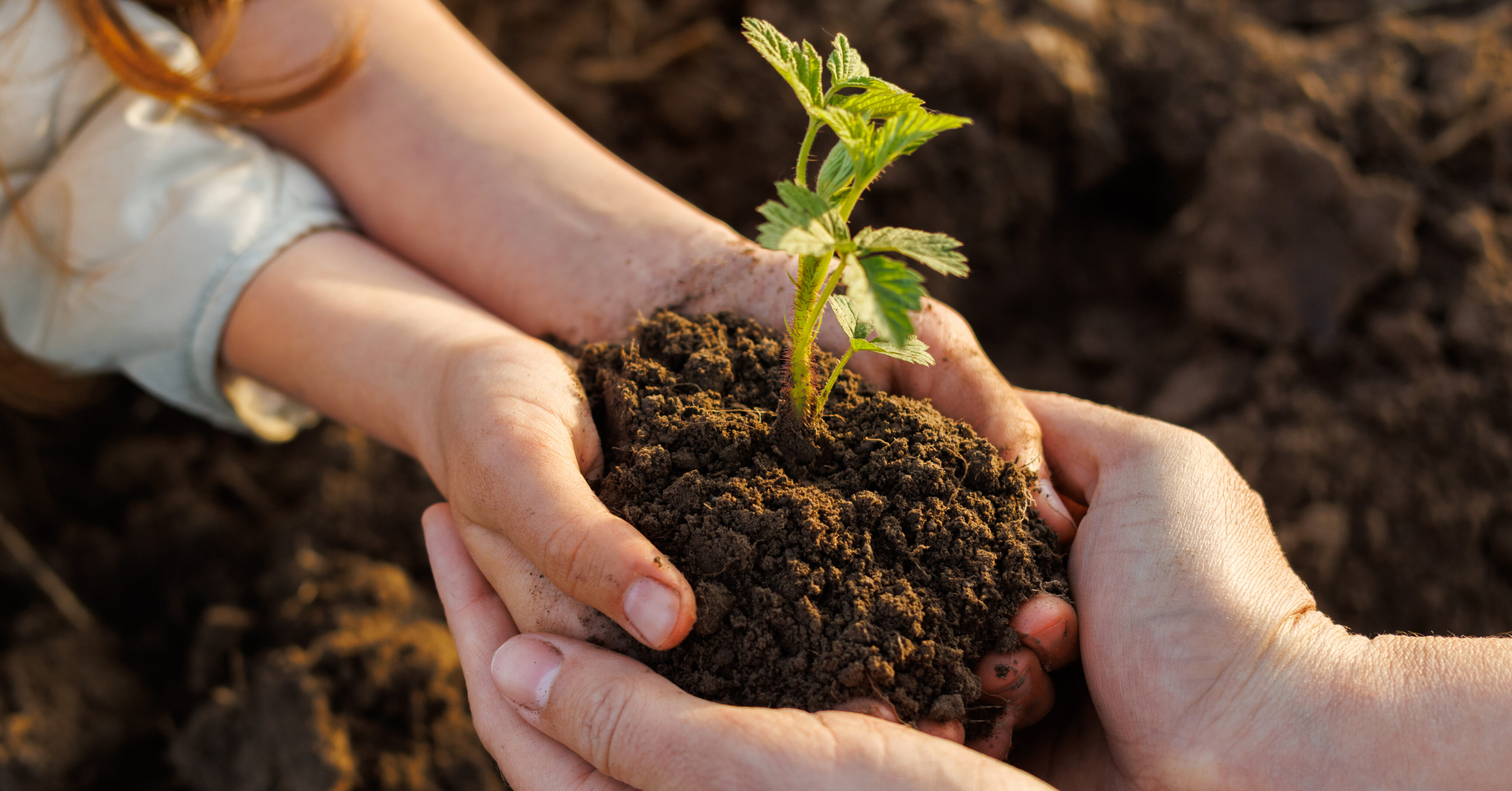


Every April 22, International Mother Earth Day is commemorated, proclaimed by the United Nations General Assembly in 2009 to recognize the interdependence between human beings, biodiversity and the ecosystems that sustain life. Under the slogan “Our power, our planet“, it recalls that the Earth is the common home of humanity and highlights the role of collective action, innovation and public policies to promote a just ecological transition and strengthen the resilience of our societies.
The commemoration comes against a backdrop of increasing pressure on natural systems. The United Nations and the United Nations Environment Programme (UNEP) warn that the planet is facing a triple planetary crisis marked by climate change, biodiversity loss and pollution.
Around 4.7 million hectares of forest are lost each year, essential ecosystems that are home to about 80% of terrestrial species. This degradation directly affects human well-being and economic stability. Healthy ecosystems act as a strategic natural infrastructure that contributes to climate resilience and food security. Approximately 75% of the world’s crops depend, at least in part, on animal pollination, and a single bee colony can pollinate up to 300 million flowers a day. However, insect populations are declining globally by 40%, reflecting a large decline in biodiversity.
Pollution intensifies this pressure on ecosystems. Global plastics production has reached approximately 460 million metric tons, and it is estimated that about 80% of the plastic manufactured remains accumulated in landfills or in the natural environment. According to the International Union for Conservation of Nature (IUCN), at least 14 million tons of plastic end up in the ocean each year. If this trend continues, by 2050 the volume of plastics in the ocean could exceed that of fish in terms of weight.
The climate context reinforces the urgency to act. The World Meteorological Organization confirms that the average global temperature for the period 2023-2025 was 1.48 °C above the pre-industrial level. At the same time, terrestrial and marine ecosystems absorb approximately half of CO₂ emissions, making nature a key ally in mitigating climate change.
Faced with this scenario, ecological restoration is consolidated as a strategic investment. According to the UN, more than 2 billion hectares of land are degraded in the world and more than 3.2 billion people are affected by its consequences. The Kunming-Montreal Global Biodiversity Framework sets a goal of protecting at least 30% of land and sea surface by 2030. However, the Protected Planet Report 2024 indicates that global coverage currently reaches 17.5% of the land surface and 8.5% of the ocean, highlighting the need to accelerate action to ensure an environmentally sustainable, socially just and economically viable future.
RENATURATION AND RESTORATION FOR A RESILIENT PLANET
In this context, the Biodiversity Foundation of the Ministry for the Ecological Transition and the Demographic Challenge (MITECO) promotes projects aimed at improving the resilience of ecosystems and generating opportunities for sustainable development. Through the calls for the renaturation of cities and the restoration of urban river ecosystems of the Recovery, Transformation and Resilience Plan (RTRP), financed by the European Union – NextGenerationEU, 73 projects have been supported with an endowment of 195 million euros. Likewise, thanks to the PRTR funds, 70 bioeconomy projects have been supported with an investment of 97 million euros, aimed at promoting sustainable production models and strengthening rural development.
Currently, the Biodiversity Foundation manages new initiatives co-financed by the European Regional Development Fund (ERDF). Among them, the call for the renaturation of cities mobilises nearly 40 million euros for 12 projects aimed at strengthening urban green infrastructure and improving adaptation to climate change. In the field of bioeconomy, the grants have 42.6 million euros for 27 projects aimed at promoting the sustainable use of natural resources and the creation of green employment. Likewise, the ERDF calls for the conservation and restoration of marine biodiversity support eight projects with an endowment of six million euros, contributing to the protection and recovery of strategic marine habitats.
On the other hand, the LIFE INTEMARES project, coordinated by the Foundation, promotes the effective management of the protected areas of the Natura 2000 Network, while LIFE ECOREST promotes the restoration of 30,000 hectares of deep marine habitats. In addition, the LIFE Wetlands project, also led by the Foundation, will mobilise more than 271 million euros to carry out 284 actions in 107 areas of the Natura 2000 Network, with the aim of restoring more than 26,100 hectares of wetlands.
For its part, the LIFE Marbled Teal project has made a decisive contribution to improving the conservation status of this critically endangered duck species by restoring more than 3,600 hectares of wetlands. Since the start of the project in 2021, the breeding population has quadrupled to 172 females with chicks, and more than 3,700 specimens have been released to reinforce populations.
These actions highlight the strategic role of ecological restoration and nature-based solutions in protecting biodiversity, generating green jobs and strengthening resilience to climate change. Conserving natural capital not only helps to halt species loss, but also strengthens food security, ecosystem health, and long-term economic sustainability.
